
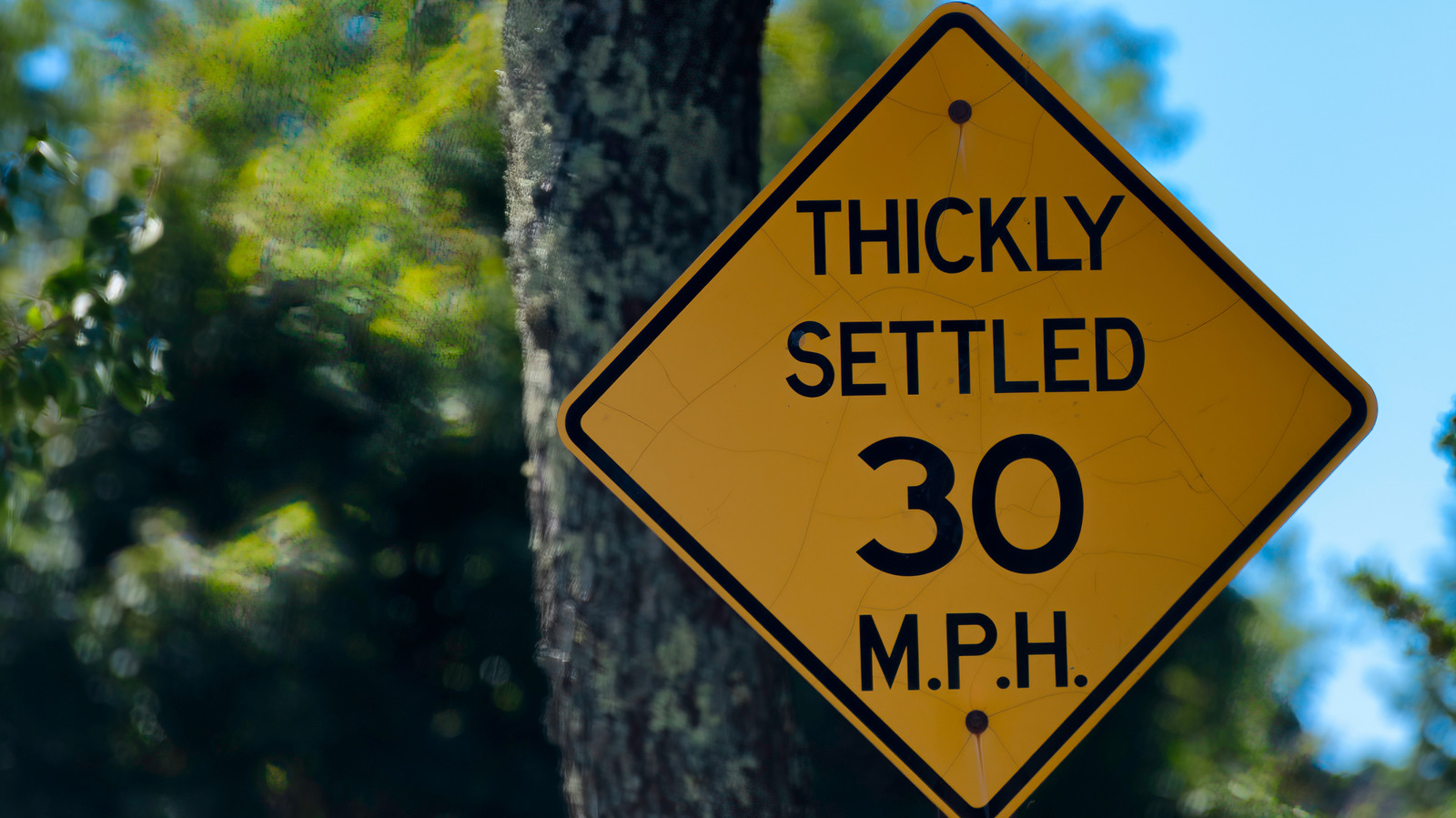
Massachusetts has a habit of surprising drivers, and one of its quirkiest little curveballs is the yellow road sign that says “Thickly Settled.” It looks almost like something made for a joke, but it carries real weight on the road. In plain terms, it marks a stretch where people, buildings, and traffic are packed close enough together that drivers need to ease up and pay attention.
That strange wording can catch visitors off guard, especially if they are used to the more familiar “Congested area” signs seen in other states. The message is basically the same, though, and it is all about slowing down in busy spots where pedestrians, homes, and businesses are closer to the roadway. In Massachusetts, those areas often come with a default speed limit of 30 mph, with some places set even lower.
The legal roots of the phrase go back a long way, and that is part of why it still hangs around. The term showed up in the state’s laws in the 1800s, and instead of being replaced by something more modern, it stuck. That old-school language gives the sign its charm, but it also makes the warning feel a little more memorable than the average speed-limit notice.
The phrase has a very Massachusetts feel to it, the same kind of dry, oddly specific flavor that shows up in other corners of the state. It is not trying to be cute, even if it sounds that way. It is simply a legal label for a place where conditions demand more caution, and that means drivers should treat it as seriously as any other speed-zone alert.
Massachusetts has another road sign quirk that fits the same personality. Some highways are posted with restrictions not just for pedestrians and cyclists, but for horses and horse-drawn vehicles too. That leads to a funny little logical twist, because if a highway has a sign banning horses, then the rule suggests horses may be allowed where no such sign is posted.
Road signs like these can feel funny at first glance, but they serve a real purpose. They are designed to keep traffic moving safely in places where the road environment changes fast, whether that means packed neighborhoods, busy commercial strips, or routes with unusual traffic mix. A driver who treats the sign like a punchline instead of a warning is asking for trouble.
And Massachusetts is far from the only state with signs that make drivers do a double take. There are no-hitchhiking signs with a thumbs-up symbol crossed out, warnings for horse-drawn buggies in Amish Country, and even signs near military bases for tank crossings. Each one reflects a very specific local reality, which is exactly why road signs can look strange while still doing an important job.
The key is not to overthink the wording when a sign seems odd. The shape, color, and placement usually tell the story before the words do, and unfamiliar signs are worth slowing down for. If a yellow sign tells drivers a road is “Thickly Settled,” it is not being poetic, and it is definitely not kidding around.
