
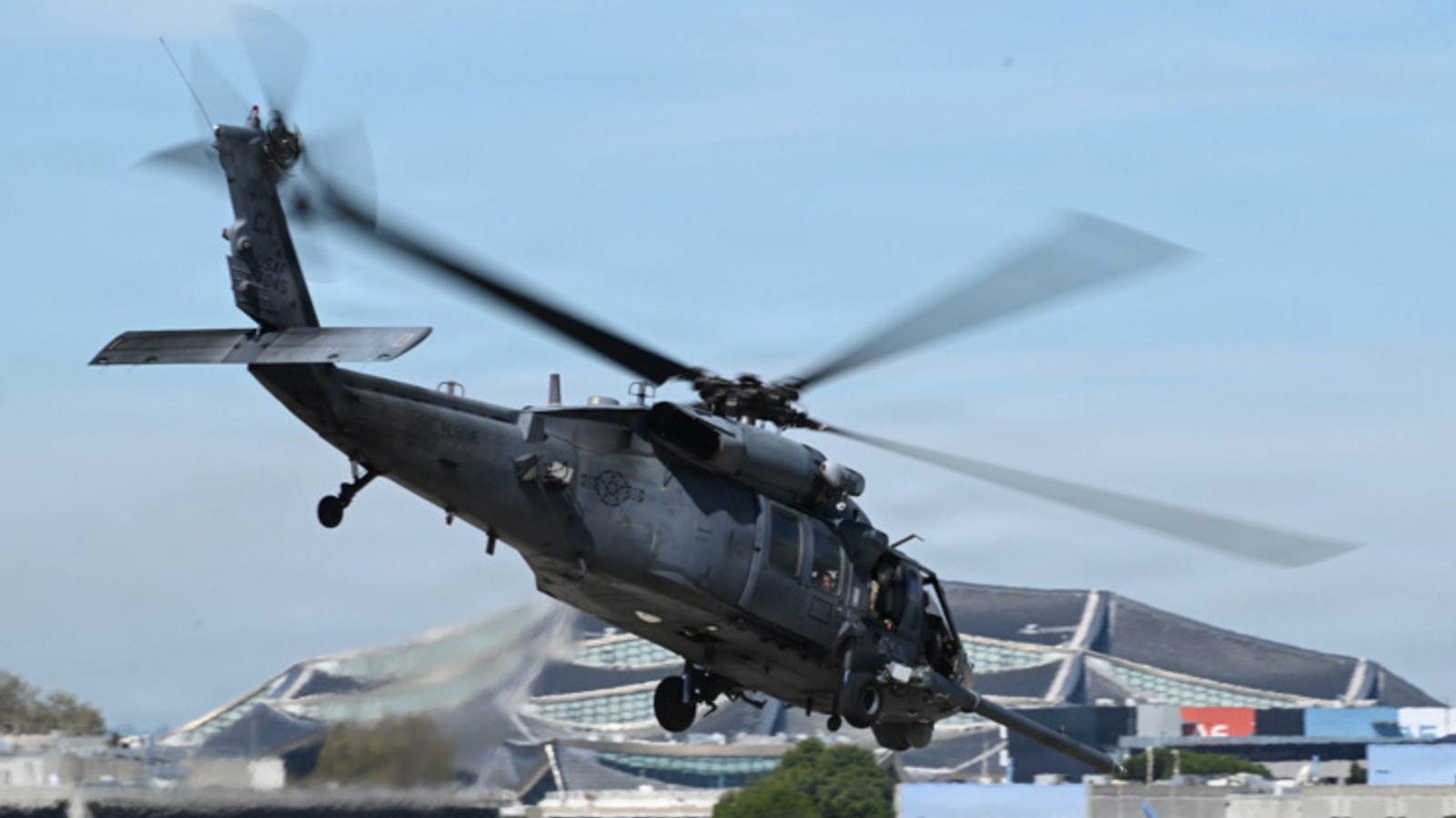
The HH-60G Pave Hawk has flown its last U.S. Air Force mission, closing the book on a helicopter that spent decades pulling people out of danger and bringing them home. Its final flight on September 10, 2026, marked the end of an era that stretched back to the early 1980s, when the aircraft first entered service as a rugged offshoot of the Black Hawk family.
The Pave Hawk earned its reputation the hard way. Built for combat search and rescue, it became a trusted workhorse in places where the stakes were brutal, from Iraq and Afghanistan to disaster zones and civilian rescue scenes across the country.
That mission gave the helicopter a rare kind of legacy. It was not just another military machine sitting on a flight line. It was the aircraft people hoped would appear when someone was missing, trapped, injured, or running out of time.
The final aircraft in the line belonged to California’s Air National Guard, where the 129th Rescue Wing handled the last chapter of the Pave Hawk story. The farewell carried real weight because it was tied to a long record of service and a body count that tells its own story in the best possible way, with 1,190 lives saved by the wing’s crews.
Those rescues were never clean or easy. They came from flying into ugly weather, hostile territory, and chaotic emergencies where hesitation could cost lives, and the Pave Hawk repeatedly proved it was up to the job.
Now the HH-60W Jolly Green II is stepping into that role. It comes from the same Sikorsky lineage, so the family resemblance is obvious, but it brings a more modern rescue package and a fresh set of systems built for today’s battlefield realities.
The new helicopter first went to the 512th Rescue Squadron at Moody Air Force Base in Georgia, along with the 38th and 41st Rescue Squadrons at Kirtland Air Force Base in New Mexico. That rollout in 2020 signaled where Air Force rescue aviation was headed, even while the older bird was still carrying the load.
On paper, the Jolly Green II looks familiar enough, but the numbers tell the story of an upgrade. It can reach a service ceiling of 20,000 feet, stretch out to 690 miles, and top out at 176 mph, which makes it a serious tool for long-range rescue work.
It also brings a heavier frame, with an operational weight of 22,500 pounds, plus a stack of mission systems that help crews survive and succeed when conditions turn nasty. A digital radar warning receiver, laser, hostile fire warning system, and integrated air defenses all point to one thing: the Air Force wants its rescue teams better protected and better informed.
That shift matters because rescue work has never been gentle. The mission still depends on speed, precision, and nerves of steel, but the gear now gives crews a sharper edge when seconds matter and the threat picture keeps changing.
For the people who flew and maintained the Pave Hawk, the farewell was about more than hardware. It was about a machine that became part of countless tense moments, one that built its reputation not through flash but through repeat trips into danger when somebody needed a way out.
Even as the new aircraft takes over, the old one leaves behind a hard-to-match reputation. The Pave Hawk did exactly what it was built to do, over and over again, and in military aviation, that kind of record tends to speak louder than any sendoff ever could.
