
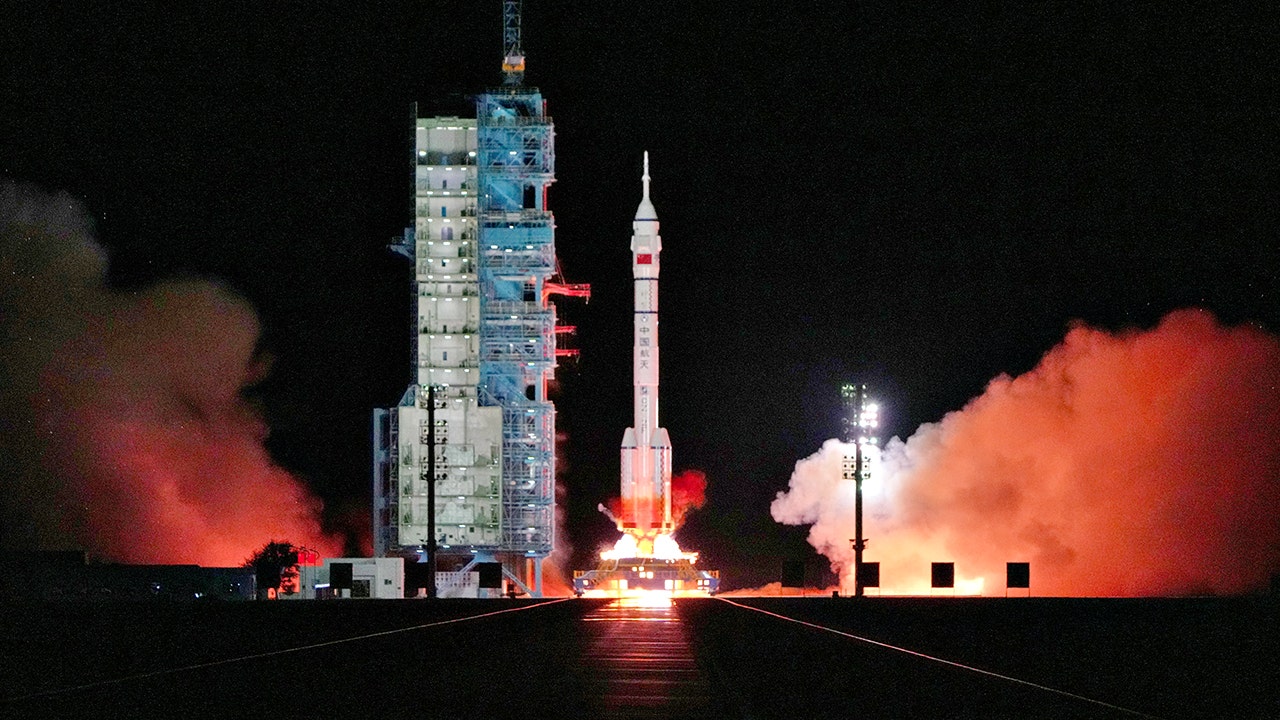
China’s push into space is no longer some distant warning flare. The U.S. is starting to talk more openly about orbital weapons, moon strategy, and the hard truth that the next major rivalry may not stop at Earth’s edge.
The big issue is control of the high ground, and space is the highest ground of all. Satellites, cislunar routes, and lunar resources are all becoming part of a real contest that mixes military power, technology, and national security.
For years, the warning signs were easy to ignore. But recent Pentagon remarks, plus fresh talk about battles around the Moon, have made the competition feel a lot less theoretical and a lot more immediate.
Air Force Secretary Troy Meink’s confirmation that the U.S. has on-orbit space control weapons sent a clear message. The point was not mystery for mystery’s sake, but a blunt signal that hostile action in space is no longer being treated as science fiction.
That matters because space assets are woven into nearly everything modern America depends on. They guide military operations, support the economy, and keep critical systems connected, which means an attack on satellites would hit far more than just defense planners.
Then came the even sharper warning about the Moon itself. General Dan Caine’s remarks about preparing for “global contested environments, from the seabed to cislunar space” showed how wide the battlefield has become in the minds of military leaders.
Cislunar space is not just a fancy phrase. It reaches from Earth’s orbit to the Moon and its surface, and that makes it part of the strategic map whether people like it or not.
The old belief that humanity would leave its worst instincts behind once it reached space was always wishful thinking. Power struggles do not vanish just because the setting changes, and national rivals understand that just fine.
That is where John F. Kennedy still looms large. His Rice University speech made the case that the United States had to lead in space, not drift along behind, because the future would be shaped by whoever set the pace.
Kennedy’s warning about a “new ocean” becoming either a sea of peace or a terrifying theater of war still lands with force. Space was never just about planting flags and collecting bragging rights, because leadership there also means shaping the rules of the game.
China appears to understand that better than most. With a space program tightly tied to military power, it is not simply exploring the Moon, but treating it like a strategic prize with real value.
Satellites in low orbit and geosynchronous orbit are part of that equation, because they sit at the center of communications, navigation, surveillance, and commerce. Knock those out, and a country feels the impact fast and hard.
The Moon itself may be the bigger prize. China’s interest in helium-3 points to a future where lunar resources are linked to energy security, industrial strength, and long-term leverage.
Helium-3 has drawn attention because it could, in theory, help deliver cleaner and safer energy. Some estimates suggest the Moon holds enormous quantities of it, and even a small amount could be enormously valuable if the technology ever catches up.
China is not waiting around to see who gets there first. Its lunar missions have already returned samples for study, which shows that the country is not just talking about lunar ambition, but building toward it piece by piece.
The deeper concern is that the Moon may become an extension of earthly rivalry instead of a shared frontier. If the U.S. falls behind in this race, the loss will not just be symbolic, because it could reshape military balance, energy opportunity, and global influence for decades.
