
“`html
• A resurfaced clip shows a sharp exchange over Abdul El-Sayed’s faith and political views.
• The moment centers on accusations about ties to the Muslim Brotherhood and Sharia law.
• Patrick Colbeck’s comments helped trigger the confrontation at a 2018 Michigan forum.
• El-Sayed responded by stressing his oath to the Constitution and his faith rights.
• The debate reflects wider Republican concerns about Sharia, cultural change, and public trust.
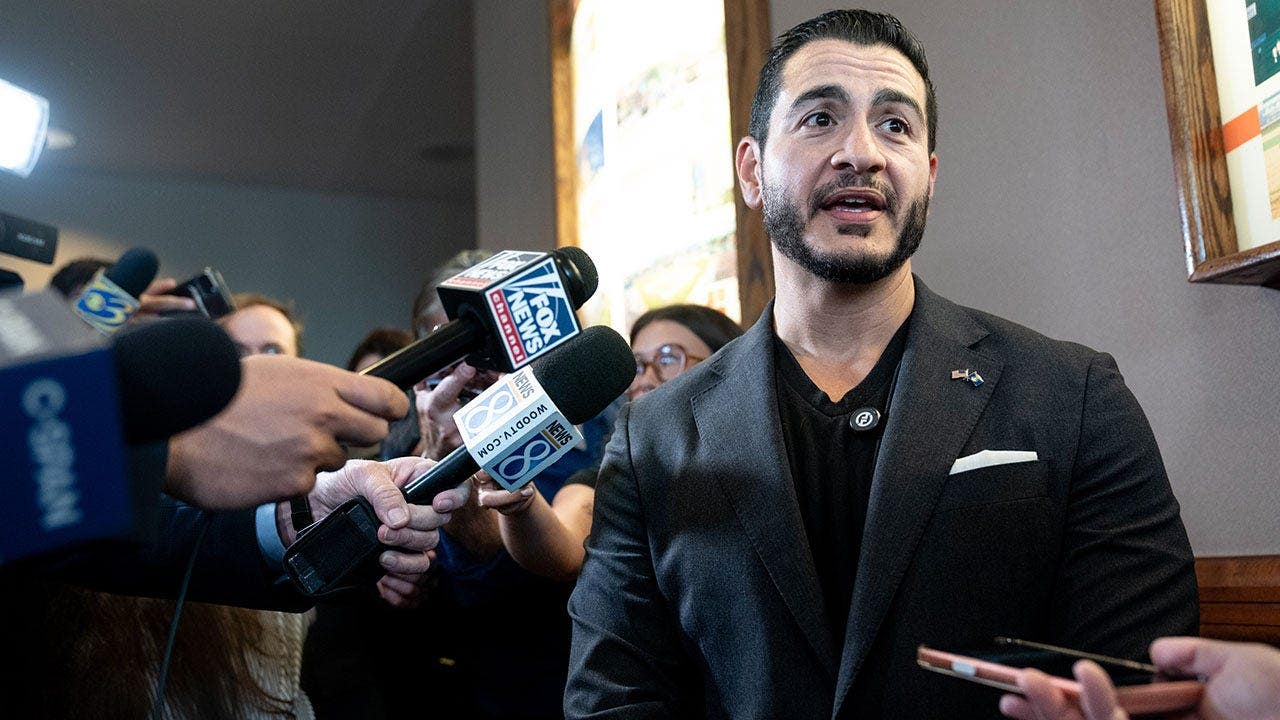
Abdul El-Sayed’s 2018 exchange with Patrick Colbeck is making noise again because the language was so blunt it is hard to ignore. In the clip, a tense forum turns into a public clash over religion, political loyalty, and the fear that personal faith could shape public policy. The result is a snapshot of how quickly a Senate race can become about much more than the campaign trail.
At the time, El-Sayed was being pressed over claims that he had connections to the Muslim Brotherhood, a group long viewed with suspicion by many conservatives. The question wasn’t just about labels or background, but about whether a candidate with a Muslim identity might support Sharia law in the United States. That concern drove the discussion hard, and El-Sayed clearly bristled at the implication.
The most memorable line came when he snapped back at the audience with, “Now, you may not hate Muslims. But I’ll tell you, Muslims definitely hate you,” a remark that landed like a slap. It captured his anger at what he saw as guilt by association, but it also showed how raw the subject had become. The exchange was not subtle, and it was never going to stay buried once the video resurfaced.
Colbeck, who was also running for governor, had framed his criticism around the Muslim Brotherhood and the Muslim Students Association. He pointed to old strategy memos and broader ideological concerns, arguing that the issue was bigger than one candidate’s biography. His warning about “civilization jihad” pushed the conversation into territory that many voters see as deeply troubling.
El-Sayed’s college ties were part of that argument, since he had served as vice president of a University of Michigan MSA chapter in 2007. That fact alone did not prove anything about political intent, but it gave opponents an easy opening. In politics, even loose associations can become fuel, especially when the subject touches religion, law, and national identity.
When the moderator asked whether Sharia law was a real concern in Michigan, El-Sayed answered by drawing a clear line. He said he would swear an oath to uphold the Constitution and would not look to undermine it. He also made the point that his faith protects, rather than cancels, his rights as an American.
He put it plainly: “I solemnly swear to uphold the Constitution of the United States and the Constitution of this state — that’s the oath that if any one of us is elected, we will swear. I take that oath particularly seriously because it guarantees me the right to pray as I choose to pray,” El-Sayed said at the time. He followed that with, “Sharia law is not in question in this state.” That response was meant to calm nerves, but it also underlined how central the issue had become.
The larger backdrop matters here too. The Muslim Brotherhood has long been controversial, with some countries banning it and others treating it as a political movement with dangerous edges. Critics argue that any organization tied to its ideology should raise red flags, especially when the goal is influencing law and governance in a Western country.
That concern did not stop with the 2018 forum. Republican voices have continued warning that Sharia-style thinking clashes with American liberty, especially on speech, religion, and women’s rights. Those warnings may sound heated, but they come from a real fear that the rules of the country could slowly be bent by political pressure dressed up as tolerance.
Detroit, Dearborn, and other Michigan communities have also kept the issue in the public eye. As Muslim populations have grown, the conversation has shifted from abstract theory to local politics, school boards, and city halls. That makes the El-Sayed clip feel less like old campaign theater and more like an early warning shot in a much bigger fight.
El-Sayed’s team has said he believes in separation of church and state and opposes any attempt by any faith group to write religious rules into American law. That position is straightforward enough, but it has not stopped critics from revisiting the footage and asking hard questions. In a race this competitive, a single video can hang in the air for years, especially when it hits on faith, power, and the future of the country.
“`
