
• Chinese influence concerns around America’s AI buildout
• Lawmakers pressing Treasury and IRS for answers
• Pro-China nonprofit networks and tax-exempt status
• Data center protests and public messaging campaigns
• Neville Roy Singham’s funding trail and linked groups
• Worries about foreign money shaping U.S. tech policy
Two top House Republicans are sounding the alarm over what they see as a coordinated push to slow America’s AI momentum by turning public frustration into political pressure. With President Donald Trump set to sit down with Chinese leader Xi Jinping, the warning is blunt: Beijing and its allies are not just watching the AI race, they are trying to tilt it.
House Ways and Means Chairman Jason Smith of Missouri and House Select Committee on the Chinese Communist Party Chairman John Moolenaar of Michigan asked Treasury Secretary Scott Bessent and IRS Chief Executive Officer Frank Bisignano to examine whether foreign money has seeped through the charitable system to help block data centers across the United States. Their concern is simple and sharp, that tax-exempt groups may be doing the bidding of outside interests while posing as ordinary civic voices.
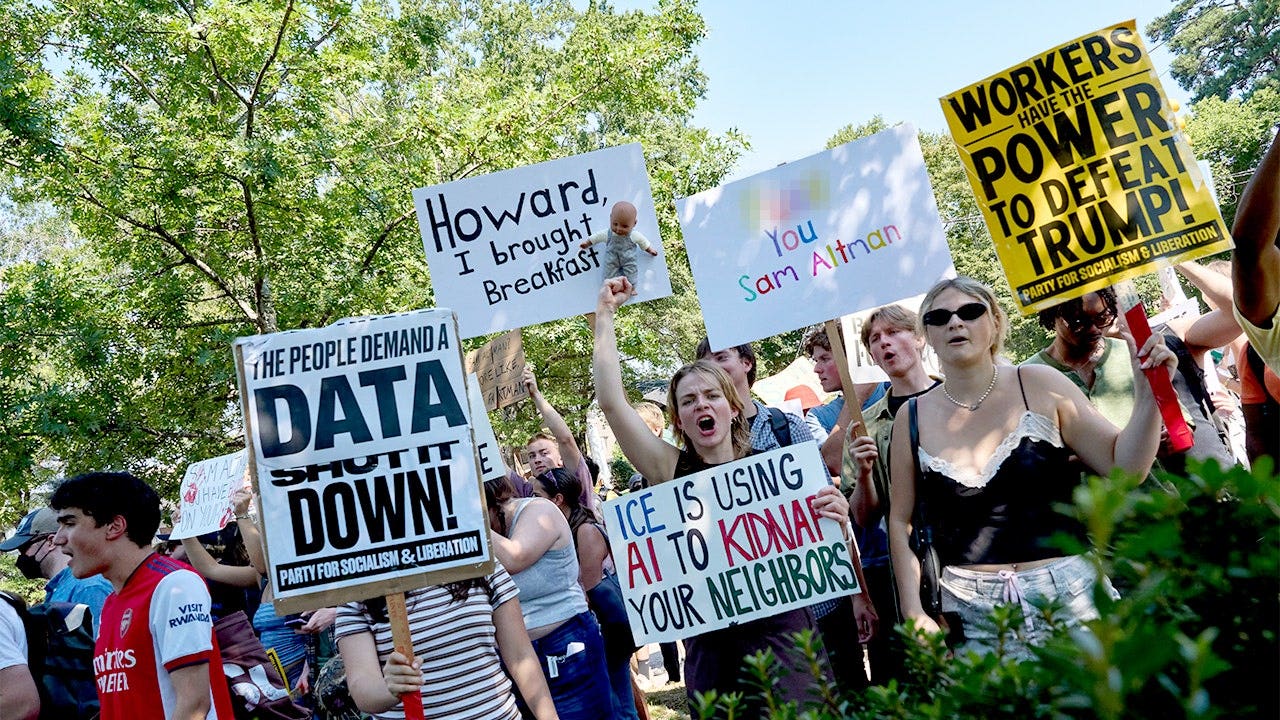
The lawmakers pointed to hundreds of millions of dollars routed by American-born communist tech tycoon Neville Roy Singham into nonprofits and advocacy groups that have pushed hard against data center construction. Among the recipients were the Party for Socialism and Liberation and the ANSWER Coalition, organizations that openly lean pro-China and have shown up at protests tying anti-AI rhetoric to broader anti-American messaging.
In one recent Chapel Hill protest, activists carried signs and chants that mixed opposition to data centers with support for communist causes abroad. That kind of overlap is exactly what has lawmakers worried, because a local zoning fight can quickly become a vehicle for something much bigger, including a foreign effort to stall U.S. infrastructure and chip away at confidence in American tech.
Smith said the issue is not that every protest against a data center is fake or foreign-driven. Americans have real concerns about electricity prices, water use, and how much land these projects can swallow, but he argued those fears should not be manipulated by people with an agenda to slow U.S. progress and hand China an edge in artificial intelligence.
That point gets to the heart of the fight. Data centers are not some niche side project, they are the backbone of AI, and whoever controls the compute has a serious advantage in the future economy. If foreign-backed groups can make that infrastructure politically toxic, then the damage goes far beyond one construction site or one city council meeting.
The lawmakers want Treasury and the IRS to dig into whether tax-exempt organizations connected to the network have been operating for the private or political benefit of foreign-aligned interests. They also want to know whether donor-advised funds or intermediary entities were used to blur the trail and disguise where the money really came from.
Smith said transparency is the key word here, and he was careful to note that tax-exempt status is a privilege, not a free pass. His view is that the public should not be forced to subsidize groups that stir unrest or push messaging that lines up neatly with the interests of an adversary.
There is also a bigger warning tucked inside the request. If the funding trail and the messaging trail keep lining up, the issue may reach beyond tax rules and into possible Foreign Agents Registration Act questions, which could put even more heat on the organizations involved.
Moolenaar framed the problem in even plainer terms, saying some groups that claim to be grassroots are really astroturf, polished and propped up by outside money. In his view, that kind of operation is meant to manipulate the public debate, spread distrust, and turn Americans against the very technologies that could keep the country competitive.
He also pointed to the role of online bots, propaganda, and community organizing that looks local on the surface but serves a larger purpose underneath. The concern is not just about one protest or one nonprofit, but about a pattern of pressure that can spread fast, especially when social media gives it a megaphone.
OpenAI recently identified influence operations tied to China that used fake or coordinated accounts to push narratives around AI and technology policy. One campaign, called “Data Center Bandwagon,” targeted the same debate now heating up in cities and states, claiming that data center development was driving up electric bills for ordinary families.
The broader pattern has started to draw attention from researchers and policy analysts too. A Bitcoin Policy Institute report cited by the lawmakers said the Party for Socialism and Liberation drove multiple campaigns against data centers across 14 states, with some efforts contributing to moratoria, project cancellations, and billions in proposed investment getting shelved.
That kind of impact is why the fight has become so intense. A local protest can be a local protest, but when it is backed by money trails, coordinated messaging, and a foreign rival that wants America to stumble, the whole thing looks a lot less spontaneous and a lot more strategic.
Smith and Moolenaar say the American people deserve to know who is really behind the pressure campaigns and whether the country’s charitable system is being used as cover. The debate over AI infrastructure is not going away, and neither is the scrutiny over who is trying to shape it from the shadows.
