
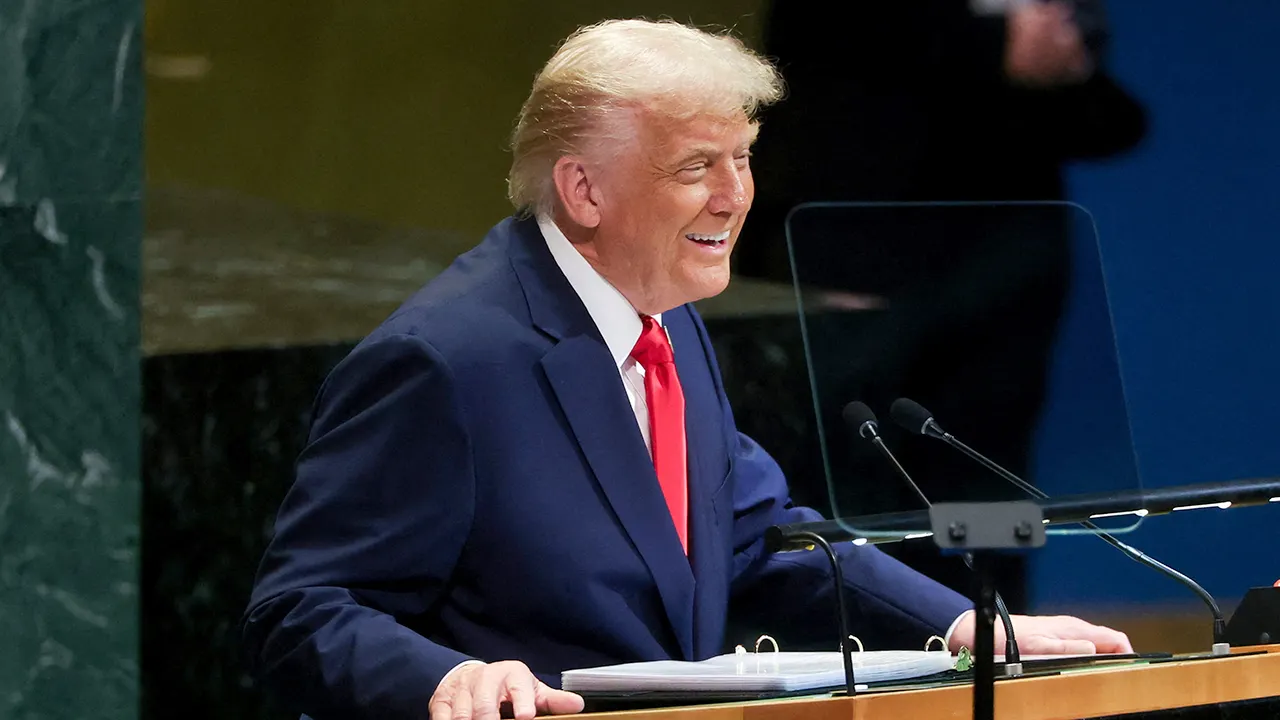
Trump’s United Nations address came in hot, mixing hard edges, big promises, and a clear message that America was done playing defense. The speech touched Iran, Greenland, cartels, artificial intelligence, and the role of allies, while also making room for a personal nod that softened the steel a little.
He framed the moment as one shaped by action, not by talk, and kept the pressure on hostile regimes and global troublemakers. The tone was confident, sometimes blunt, and built around the idea that U.S. strength still sets the pace for everyone else.
1. Iran was put on notice. Trump made it clear that Tehran was staring down a simple choice: make a deal or face the consequences. He argued that a nuclear-armed Iran would be too dangerous to tolerate, especially if it could hide behind a shield while fueling terror across the region.
The reaction inside the room suggested the warning landed. Trump repeated that Iran would never get a nuclear weapon, while also signaling that diplomatic doors were not fully shut, even if they were hanging by a thread.
2. The pressure campaign was not just talk. Trump said he believed a deal could come together after the midterms, but nobody in the room missed the backup plan sitting in plain sight. With roughly 50,000 U.S. service members still deployed in the region, backed by aircraft carriers and Central Command firepower, the message was obvious: America was ready either way.
That mix of hope and hard power defined the whole Iran portion of the speech. Trump sounded like a man betting on diplomacy, but only after making sure the threat of force was impossible to ignore.
3. Greenland stayed in the spotlight. Trump leaned into the Greenland deal as a strategic win, not just a diplomatic one. The point was to keep Chinese influence out of a key Arctic space while strengthening U.S. and NATO positions in a part of the world that matters more than most people realize.
The optics were striking too, with leaders appearing comfortable and upbeat around the agreement. For Trump, the Arctic is not some far-off icebox, but a serious security lane with military and geopolitical value written all over it.
4. The cartels got hammered. Trump drew a straight line between cartel power and the broader security fight in the Western Hemisphere. He called the cartels the ISIS of the region and treated them like the kind of enemy that feeds on chaos, cash, and weak borders.
He also made the case that the United States will not sit back while criminal networks spread their reach. The warning was plain: if threats keep showing up in America’s neighborhood, the response will not be polite.
5. AI was turned into a race for dominance. Trump wanted the artificial intelligence conversation to sound bigger and bolder, even floating the idea of calling it “Super Intelligence,” or SI. That was more than a branding stunt. It was a signal that the U.S. sees AI as a global contest with China, and the winner gets the edge in power, markets, and military advantage.
The idea behind the joke was serious enough. Trump treated tech leadership like a national security issue, not just another Silicon Valley obsession, and that gave the subject a sharper edge than usual.
He also made space for a personal touch, pointing to Melania Trump and giving her a visible place in the moment. That small gesture stood out because the speech otherwise had a steady drumbeat of confrontation, discipline, and global ambition.
The larger impression was of a president trying to project control in a world that still looks shaky in all the familiar places. Iran, cartels, China, the Arctic, and the UN itself all got pulled into the same frame, with America positioned as the force that still has the muscle to shape what happens next.
