
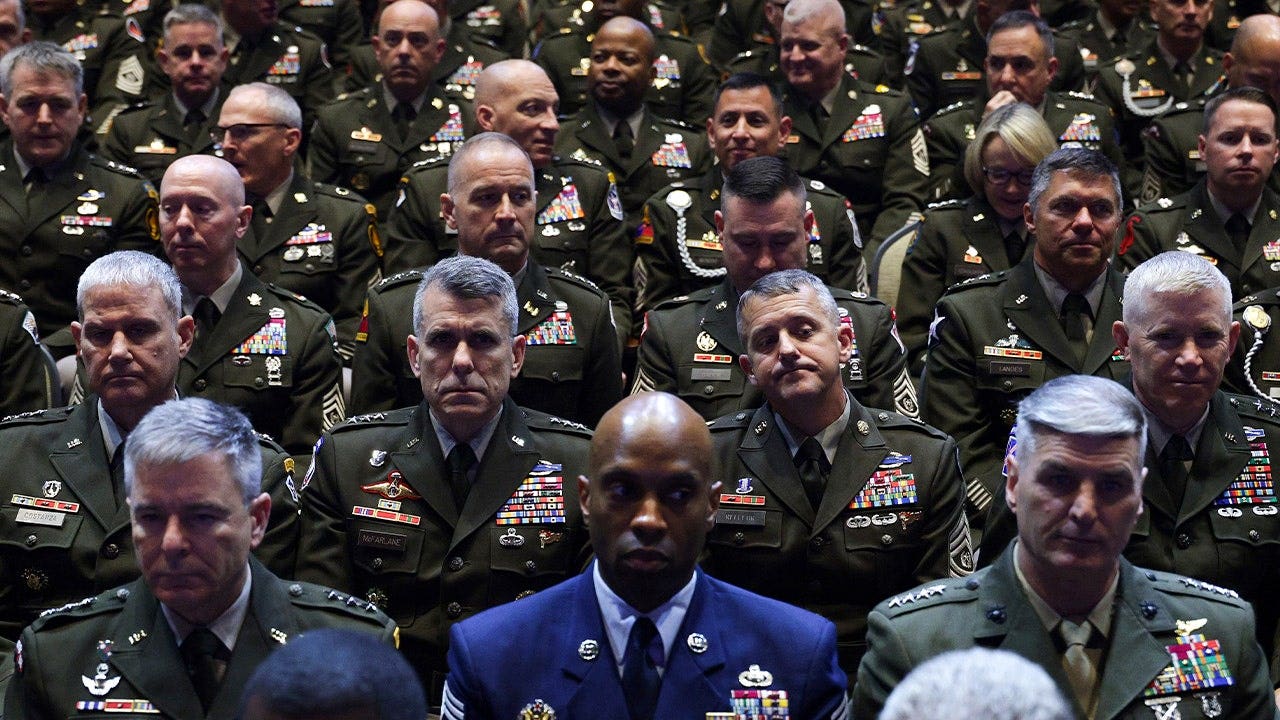
The Pentagon is putting a new spotlight on battlefield judgment, rolling out a tougher evaluation that asks senior officers to prove they can think and act like warfighters, not career climbers. The idea is simple, even if the test is not: promotions to general should reward people who can handle chaos, pressure, and real-world combat problems.
The new Joint Warfighting Evaluation, or JWE, is built to give promotion boards a fresh look at how officers perform outside the usual paper trail. Instead of relying only on career evaluations from superiors, the assessment is designed to measure decision-making, operational planning, and leadership in combat-like settings.
Each branch has its own version of the test, and the formats vary widely. Some officers will face online simulations, while others will sit through longer in-person war games where every move triggers a response from a mock enemy. The point is to see whether a senior officer can adapt when the other side starts punching back.
Stu Scheller, the senior Pentagon adviser leading the effort, has argued that the current system can reward polished resumes more than battlefield instincts. In his view, some officers become experts at managing impressions, but that is not the same thing as being the best commander when the situation turns ugly.
That criticism cuts to the heart of the change. Traditional performance reports are still in place, and they remain the backbone of promotion decisions, but the new evaluation adds another layer that is supposed to separate administrative success from combat readiness. The Pentagon wants a better picture of who can actually lead under pressure.
The service-specific versions show how ambitious the plan really is. The Army, Air Force, Space Force, Navy, Marine Corps, and Joint Staff each have distinct formats, ranging from remote written tests to hours-long war college exercises. Some versions even use AI-driven opposition to make the scenarios feel less predictable and more like an enemy with a plan.
For the Army and Air Force, the process leans more digital, with written assessments paired with simulations. The Navy and Marine Corps are taking a heavier route, with longer sessions and more intensive wargaming meant to force officers into fast decisions with consequences that unfold in real time.
The timing matters just as much as the design. The first round is set to hit eligible colonels in 2027, before the promotion boards that decide who moves up to general. That will give Pentagon leaders a chance to see whether the new tool actually adds value or just creates another layer of bureaucracy.
Scheller has been careful not to oversell it. No test can perfectly duplicate war, and that is not really the goal anyway. The idea is to build a better filter, one that catches weak battlefield judgment before an officer gets handed even more responsibility.
This push fits into a broader overhaul under Secretary of War Pete Hegseth, who has made no secret of wanting a leaner, sharper, more merit-driven military. He has pressed for faster promotion of top performers, quicker removal of weak ones, and less tolerance for systems that reward checking boxes over delivering results.
That broader cleanup has also included shrinking the top ranks and rethinking how generals and admirals are selected. Hegseth has taken a more hands-on role in promotion matters too, which has stirred up concern in some corners of the military and among lawmakers who worry about political pressure creeping into what has long been a service-driven process.
Even so, the Pentagon is betting that a direct measure of warfighting ability will help course-correct a system too often accused of favoring smooth operators over hard chargers. The real test will not just be whether the evaluations are clever or modern, but whether they produce leaders who are sharper, tougher, and less likely to freeze when the fight gets real.

1 Comment
From 06 above ranks, ALL forces involved
Under Combat training mode
End the perks of DOW