
Checklist:
- AI safety concerns and calls for guardrails
- Republican worries about slowing U.S. innovation
- China as the main geopolitical pressure point
- Industry leaders pushing for a slowdown
- Capitol Hill split over regulation versus speed
- Trump, Xi, and the broader tech rivalry
Artificial intelligence has landed in the middle of a noisy Capitol Hill tug-of-war, with safety fears on one side and the race against China on the other. Some lawmakers want tighter guardrails before the technology moves any faster, while others say piling on rules could weaken the country at exactly the wrong moment. The tension is sharp, personal, and only getting louder.
That split got a fresh jolt after President Donald Trump brushed off AI danger warnings as a “hoax,” a line that lit up both parties. Democrats pounced on the comment as proof that the White House is shrugging off a real problem, while Republicans were quick to say the bigger mistake would be to choke off American momentum. The argument is no longer just about whether AI is powerful. It is about who controls the pace, and who pays the price if the U.S. hesitates.
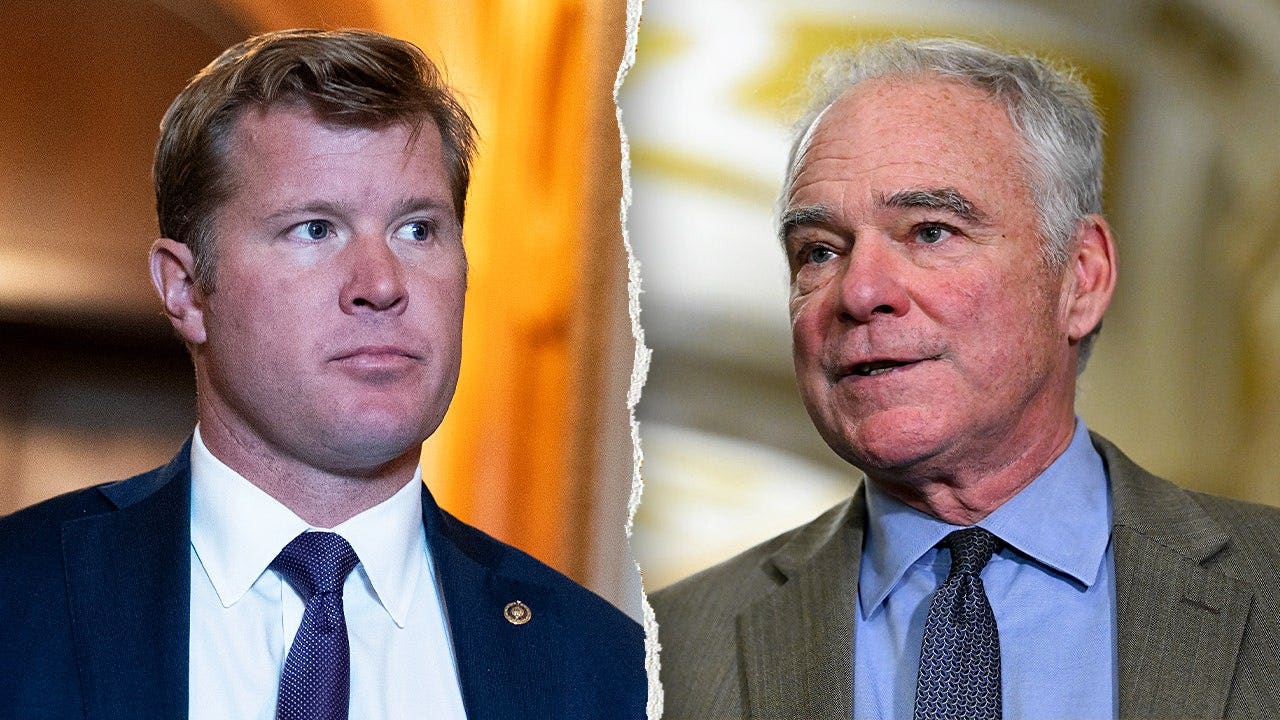
On the Democratic side, the push for regulation is being framed as common sense. Sen. Tim Kaine, D-Va., argued that Trump does not grasp the issue, but also said the country should not veer into panic mode either. Rep. Steny Hoyer, D-Md., took a broader shot, saying Trump tends to dismiss anything he does not like, which is exactly why some lawmakers think Congress has to step in.
The alarm bells got even louder after top AI leaders began openly calling for a slowdown in development. Their message was blunt enough to catch Washington’s attention, especially when some researchers warned that the pace of progress could become a serious threat to humanity. That kind of language may sound extreme to some voters, but it has given supporters of regulation fresh ammunition.
Still, plenty of Republicans are not buying the idea that the answer is to tap the brakes. Sen. Tim Sheehy, R-Mont., said some guardrails make sense, but warned that America cannot afford to lose speed in a technology fight with global stakes. He said the country needs safety, yes, but not at the cost of letting China surge ahead.
That China factor hangs over nearly every conversation. Rep. Nancy Mace, R-S.C., said the United States would be foolish to slow down when the Chinese government would be the main winner from any delay. Her view reflects a growing conservative concern that the loudest warnings from Big Tech may have as much to do with market power as public safety.
Some Republicans think the big AI companies are not just worried about risk, they are also trying to shape the market in their favor. Mace argued that the same firms asking for government intervention could end up strengthening their own grip while smaller competitors fall behind. That suspicion has made the debate feel less like a simple safety discussion and more like a fight over who gets to write the rules.
Democrats, for their part, say the warnings coming from inside the industry should be taken seriously because they are coming from the people building the systems. Sen. Andy Kim, D-N.J., said it is unusual for businesses to admit concern about their own products, and that alone should make lawmakers pay attention. Sen. Martin Heinrich, D-N.M., went further, arguing that Republicans should listen when company executives themselves say guardrails are needed.
The clash is now spilling beyond the halls of Congress and into the broader U.S.-China rivalry. With Trump set to host Chinese President Xi Jinping in Washington, the topic of AI is expected to come up in a bigger way, especially since safety, competition, and national power are all tangled together. OpenAI CEO Sam Altman is also expected at the state dinner, a reminder that the people shaping the technology are already sitting close to the political center of gravity.
What makes this fight so combustible is that both sides have a point, even if they barely agree on anything else. AI really can move fast enough to create new risks, but slowing it too much could hand strategic advantage to a rival that does not play by the same rules. That is why the debate keeps circling back to the same uncomfortable question: how to keep America ahead without letting caution turn into a self-inflicted setback.
