
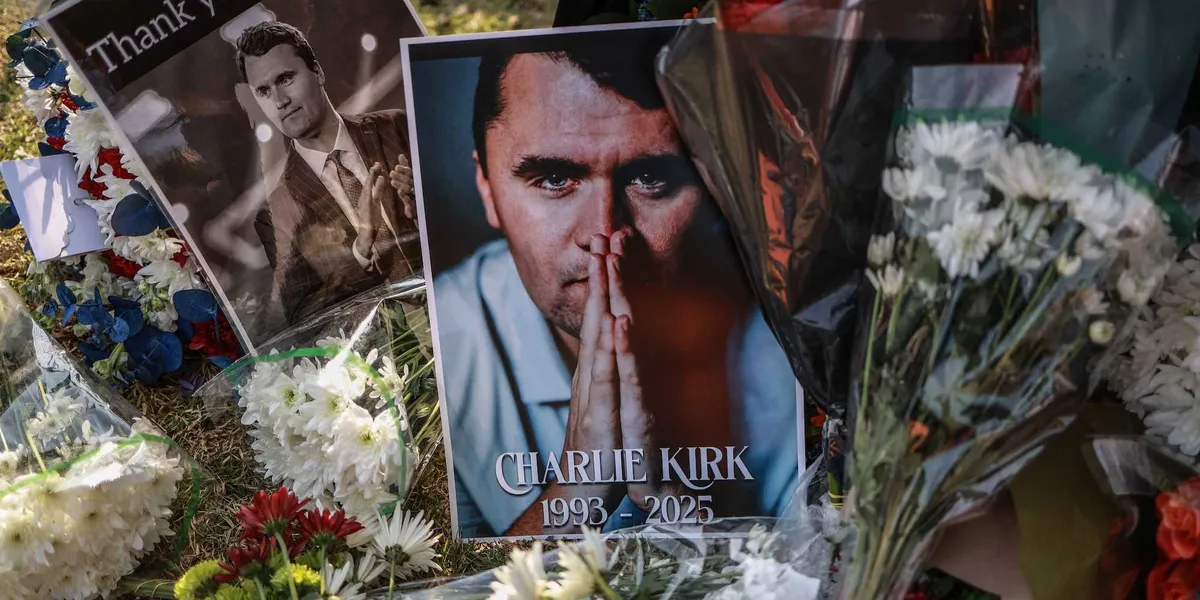
A Washington state high school is facing a storm after a student showed up in a bloody shirt apparently meant to taunt the killing of Charlie Kirk. The image sparked immediate backlash online and pushed the district into damage-control mode, with families, commenters, and local observers demanding a response that matched the seriousness of the moment.
The outrage has centered on more than one ugly outfit choice. It has also turned into a wider argument about basic decency, school culture, and how quickly political cruelty can spill into a place that is supposed to be about learning, not spectacle.
The shirt at the center of the controversy was clearly designed to provoke. Wearing something that appears to mock a real death is not harmless edgy behavior, and plenty of people saw it that way right away. What might have been brushed off as teen stupidity in another setting landed much harder because the target was tied to a violent public event.
That distinction matters. When a student turns a tragedy into a costume, the message is not subtle, and it is not funny. It sends a signal that basic respect for human life has been traded for social media attention and cheap laughs.
The district’s response came after the backlash started building. Officials moved into public explanation mode, trying to cool tempers while the story spread and the comments section did its usual thing. That approach rarely satisfies anyone, especially when the public wants to know whether the school understands why the incident hit such a nerve in the first place.
Parents are often the first to ask the obvious question: what kind of example is being set? A school can talk all day about safe spaces, inclusion, and responsibility, but those ideas lose weight fast if students feel free to parade around in clothes that celebrate cruelty or death. The reaction from families suggests that many people still expect schools to draw a hard line on behavior that crosses into mockery of violence.
The episode also shows how fast a local issue can become a national talking point. One student, one shirt, and suddenly the conversation jumps from a hallway to the broader culture war, where every side sees proof of what it already believes. For critics, the incident is another sign that some schools are struggling to enforce common standards in a time when attention-grabbing behavior gets rewarded.
For supporters of a stronger response, the issue is not just punishment. It is about restoring a sense that public institutions should not shrug when students act out in ways that degrade victims and inflame tensions. If a school fails to react clearly, the silence can look a lot like permission.
There is also the bigger problem of online validation. Teens know that outrageous behavior can travel far beyond the school parking lot, and that visibility can make even a foolish stunt feel powerful for a few minutes. But internet clout has a way of curdling fast when people realize the joke is built on disrespect and grief.
This is where the district has a real test on its hands. A vague statement will not calm anyone down for long, and a soft response will probably make the criticism louder. People want to see that there are standards, that they mean something, and that students are not being taught that cruelty is just another form of expression.
Incidents like this keep dragging the same uncomfortable truth back into view. Schools are not separate from the culture around them, and when public anger, politics, and social media collide, the fallout can land in a classroom before anyone has time to catch it. The story is still moving, and so is the debate over how much ugliness a community is willing to excuse before it calls it what it is.
