
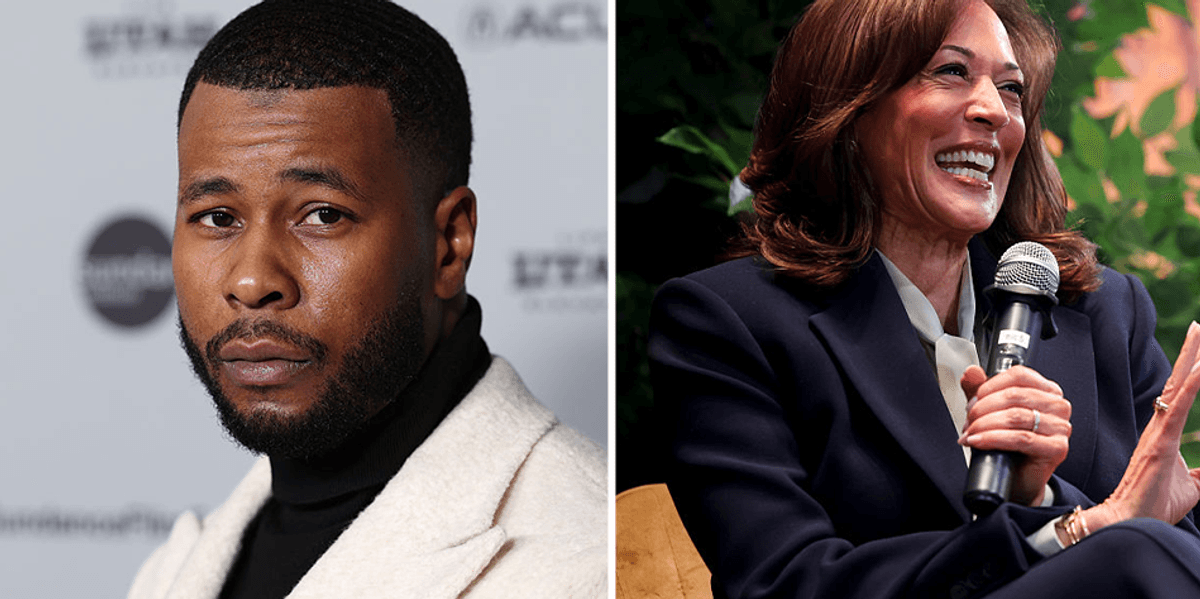
A fresh round of political commentary from the entertainment world has reignited a familiar fight over race, identity, and public loyalty. The remarks at the center of it all zero in on Kamala Harris, the country’s mood, and a blunt claim about what happens when people do not trust a Black woman in power.
The latest flashpoint came from HBO actor J. Alphonse Nicholson, who tied the state of the country to Harris and framed the conversation in stark racial terms. His comments did not land like a polite opinion, but more like a challenge thrown straight into the middle of an already heated cultural debate.
Nicholson argued that the United States is “suffering” without Harris in the spotlight, and he did not stop there. He went further by describing the fallout as the “Consequences of not trusting a black woman,” a phrase that instantly pushed the discussion beyond politics and into a much bigger clash over respect, race, and representation.
That kind of language is built to provoke, and it did exactly that. For supporters, it reads as a sharp defense of Harris and a rebuke of what they see as a long history of dismissing Black women before they even get a fair shot.
For critics, though, the statement feels like a shortcut that shuts down real debate. Instead of arguing policy, leadership, or results, the message shifts the focus to identity alone, which can leave people feeling like disagreement is being painted as prejudice.
Harris has long been a lightning rod, and Nicholson’s comments show just how much she still matters as a symbol. She is no stranger to being used as a stand-in for wider arguments about power, race, and who gets treated like a serious contender in American life.
That symbolism is part of why the reaction was so intense. A single sentence can quickly become a cultural test, especially when it touches on Black womanhood, public trust, and the old habit of reducing political support to skin color.
Still, the broader mood around the country makes comments like this hit even harder. People are frustrated, divided, and quick to read hidden meaning into every public statement, especially when the subject is someone as polarizing as Harris.
Entertainment figures stepping into politics is nothing new, but it always brings extra heat. When a known actor speaks with this much force, the message carries far beyond a casual remark and becomes part of a larger media storm that feeds on outrage, identity, and tribal lines.
There is also a reason these kinds of statements keep getting traction. They tap into a real and ongoing conversation about who gets believed, who gets dismissed, and how race changes the way power is judged in public.
At the same time, the wording matters. Saying the country is “suffering” without Harris and linking that directly to distrust of “a black woman” gives the line a sharp edge, but it also narrows the argument into a very specific frame that leaves little room for nuance.
That is what makes the reaction so combustible. One side hears overdue honesty, another hears a needlessly racialized jab, and both walk away feeling like the other side is missing the point entirely.
What keeps the story alive is not just the quote itself, but the bigger tension it exposes. Harris remains a powerful cultural reference point, and Nicholson’s remarks show how quickly a celebrity opinion can turn into a full-on referendum on race, politics, and the emotional baggage that hangs over both.
