
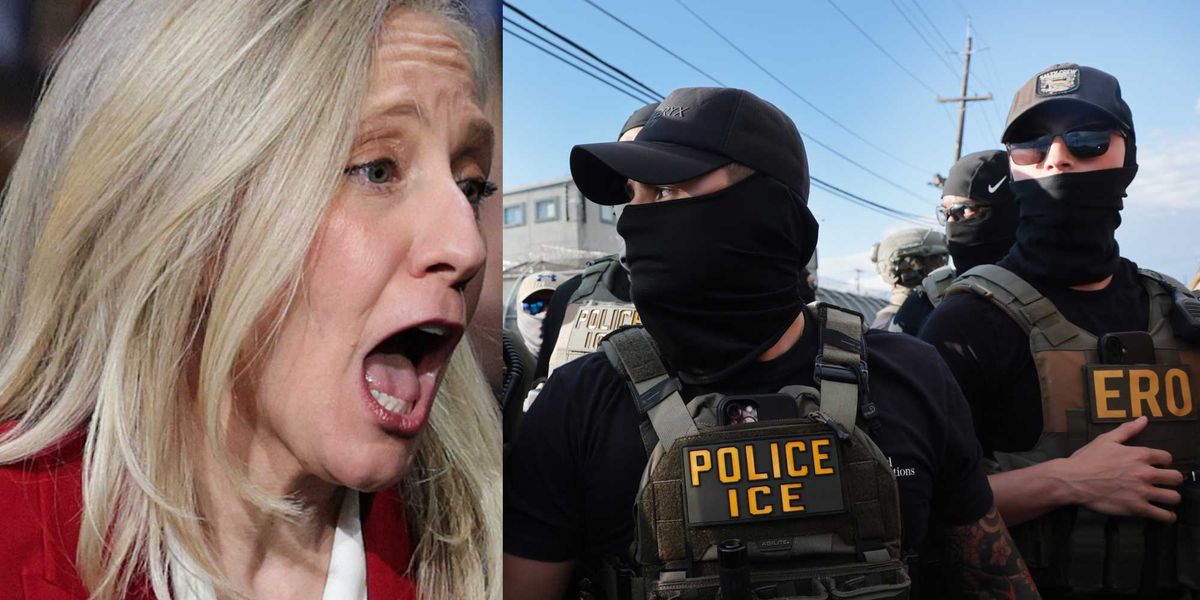
A federal court has put the brakes on a push to block ICE operations in Virginia, and that decision lands right in the middle of a bigger fight over immigration, public safety, and how far state officials can go when they try to draw a line against federal enforcement. The ruling gives fresh momentum to those who argue local leaders should not be able to tie the hands of agents enforcing immigration law, especially when the Biden-era chaos on the border already left communities dealing with the fallout. It also adds another sharp twist to the political spotlight around Abigail Spanberger and the broader Virginia race.
The issue is bigger than a single courtroom loss. At its core, it is about whether elected officials can effectively tell federal immigration officers to stand down in certain places, even when Washington says enforcement should continue. That kind of move has become a flashpoint because supporters see it as a humane response, while critics see it as a direct challenge to the rule of law and a gift to people who entered the country illegally.
Federal judges have consistently shown little patience for attempts to sideline ICE through local political pressure. The logic is simple enough: immigration enforcement belongs to the federal government, not to a governor, a candidate, or a state-level political coalition trying to score points with activists. When officials step outside that lane, the courts often step in and remind them that federal law is not optional.
Spanberger’s name has been pulled into the center of this fight because the issue cuts straight through the political map in Virginia. On one side are voters who want tougher enforcement and expect government to back the border instead of undermining it. On the other are voters who want less aggressive deportation activity and frame the debate around compassion, even when the law gives ICE broad authority to act.
That clash matters because immigration is not some abstract talking point. It affects neighborhoods, schools, law enforcement, and the daily sense of whether the system still has basic control. When ICE operations are blocked or chilled, critics say it sends exactly the wrong signal: that local politics matters more than national law, and that enforcement should bend whenever activists get loud enough.
The timing also gives the ruling extra punch. After years of border turmoil, many voters are tired of hearing excuses and watching leaders pass the buck. They want consistent enforcement, fewer loopholes, and fewer games from officials who act one way in front of cameras and another way when the public is not looking.
For Democrats in tight races, immigration has become a dangerous place to stand if the message sounds soft or evasive. Trying to split the difference may work in a speech, but it does not always survive in the real world, where illegal immigration brings real pressure on resources and real frustration from residents who expect order. That is why a judge shutting down a move against ICE can ripple far beyond the courtroom.
The broader takeaway is that the legal system is still pushing back against efforts to weaken federal immigration enforcement through political theater. That matters in Virginia, and it matters anywhere else officials think they can turn ICE into a villain while ignoring the law on the books. The ruling keeps the focus where it belongs, on whether leaders will defend lawful enforcement or keep trying to quietly smother it.
