
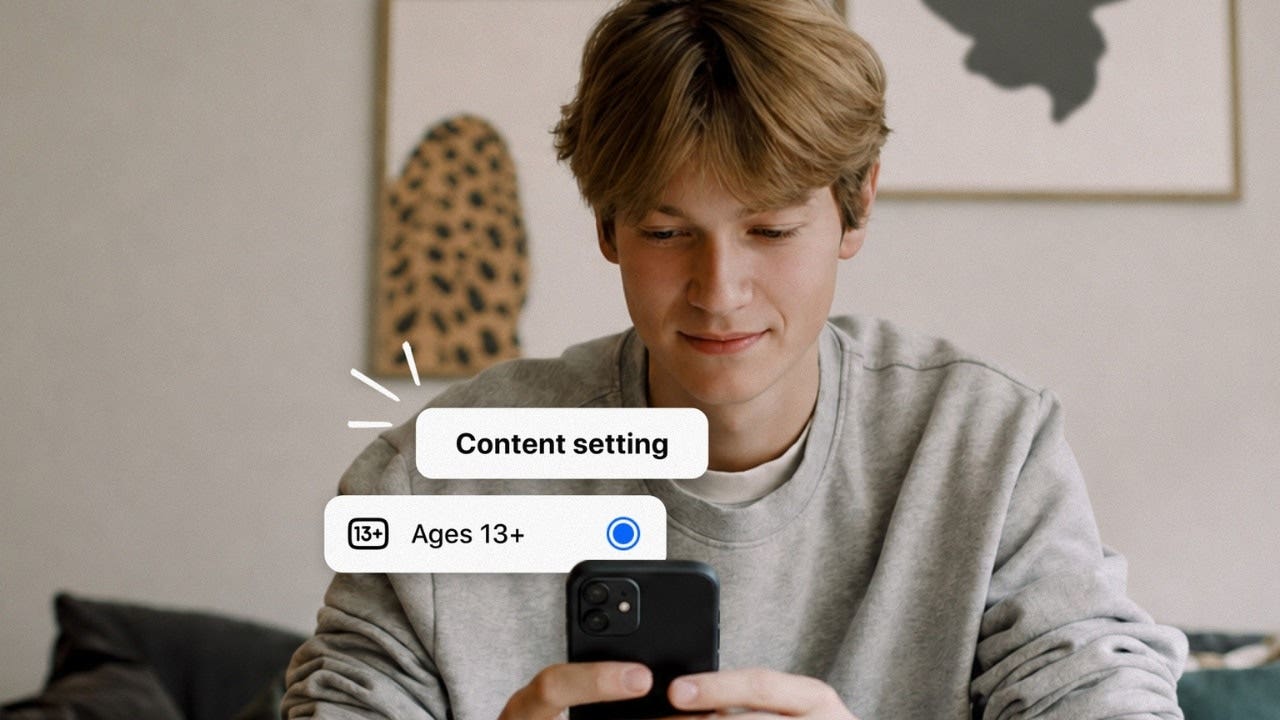
Meta’s new teen restrictions are a big shift for Facebook and Instagram, putting tighter default limits around scrolling, notifications, and content exposure. The agreement adds firmer guardrails for teens, gives parents more control, and pushes the platform toward stronger age checks and safer settings.
For families that have watched phones take over dinner, homework, and bedtime, the changes will feel familiar but much stricter. A judge approved the deal on Aug. 27, and the protections will roll out over the coming months, with several major pieces due within six months.
The headline change is a default two-hour daily cap across Facebook and Instagram combined. Time spent on either app counts toward that total, and Meta will also track usage across multiple accounts when it can tell one teen is juggling more than one profile.
Not every activity gets counted the same way. Direct messages, settings changes, and qualifying long-form audio or video are excluded, with long-form content generally defined as media lasting at least 22 minutes. A teen can only disable the cap with a parent’s permission, which makes the limit far harder to shrug off than a simple reminder.
Night Mode adds another hard boundary by blocking most app activity from midnight to 6 a.m. During that window, teens cannot browse areas like Feed, Stories, Explore, or Reels, though messaging stays open so conversations can continue. Push notifications will also be silenced by default from 10 p.m. to 7 a.m., aside from urgent security or integrity alerts.
School Mode goes after daytime distractions. From 8 a.m. to 3 p.m. on school days between Aug. 15 and June 15, Meta will mute most push notifications by default, while still allowing direct messages and safety alerts. The idea is simple enough: fewer buzzes, fewer excuses to check the app in class.
Teens will also get more frequent nudges to stop scrolling. Meta plans to show prompts every 15 minutes of continuous use, then again at 60 minutes and 90 minutes, before the two-hour cap kicks in. Those prompts turn the hard limit into the final stop instead of the first warning.
The agreement also changes what teens see once they open the apps. A non-personalized feed can be set as the default, reducing the pull of recommendation systems, and autoplay can be turned off so the next clip does not launch on its own. Parents using supervision can require both settings, which takes a lot of the temptation out of the endless-scroll design.
Likes, reactions, and appearance filters are getting a makeover too. Meta will hide like and reaction totals by default for teen accounts, and it will expand limits on cosmetic tools by blocking extreme makeup filters in addition to the surgery-related filters it already restricts. That trims back some of the social pressure and appearance obsession that can hit younger users hardest.
Age checks sit at the center of all this, because none of it works if the platform cannot tell who is a teen and who is not. Meta says it will invest in stronger detection for children under 13 and for teens who enter adult birthdays, then move those accounts into age-appropriate experiences. That is a smart goal, but it is also one of the toughest parts to get right.
Parents are supposed to get more visibility, too. Meta plans alerts when a teen links a secondary account, interacts with suspicious accounts, or tries to change protective settings, along with periodic usage updates. Those notices should make it easier to spot trouble without constantly digging through an account.
The settlement also ties Meta’s financial structure to broader industry pressure, especially on TikTok and YouTube. Meta says teens bounce between platforms so quickly that one app’s limits can be meaningless unless rivals play along with similar daily caps, overnight restrictions, and age-assurance rules. Independent auditors will also review compliance, which should keep the company from treating these promises like loose suggestions.
For parents, the immediate takeaway is practical: the new defaults are stronger, but they still work best when paired with house rules and real conversations. Screen-time dashboards, phone-level controls, and overnight charging habits can back up the app settings and make the boundaries harder to dodge. The biggest difference may be that families no longer have to build every safeguard from scratch, since more of the protection is being baked in from the start.
