
Michigan is heading into a tense fall with two big races pulling in different directions. Republicans have the Senate advantage for now, while Democrats are leaning in hard on the governor’s race, and both contests are shaped by party loyalty, turnout energy, and a deep unease about where the state is headed.
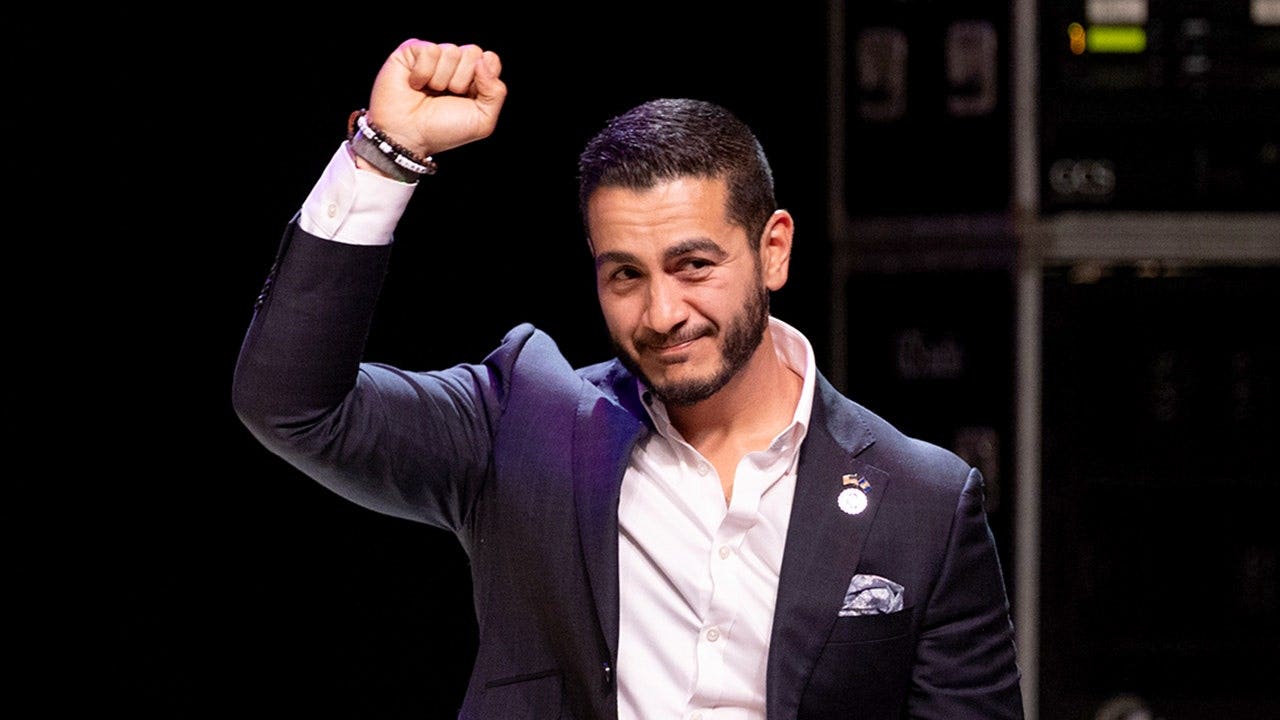
In the Senate contest, Republican Mike Rogers holds a narrow lead over Democrat Abdul El-Sayed, 51% to 47%, which is close enough to keep everyone guessing. The margin is small, but the bigger story is how locked-in the camps already are, with Republicans showing strong unity behind Rogers and Democrats rallying fast around El-Sayed after a bruising primary.
That Republican cohesion matters. Nearly all Republicans are behind Rogers, and that kind of discipline gives him a real shot to keep the race tight even in a state that often swings hard in both directions.
Democrats are fired up too, though not always in the same lane. El-Sayed is especially strong with liberal voters, Black voters, city residents, and college-educated women, but his support thins among non-DSA Democrats and independents, where Rogers can still edge ahead.
The gender split is notable, but not dramatic enough to settle anything. Men back Rogers by 11 points, while women are nearly dead even, which tells the same basic story: this race is still being fought over the middle, and the middle is restless.
Michigan’s recent presidential history hangs over both campaigns. Donald Trump carried the state in 2016 and 2024 by less than 2 points each time, while Joe Biden won in 2020 by nearly 3, a reminder that this electorate does not stay parked in one place for long.
El-Sayed is also running into a familiar problem for Democrats in a state like Michigan, where ideological suspicion can get expensive. More than half of voters worry his positions are too extreme, while Rogers takes heat for being too close to Trump, and that split shows how both sides are carrying baggage into the race.
Interest and motivation are where Democrats get a lift. El-Sayed does better among the most engaged voters, and Democrats overall are more energized than Republicans on several turnout measures, which could help if that energy actually shows up on Election Day instead of just sounding loud in August.
Inflation is the issue driving the race, and that is not a subtle signal. Plenty of voters say they are falling behind financially, and the economy is pulling hard on their decisions, with Rogers drawing support from people focused on immigration and border security while El-Sayed gets traction with voters worried about healthcare and broader political division.
There is also a foreign policy angle in the background, with Michigan voters split on U.S. military aid to the Israeli government. That divide does not just sit on the sidelines, either, because voters who support aid lean toward Rogers while those who oppose it move toward El-Sayed.
The governor’s race gives Democrats another opening. With Gretchen Whitmer term-limited, Jocelyn Benson is out front by 5 points over Republican John James, and the result sits inside the margin of error, so nobody should get too comfortable.
Benson has a broader base than El-Sayed, especially with non-DSA Democrats and independents, and that matters in a statewide race where crossover voting can decide everything. Rogers supporters are also more likely to drift toward Benson than El-Sayed supporters are to back James, which is the kind of quiet cross-current that can reshape a ballot fast.
Both gubernatorial candidates still have room to move, since plenty of voters say they could change their minds. Benson has the edge in personal favorability, while James sits slightly underwater, and that leaves the final stretch open to a lot of persuasion, a lot of noise, and a lot of last-minute second-guessing.
Michigan’s political mood is sharp, split, and anything but sleepy. The Senate fight is built around trust, ideology, and turnout, while the governor’s race has its own momentum, and both are set to test whether raw enthusiasm or simple voter fatigue ends up carrying the day.
