
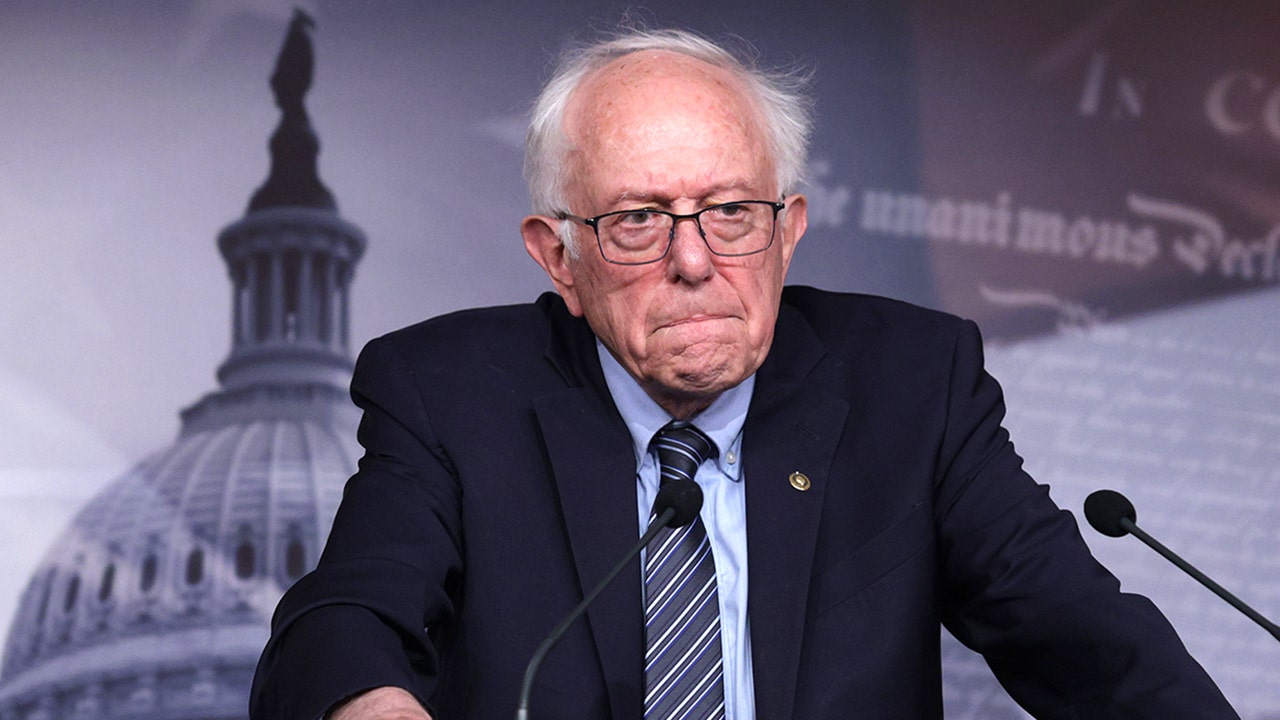
Bernie Sanders is turning up the heat on Democrats over one of the party’s messiest fault lines: big-money super PACs in primary races. He’s also aiming sharp criticism at AIPAC, arguing that outside spending has warped Democratic nominations and left the party vulnerable to Republican gains later on.
Sanders used a Sunday post on X to push a blunt message to party leaders. His view is simple and aggressive: if Democrats want cleaner primaries, they should shut super PACs out of them entirely.
“It is insane that the Democrats allow super PACs like AIPAC to spend millions in their primaries — only for those same special interests to help elect Republicans in the general election,” Sanders wrote. “My message to Democratic leaders: Ban super PACs from Democratic primaries NOW.”
He also shared an Aug. 8 letter sent to Senate Democratic Leader Chuck Schumer, House Democratic Leader Hakeem Jeffries and Democratic National Committee Chairman Ken Martin. In that note, Sanders argued that outside groups have been too comfortable spending huge sums to shape who wins the Democratic nomination.
At the center of his complaint is Michigan, where Sanders said AIPAC and allied groups spent more than $30 million in the Democratic primary to oppose Dr. Abdul El-Sayed. He added that the same network is expected to spend tens of millions more backing Republican Mike Rogers in the general election.
Sanders widened the target beyond AIPAC, saying the problem goes deeper than one organization. He pointed to corporate super PACs tied to crypto, artificial intelligence and online betting, saying they have already poured a record $517 million into the current election cycle.
“AIPAC is not the only super PAC or outside organization playing this role. Corporate super PACs — including crypto, AI and online betting special interests — have already spent a record $517 million this election cycle, shattering the record set in 2024,” Sanders wrote.
His argument is not just about scale. It is also about motive, since he says these groups are happy to influence a Democratic primary and then pivot to the Republican side if their favorite Democrat loses.
“What is particularly obscene is not only the outrageous amount of money coming into Democratic primaries from billionaire-funded super PACs, but the reality that these special interests have no particular desire to see Democrats win,” he said.
Sanders also took aim at AIPAC’s role in the broader political fight, saying it spends heavily to shape the Democratic field before backing Republicans in the general election. That is the part of the arrangement that seems to drive his frustration the most, because it turns primary politics into a cash-fueled pressure campaign.
“It is absurd that they spend tens of millions of dollars to try to determine who the Democratic nominee is and, if they fail, then proceed to support the Republican candidate in the general election.”
AIPAC, for its part, says it supports pro-Israel candidates from both parties. Its public description presents the group as a membership organization backed by individual Americans who want to strengthen the U.S.-Israel relationship.
“AIPAC is a grassroots membership organization with a PAC that supports pro-Israel Democratic and Republican candidates for Congress,” as noted on its website. “The AIPAC PAC is funded by individual American citizens who care deeply about helping elect leaders who want to strengthen the partnership between the United States and Israel.”
Sanders also revived a familiar reform push, calling again for a constitutional amendment to overturn Citizens United and for public financing of elections. He said Democrats already have the ability to keep super PACs out of their primaries, and he wants that power used without delay.
“Right now, the Democratic Party has the power to prohibit super PACs from participating in its primaries. That can be done. That must be done,” Sanders wrote. “I urge you to take action and make clear that the Democratic Party will no longer maintain this corrupt system.”
That message lines up with legislation he introduced in May alongside Rep. Summer Lee of Pennsylvania, the Abolish Super PACs Act. The proposal would cap individual contributions to super PACs at $5,000 and effectively wipe them out as they operate now.
Sanders also added a broader warning for his own party, saying Republican special interests should not be deciding Democratic outcomes. The clash leaves Democrats in a familiar spot, caught between the lure of big-money politics and the growing pressure to prove their primaries are still theirs to control.
