
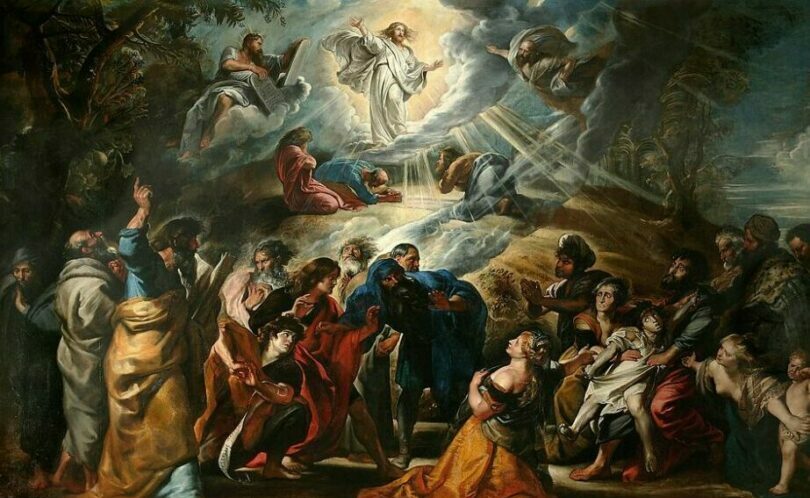
Jesus’ Transfiguration stands as one of the clearest flashes of hope in the Gospel, a brief unveiling of glory before the road to suffering and the Cross. On Mount Tabor, the disciples saw more than a miracle. They caught a glimpse of who Christ is, what He came to do, and what waits at the end of His saving work.
The scene is unforgettable. Christ’s face shines, His clothing blazes white, and the Father’s voice cuts through the moment with unmistakable authority. Moses and Elijah appear beside Him, signaling that the Law and the Prophets are not being discarded but fulfilled in Him.
That matters because the Transfiguration is not just a dramatic mountaintop experience. It is a preview of resurrection glory, a promise wrapped in light. The disciples were not given this vision to stay on the mountain forever, but to carry it into the dark stretch that followed.
The timing also carries weight. By placing this mystery in the Church’s calendar, believers are reminded that divine glory is not random or decorative. It is tied to Christ’s identity, to the testimony of heaven, and to the promise that human nature can be lifted up by grace.
The bright clothing of Jesus is especially striking in the tradition surrounding this feast. The dazzling robe points to His divinity, but it also hints at the glory to come for those united to Him. The beauty on Tabor is not a side note. It is a sign of what the resurrection will reveal in full.
There is a strong sense of fulfillment in the presence of Moses and Elijah. Both men represent the long preparation of God’s people, one through the Law and the other through the prophets. Their appearance shows that history is not drifting aimlessly, but moving toward Christ with purpose.
The Father’s declaration, “This is my beloved Son,” seals the moment with force. It is not a vague spiritual compliment. It is heaven’s own witness that Jesus is the one to hear, trust, and follow, even when the path leads down from the mountain and into pain.
The Transfiguration also speaks to the life of the Church now. Believers do not see Christ face to face in earthly glory, but faith allows that same mystery to shape the heart. Prayer, worship, and quiet contemplation become ways of climbing the mountain without leaving daily life behind.
That is why the feast has always carried more than historical memory. It calls attention to transformation, not just admiration. The same Lord who shone on Tabor is still drawing souls upward, slowly conforming them to His image through grace, discipline, and love.
The link between the Transfiguration and the resurrection is impossible to miss. What the disciples saw in part, the risen Christ later confirmed in full. The brilliance on the mountain was a forecast of victory, a glimpse of life beyond suffering and death.
Even the old liturgical traditions around the feast reflect that sense of anticipation. East and West alike treated the day as something weighty, rich, and festive. The Church has long understood that this mystery is not meant to stay locked in the past, because its meaning keeps unfolding wherever Christ is followed in faith.
There is also a quieter challenge hidden inside the feast. The apostles were overwhelmed, but they were also called to listen. That still lands today, since the real turning point is not just seeing the glory, but submitting to the Son whose glory it is.
So the Transfiguration becomes a kind of spiritual north star. It points beyond fear, beyond suffering, and beyond the limits of ordinary sight. In that blaze of light, the Church finds both comfort and command, because the same Jesus who revealed His glory on the mountain still asks to be trusted on the road below.
