
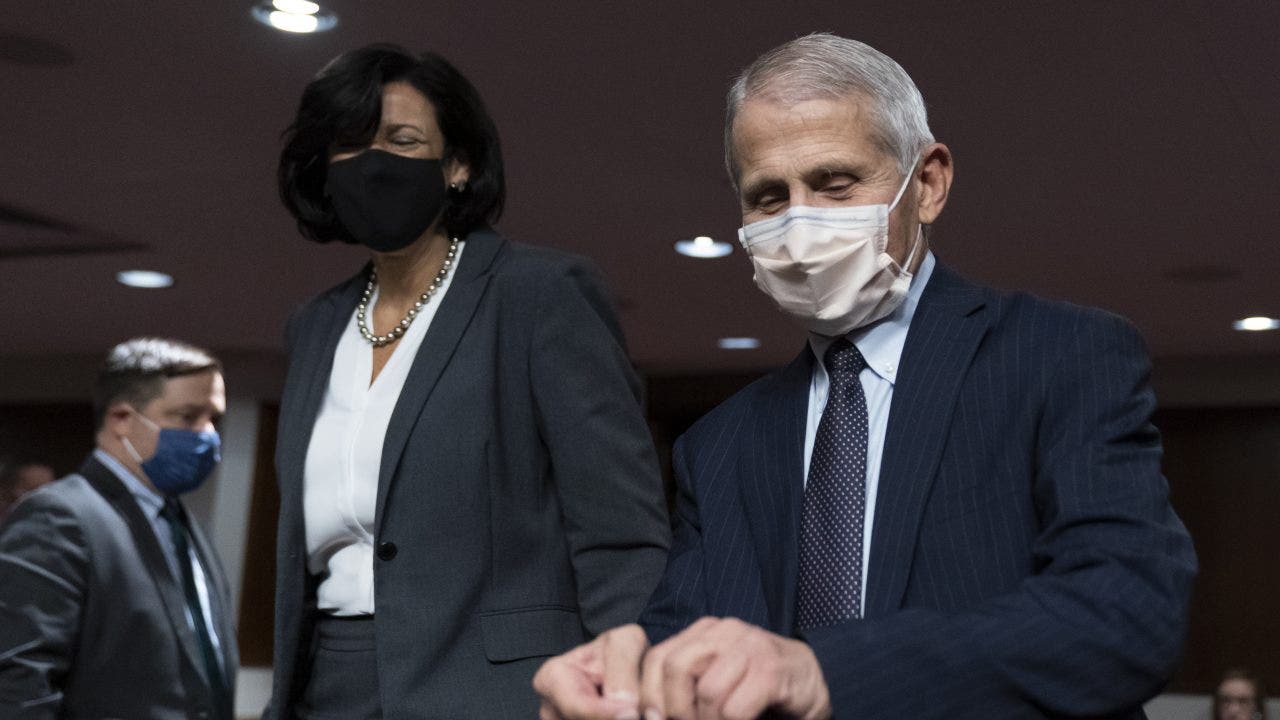
For years, Dr. Anthony Fauci was presented by much of the corporate media as the unquestioned face of America’s response to COVID-19. He appeared on television almost daily, assured Americans that they should trust “the science,” and dismissed many critics who challenged his guidance during the pandemic.
Now, years later, the image that once dominated television screens has been replaced by another—Dr. Fauci sitting before a Senate committee and repeatedly invoking the Fifth Amendment rather than answering lawmakers’ questions.
The moment stunned many Americans.
During a contentious Senate Homeland Security Committee hearing, Fauci invoked his Fifth Amendment right against self-incrimination more than 100 times as senators questioned him about his role in the government’s pandemic response, COVID-19 origins, communications with other officials, and related issues. His testimony came after the release of thousands of pages from his personal diaries, which have renewed political scrutiny of decisions made during the pandemic.
For critics who spent years questioning Fauci’s policies, the repeated refusals to answer became the biggest headline of the day.
It wasn’t simply that Fauci pleaded the Fifth.
It was that he did so over and over again.
Question after question.
The same response.
Again.
And again.
Even Americans who understand that the Fifth Amendment is a constitutional protection against self-incrimination couldn’t help but notice the unusual spectacle. Invoking the Fifth is a legal right, and attorneys often advise clients to do so regardless of guilt. Still, when a public official who spent years insisting his actions were guided entirely by science declines to answer virtually every substantive question under oath, critics argue that it inevitably raises public suspicion.
Republican lawmakers did not hide their frustration.
Sen. Rand Paul, who has clashed with Fauci for years over COVID-19 policies and research funding, argued that the American people deserve answers about decisions that affected nearly every household in the country. Other senators echoed similar concerns, saying millions of Americans lost businesses, careers, educational opportunities, and precious time with loved ones because of policies Fauci helped shape.
Those critics say accountability should accompany extraordinary government power.
During the pandemic, Fauci became one of the most influential unelected officials in modern American history. His recommendations influenced school closures, business restrictions, masking guidance, vaccine campaigns, travel policies, and countless federal decisions.
Supporters have long argued that he made difficult decisions under extraordinary circumstances using the best information available at the time.
His critics see things very differently.
They point to changing public guidance on masks, shifting explanations about COVID-19’s origins, disputes over gain-of-function research, and internal communications that have surfaced over the past several years as reasons why Congress should continue examining the government’s pandemic response.
The release of Fauci’s personal diaries has only intensified that debate, fueling renewed interest in what officials knew, when they knew it, and how major public-health decisions were made behind closed doors.
What many observers found most surprising was not simply that Fauci invoked the Fifth—it was how comprehensive his refusal to answer became.
Rather than selectively declining questions that his attorneys viewed as legally risky, he invoked the Fifth repeatedly throughout the hearing, creating an image that quickly spread across television and social media. Critics seized on the moment as symbolic of broader concerns about transparency in the federal government’s handling of the pandemic.
Whether Congress ultimately uncovers new information remains to be seen.
Whether additional investigations will follow also remains uncertain.
But one reality is difficult to ignore: the man who once confidently answered nearly every question from reporters spent much of this hearing declining to answer senators at all.
That contrast is what many Americans are talking about.
For years, Fauci urged the public to trust government experts and follow their guidance without hesitation. Now, as lawmakers seek answers about one of the most consequential public-health crises in American history, his repeated reliance on the Fifth Amendment has become a story in itself.
His supporters view it as the prudent exercise of a constitutional right under contentious political circumstances.
His critics see it as a missed opportunity to provide transparency and accountability after years of defending the government’s COVID-19 response.
That is the real problem for Fauci. Once a public figure has been accused of saying one thing in public and something else in private, every follow-up question becomes dangerous territory. If those private notes are any guide, the fear is not just embarrassment, but the possibility that further explanation could create even more trouble.
He had plenty of defenders when the pandemic was still dominating daily life, but confidence is not the same thing as trust. At the start, many people wanted a steady hand and a calm voice, and Fauci seemed to fit that role. Over time, though, the gap between his certainty and the public’s experience kept getting wider, until the whole act started to crack.
There was also the unmistakable tone in the diary entry itself. The language was raw, heated, and deeply personal, which is exactly why it matters. It shows a man who was not just defending his policy positions, but wrestling with anger, fear, and a sense of siege that bled into how he viewed everything around him.
That is where the Trump fixation comes in, and it is impossible to ignore. The diary reads like a window into a mindset that had fully merged public health with partisan panic, and that is a bad mix no matter how you slice it. When every disagreement gets filtered through a political meltdown, judgment starts to warp fast.
Public officials are supposed to stay above that kind of spiral, especially when their decisions affect millions of people. Instead, Fauci’s private words suggest that he was deeply absorbed in the same tribal noise that was consuming cable panels and social media feeds. That does not exactly scream cool-headed scientific leadership.
The bigger story, though, is not only Fauci. It is the way legacy media keeps building a protective shell around certain figures while going after others with full force. Some stories get treated like national emergencies, while others are softened, delayed, or quietly pushed aside until the moment passes.
That pattern has been obvious for years. From Hillary Clinton’s server mess to the Russia hoax fever dream, from the Hunter Biden laptop circus to the endless legal dragnet around Trump, the media’s instincts have been pretty easy to read. If a story hurts Democrats or helps Trump, the coverage suddenly gets cloudy, selective, or suspiciously soft.
That is why the Fauci diaries hit a nerve. They do not just expose one man’s ego or frustration, they also test the ability of the usual gatekeepers to bury something inconvenient. And right now, that shield is wobbling more than it used to, because too many people have gotten wise to the game.
New media keeps punching holes in the old media wall, and those cracks are getting harder to patch. Stories that once would have vanished now keep circulating, growing legs, and reaching people who are tired of being talked down to. The old information monopoly is not gone, but it is definitely sweating.
Fauci may have thought his private diary would stay private enough to avoid a full blast of scrutiny. Instead, it has become another headache for the people who spent years pretending his every word was above challenge. That is a nasty turn for anyone who depended on a polished image to keep the larger story from catching up.
And that is what makes this whole mess so revealing. The diaries do not just reflect one man’s inner turmoil, they expose how fragile the media machine really is when an inconvenient truth comes barreling through the front door. For once, the shield is taking hits, and it is not clear it can keep absorbing them forever.
