
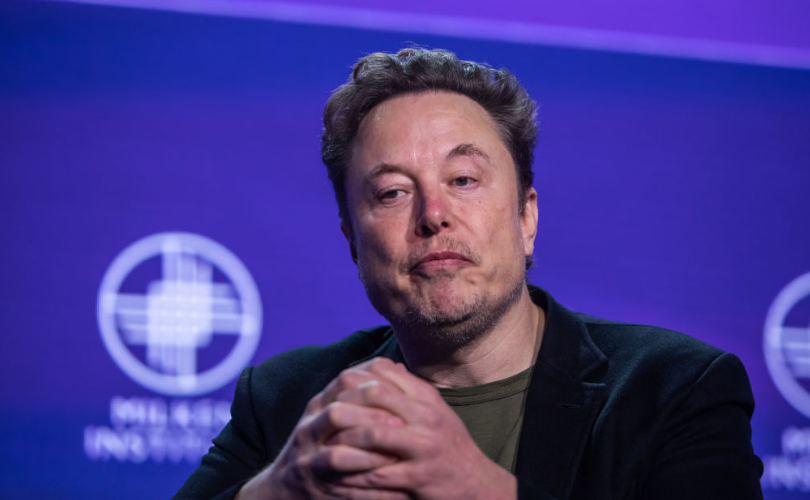
Elon Musk has tossed a very loud idea into the culture-war blender: funding Mel Gibson with $100 million for a version of Homer’s Odyssey that aims for historical accuracy instead of modern flash. The conversation blew up fast because it mixed big money, big names, and a familiar gripe about Hollywood getting ancient history wrong.
The spark came from an X user who urged Musk to bankroll a Gibson-directed adaptation with painstakingly accurate ships, armor, weapons, and casting, plus dialogue pulled straight from the poem in Homeric Greek. Musk fired back, “I’m down.” That one-line reply was enough to set off a wave of speculation about whether he was teasing, serious, or just enjoying the chaos.
Things got even murkier when Musk later reacted to a scene from the Odyssey made by his AI tool Grok Imagine. He then said, “Before this year ends, Grok Imagine will make a full-length movie of The Odyssey that is historically accurate and true to the art of Homer.” That raised a new question: was he talking about backing Gibson, building his own version, or doing a little bit of both?
https://x.com/elonmusk/status/2079756091232227665
The whole dust-up also landed squarely in the middle of the backlash aimed at Christopher Nolan’s The Odyssey adaptation. Critics have blasted the film over what they see as woke DEI casting and for bending history in ways that do not fit the story’s ancient setting. One point of attack has been the inclusion of gender-confused actress Ellen “Elliot” Page, which has only added more fuel to the argument.
For a lot of viewers, the bigger issue is not just casting, but the tone Hollywood keeps bringing to old stories. People who want these epics to feel authentic have complained about armor, weapons, and other visual details that look more like studio costume design than anything from the ancient world. When a story is supposed to feel mythic and timeless, sloppy accuracy can knock it right off the pedestal.
That is part of why Gibson keeps getting pulled into this conversation. His films have a reputation for taking historical and linguistic detail seriously, even when the subject matter is brutal or politically charged. In The Passion of the Christ, actors speak in Aramaic and Latin, and in Apocalypto, the cast performs in Mayan, which gave both movies a strong sense of place.
Gibson’s style also appeals to people who want filmmakers to stop sanding off the rough edges of history. He has built a career on making faith and period storytelling feel immediate instead of polished for modern sensitivities. That is a big reason a hypothetical Gibson Odyssey has already become more than just another internet fantasy.
Of course, none of this means a deal is actually on the table in any serious sense. Musk’s comment could end up being another high-profile post that lives and dies inside the feed, where attention is cheap and promises can be slippery. Still, when someone with that level of reach says he is willing to write a giant check, people tend to listen.
There is also the practical question of whether Gibson would even want the project. He recently wrapped filming on The Resurrection of the Christ, the long-awaited follow-up to The Passion of the Christ, and that alone is a massive undertaking. The sequel is set to arrive in two parts on May 6, 2027, and May 25, 2028, which means his calendar is already packed with a story that has huge expectations attached.
Still, the idea of an old-school, historically grounded Odyssey keeps pulling attention because it hits several nerves at once. It taps into frustration with modern movie-making, admiration for directors who lean into authenticity, and the easy spectacle of watching Musk casually reshape entertainment conversations from behind a keyboard. In an age where every tweet can become a headline, that is often enough to turn a throwaway post into a full-blown media event.
