
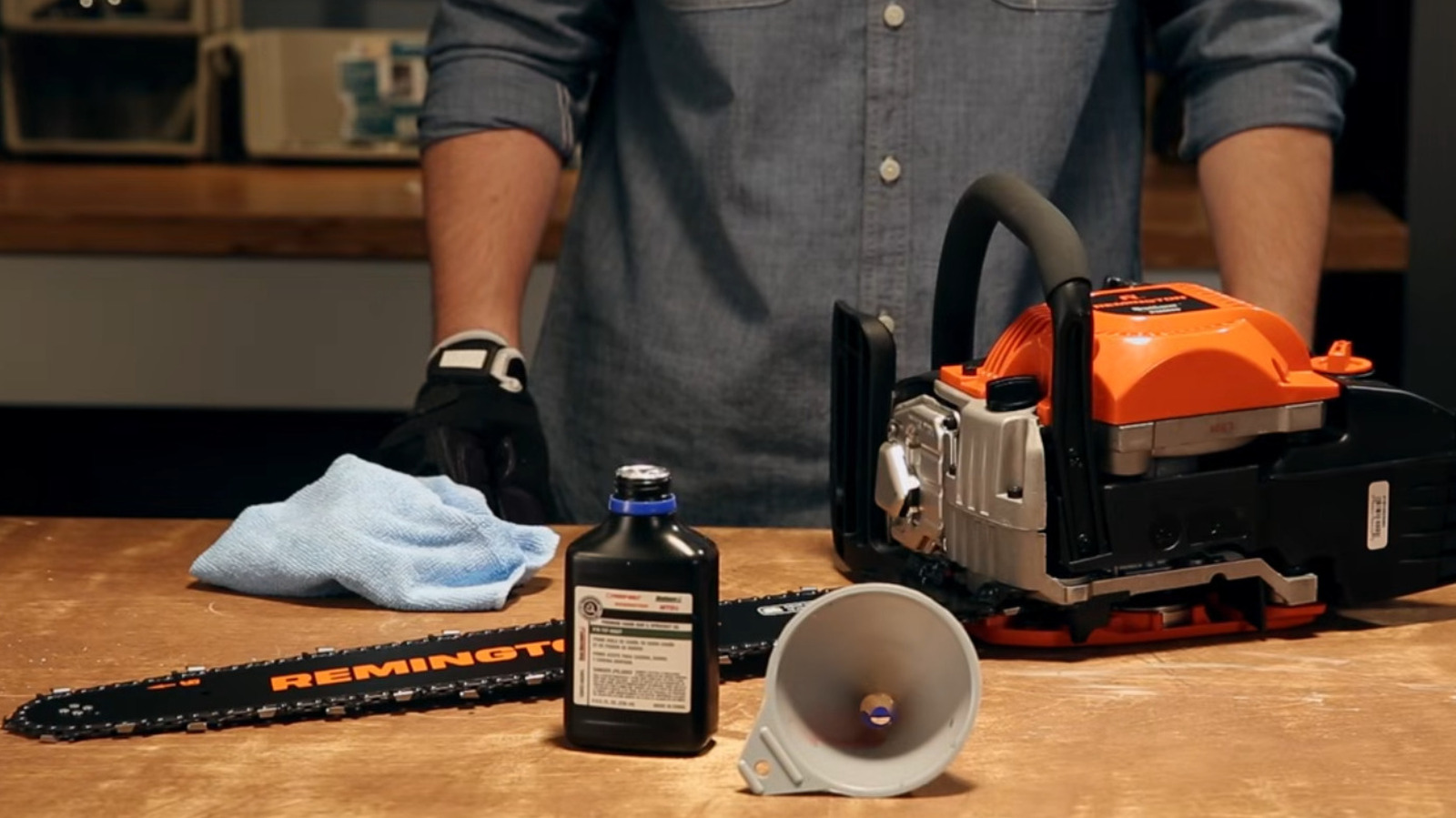
Chainsaw bar oil and motor oil may both be lubricants, but they are built for very different jobs. Bar oil is made to cling to a fast-moving chain, stay put under heavy vibration, and protect the bar and chain from heat, friction, and grime. Motor oil, on the other hand, is meant for a sealed engine, which is why it behaves so differently once it hits a chainsaw.
The biggest difference starts with thickness and stickiness. Bar oil is tackier so it does not sling off the chain the moment the saw starts working, and that matters a lot when the chain is tearing through wood at speed. That extra cling helps keep everything moving smoothly while also reducing wear on the bar, chain, and sprocket.
Motor oil just is not designed for that kind of open-air punishment. It can fling off too easily, lose effectiveness faster, and leave the saw working harder than it should. When that happens, the tool runs hotter, picks up more wear, and can need more upkeep than it otherwise would.
There is also the mess factor, and chainsaws are already messy enough without using the wrong lubricant. Bar oil helps carry away sawdust and debris as the chain moves, which keeps the cutting action cleaner and more controlled. Motor oil does not handle that job as well, and used oil can bring along contaminants that are bad news for both the saw and the environment.
That does not mean every manufacturer draws the line in exactly the same place. Some brands say to stick with proper bar and chain oil no matter what, while others note that certain motor oils can be used in a pinch. Even then, the guidance often depends on the season, the oil grade, and the type of cutting being done.
Vegetable oil comes up a lot in this conversation too, and for good reason. It is biodegradable and easier on the environment, which makes it sound like a smart swap at first glance. But plain vegetable oil is thinner than purpose-built bar oil and can struggle in cold weather or under heavy load.
There are chainsaw oils made from vegetable-based formulas, and those are a different story. They are designed to behave more like real bar oil and can offer better lubrication than straight cooking oil or other improvised substitutes. Even so, they may cost more and sometimes need additives to stay stable over time.
The colder it gets, the more the differences show up. Oils that seem fine in mild weather can thicken, separate, or stop flowing the way they should when temperatures drop. That is one reason some manuals point users toward different grades for summer and winter work.
For anyone using a chainsaw regularly, the safest move is still to check the owner’s manual before reaching for a substitute. The saw’s design, the kind of wood being cut, and the season all play into what will work best. In the end, the right oil is not just about keeping the chain wet, it is about keeping the whole tool cutting cleanly and lasting longer.
