
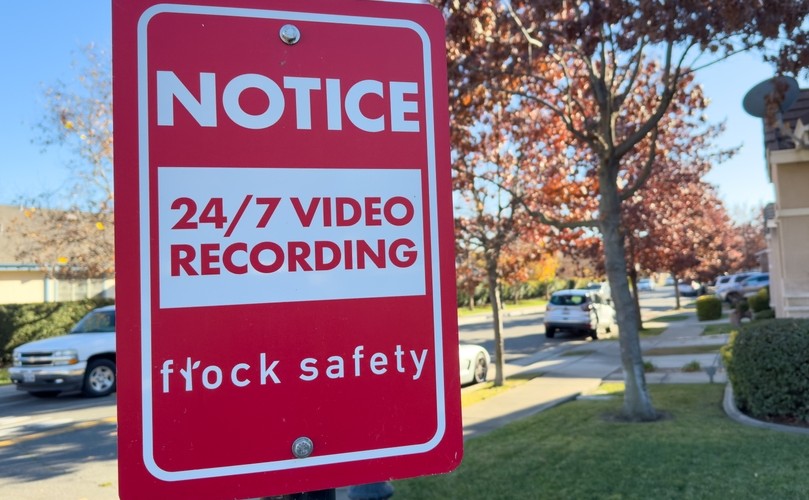
Tucker Carlson is sounding the alarm over Flock surveillance cameras, arguing that a sprawling web of license plate readers and related camera systems is quietly gutting privacy in towns and cities across the country. He says the pitch of “public safety” masks something much darker, with ordinary Americans increasingly watched, tracked, and stored in databases they never agreed to enter.
On a recent podcast, Carlson described the Flock network as “a North Korean setup that we’re building here in the United States.” He said the camera rollout feels less like local policing and more like a system built to keep tabs on everyday movement, turning people into suspects simply for living their lives in public.
At the center of the concern is who controls the data. Carlson pointed out that the information gathered by Flock cameras is owned by the company, not by the government, which means it can sit outside normal public-records rules and slip away from FOIA requests. That setup, he warned, gives law enforcement, bureaucrats, and company employees access to a huge amount of personal movement data without much accountability.
He also said the problem gets worse when facial recognition enters the picture. What starts as a plate reader can quickly become a much broader surveillance dragnet, tying together vehicle information, location history, and identity in ways that make privacy harder to defend and easier to lose.
Carlson compared the trend to being exposed inside a prison camp, stripped of basic privacy and left visible at every turn. He argued that when people cannot go anywhere without being watched, they are no longer being treated like free citizens. In his view, that is not protection, it is control.
He pushed back hard on the idea that more cameras automatically mean more safety. Carlson noted that prisons are packed with cameras and still remain dangerous places, which undercuts the claim that surveillance alone prevents crime or keeps people secure.
The scale of the system is already enormous. There are now more than 116,000 cameras spread mostly through intersections in urban and suburban areas, giving the network a huge footprint across daily American life. Carlson and investigative journalist Benn Jordan also raised concerns that the technology could grow even more invasive, including plans for drones that stay in the air and keep watch for long periods.
Jordan warned that the technology has obvious uses beyond ordinary crime fighting. He said the same kind of system could be turned against people during a future emergency, where public-health rules, emergency orders, or other restrictions might be enforced through automated tracking and penalties rather than human judgment.
That fear is not abstract. Jordan described a private Jewish Community Center near Atlanta that had its own cameras, only to learn the feed was being viewed through the Flock system after it was shared with local police. According to Jordan, Flock employees, not police, accessed those cameras more than 1,000 times, including views of sensitive areas like the pool, daycare center, and children’s gymnastics room.
Jordan said no one was arrested and no one had to answer for it, which is exactly why so many people are uneasy about these systems. Once private spaces are tied into broad surveillance networks, the line between protection and intrusion gets very thin, and the public often finds out only after the damage is already done.
Online critics have even built tools to track the spread of these cameras. A site called “deflock” maps automated license plate readers across the country and explains that the cameras capture far more than many drivers realize, including vehicle details and movement patterns that can be stored and shared widely.
Its description is blunt about the reach of the system, saying the data follows people far beyond the town where it was collected and is often shared with “thousands of other agencies nationwide (secretly).” That kind of sharing, critics say, leaves regular people with almost no control over where their information goes or how long it stays in circulation.
Concerns about abuse are already showing up in real life, not just in theory. In Houston, a police sergeant reportedly resigned before an internal affairs probe could move forward after allegations that he used the Flock system to track a female colleague, a reminder that surveillance tools can be misused just as easily as they can be sold as safeguards.
https://x.com/TuckerCarlson/status/2077562851485434228
