
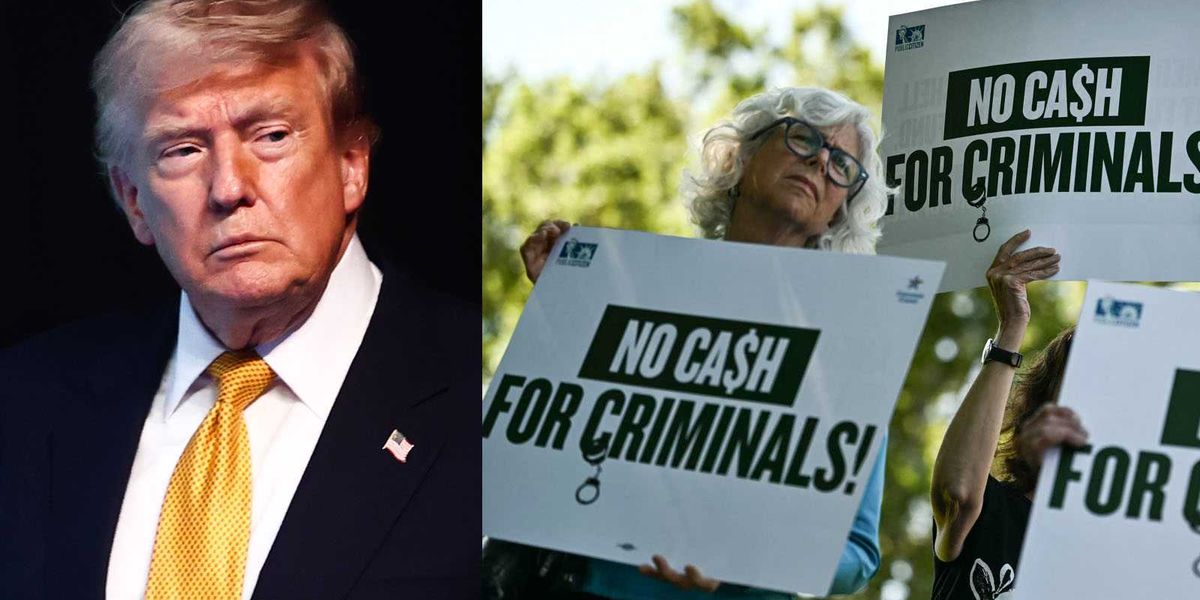
Here’s the tight version of what matters: a federal judge has put the brakes on a proposed settlement tied to Trump’s anti-weaponization fund, the court’s tone was sharp, and the dispute centers on whether the deal properly resolves claims tied to the IRS and the broader fight over government power. The case now has a new layer of uncertainty, with the judge signaling real skepticism about how the agreement was reached and what it would actually do.
The ruling lands in the middle of a much bigger argument over whether federal agencies were used as political tools. Trump’s team has long framed the issue as a fight against selective enforcement and abusive bureaucracy, while critics see the latest settlement as an attempt to paper over deeper legal and political problems. That tension is exactly why the judge’s response matters so much.
At the center of the controversy is the anti-weaponization fund, a mechanism meant to support legal efforts connected to claims of government overreach. The settlement was supposed to bring some order to the dispute, but instead it drew fire from the bench and opened the door to more questions about fairness, procedure, and public accountability.
Federal judges do not usually mince words when they believe something looks off, and this was one of those moments. The court’s skepticism suggests the agreement may not have been structured in a way that fully addressed the legal issues at stake, especially if the deal appeared to sidestep unresolved concerns about the IRS and the underlying lawsuit. That kind of pushback can slow everything down fast.
For supporters of Trump, the ruling will likely feel like another example of a system that keeps dragging its feet whenever the former president or his allies are involved. They argue that the whole point of the anti-weaponization fight is to expose abuses that ordinary Americans would never tolerate if the target were someone else. From that angle, any effort to block the settlement looks less like careful judging and more like another round of institutional resistance.
On the other side, the court’s move may be read as a reminder that big political fights still have to survive basic legal scrutiny. Even when a case touches on national debates about justice and power, the paperwork, the process, and the terms of a settlement still have to hold up. If a judge thinks they do not, the deal can unravel quickly, no matter how much momentum is behind it.
The IRS angle adds even more heat to the story. Whenever the tax agency gets pulled into a political dispute, the stakes rise because people immediately start asking whether enforcement was neutral or targeted. That question has followed the anti-weaponization debate from the start, and this ruling keeps it front and center instead of letting it fade into the background.
What happens next will likely depend on how the parties respond to the court’s concerns. They could try to rewrite the settlement, defend it more aggressively, or let the whole thing turn into a longer legal brawl. None of those paths is simple, and all of them keep the spotlight on a case that is now bigger than one agreement or one judge’s criticism.
The broader political backdrop makes this even more combustible. Every time a court steps into a Trump-related fight, both sides treat it like proof of everything they already believed. That is why this ruling is not just about one settlement, but about the ongoing struggle over who gets to define fairness, power, and accountability inside the federal government.
