
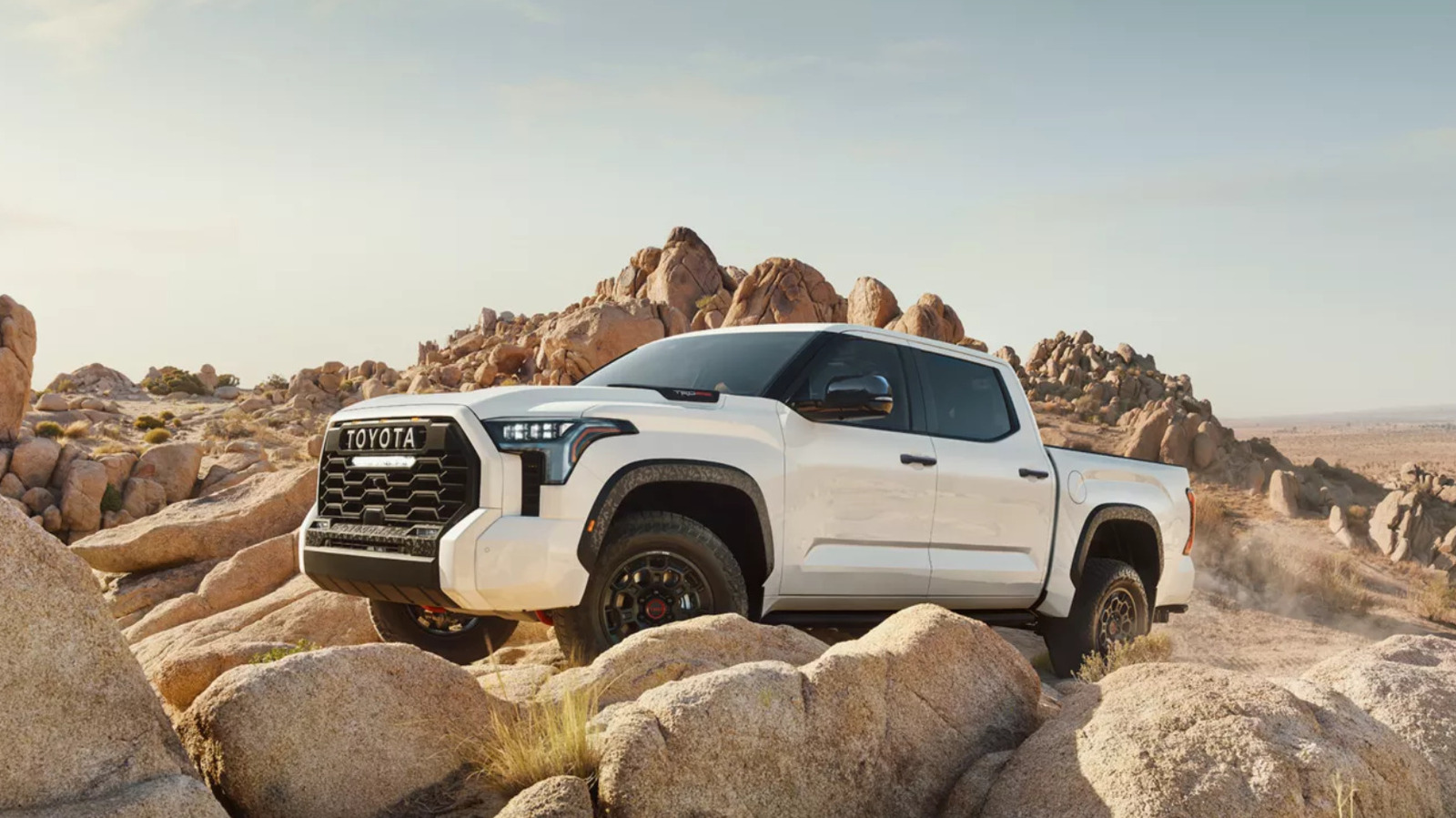
Ram 1500 and Toyota Tundra buyers are shopping in a crowded, pricey corner of the truck market, where every dollar has to earn its keep. Both pickups land in a similar starting range, but they take different paths to get there, with one leaning harder into power and comfort while the other bets on practicality and long-term durability.
The Ram 1500 brings a lot of muscle to the fight. For 2026, it offers a mild hybrid V6, a returning Hemi V8, and a twin-turbo Hurricane inline-six, giving shoppers a wide spread of choices depending on how much punch they want. The Hurricane setup is the standout here, pushing the Ram into seriously quick territory for a full-size pickup.
The Toyota Tundra keeps things simpler under the hood with its 3.4-liter twin-turbo i-Force V6. The base version is no slouch, and the hybrid i-Force Max trims add more power for drivers who want extra speed without stepping into a bigger engine lineup. Even so, the Ram still comes out ahead if the goal is raw horsepower and straight-line performance.
That gap shows up again when the trucks are asked to tow. The Ram 1500 can handle up to 11,610 pounds when configured with the Hurricane I6, which is plenty for a camper, trailer, or weekend boat run. The Tundra’s rear-wheel-drive SR 5 nudges ahead at 12,000 pounds, so if towing is the only thing on your mind, Toyota deserves a hard look.
Payload is where the Ram starts to pull away more clearly. The top-rated 1500 Tradesman Quad Cab can carry up to 2,370 pounds in the bed, while the strongest Tundra payload figure tops out at 1,940 pounds. That difference matters if you regularly haul tools, lumber, mulch, or anything else that turns a truck bed into a job site.
The Tundra does fight back with flexibility. It offers a broader spread of bed lengths, including 65.6, 77.6, and 96.5-inch options, while the Ram 1500 sticks with 67.4 and 76.3-inch beds. If your day-to-day life depends on matching the truck to specific cargo or space needs, that extra range can make a difference.
Fuel economy gives the Ram another quiet win. In two-wheel-drive form with the base V6, the Ram 1500 returns an EPA-estimated 20 mpg in the city and 25 mpg on the highway, which works out to a combined 22 mpg. The comparable Tundra rear-wheel-drive setup checks in at 18 mpg city, 23 mpg highway, and 20 mpg combined, so Toyota trails a bit on efficiency.
Inside the cabin, the Ram is the one trying to feel a little upscale. It has earned praise for a roomy, comfortable interior, and higher trims layer in heated and ventilated seats, plus a panoramic sunroof that makes long drives a lot less punishing. The cabin also offers useful storage, which helps when the truck doubles as a family hauler or road-trip machine.
The Tundra takes a more utility-first approach. It still gives passengers good legroom and smart storage, including a center-console bin and an under-seat box, but the vibe is more practical than plush. That can be a plus for buyers who care more about rugged usefulness than soft-touch flourishes.
Longevity is where the Toyota name keeps its grip. The Tundra has a reputation for lasting a long time, and that kind of confidence counts when you plan to keep a truck for years instead of flipping it fast. The Ram 1500 counters with stronger power, better mileage, a roomier-feeling cabin, and higher payload numbers, so the better buy really depends on whether you want a smoother daily driver or a more traditional work-ready truck.
