
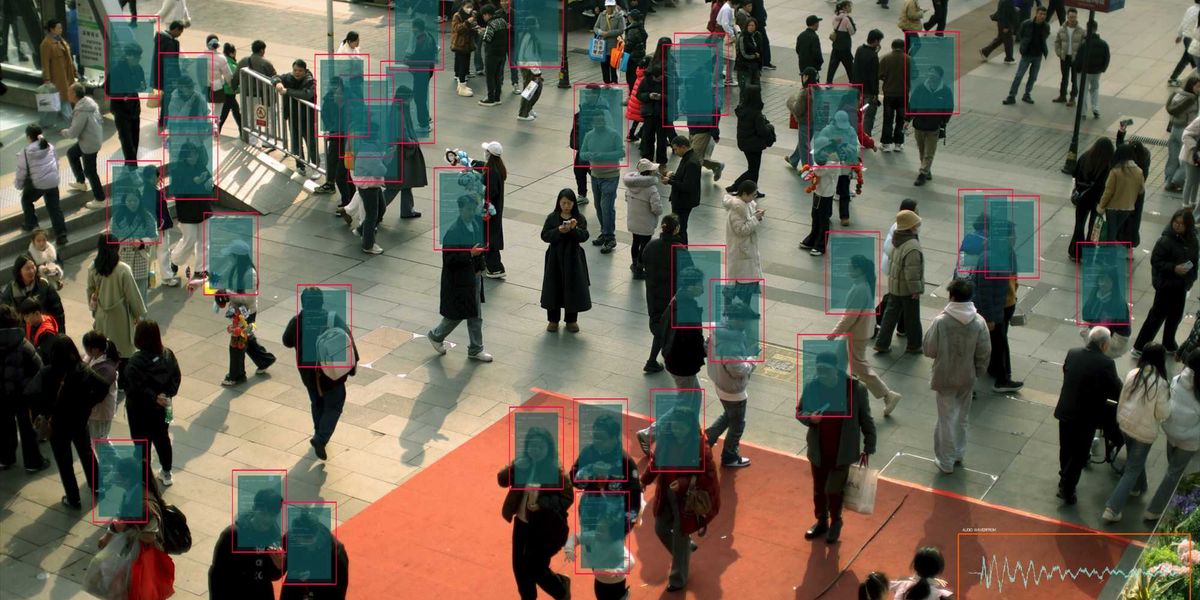
China’s latest five‑year plan reads like an engineering playbook for a tech‑first civilization: it elevates “AI Plus” at the center of national strategy, pairs massive investment with rapid deployment, and tightens rules so algorithms shape public life as much as industry. The details—huge R&D spending, patent counts, robot installations, and new rules for generative systems—illustrate not only scale but an active choice about how technology should fit into society. This piece follows those facts and asks what kind of civilization is being built by engineering so deliberately at national scale.
The 15th five‑year plan frames the future as an engineering problem and treats state direction as normal practice. Language like “rejuvenation” is repeated with the force of an official refrain, while new priorities single out “AI Plus”, swarm intelligence, embodied AI, and intelligent agents as strategic goals. The plan functions as a metronome for development, signaling where investment and policy will push people and industry next.
On the numbers, China is pouring resources into technology at a staggering clip. R&D spending topped 3.93 trillion yuan in 2025, roughly 2.8 percent of GDP, and the country holds millions of valid invention patents. Industrial robotics installations surged to 295,000 in a single year, representing more than half of new robot deployments worldwide, and national research bodies are placing at the top of global institutional rankings.
At the same time, global indices now put China among the innovation leaders, and metrics show the performance gap in AI models narrowing against American counterparts. China’s supercomputers now hold the top global ranking, a visible sign of infrastructure strength even as finer benchmarks for AI workloads tell a more complex story. These indicators describe a condition that already exists: rapid development plus concentrated deployment.
That raises the central question: what kind of civilization produces these numbers, and what will those numbers, in turn, make possible? The puzzle is older than any single plan. It goes back to debates over how to import modern tools without losing a civilization’s distinctive order, a dilemma that has been posed in different forms across Chinese history.
Writer Dan Wang calls China an “engineering state,” contrasting it with America’s “lawyerly society.” Where a lawyerly society treats problems as disputes to be adjudicated, an engineering state treats them as systems to be optimized and scaled. The result is a bias toward building infrastructure and products fast enough that questions about their desirability are answered by the fact of their existence.
The social side of that engineering shows up in everyday figures. By late 2024 China had about 1.1 billion internet users, more than a billion online payment accounts, and 974 million online shoppers. Older citizens have embraced e‑commerce in large numbers, and short‑video platforms have become major retail channels with a large percentage of viewers reporting purchases after watching.
Those habits compress many social acts into one continuous interface: entertainment, advertising, recommendation, checkout, and social proof collapse into a single feed. Commerce becomes ambient, and the feed becomes a way of life—technology shaping routines as much as meeting existing demand.
Philosophers have noted that technology is never culturally neutral, and Chinese policy reflects that view. Beijing has built a governance architecture for AI that looks different from approaches centered on permissionless innovation followed by belated regulation. Platforms are required to promote “mainstream values” and “positive energy,” while rules for generative AI emphasize legal data sources, accuracy, and safeguards against harmful outputs. 2025 labeling rules mandate disclosure of AI‑generated content.
The historical thread runs through these choices. Reformers since the Self‑Strengthening Movement have wrestled with how much modern power to adopt without rewriting the civilizational order that receives it. Each era rephrases the dilemma: how much can be modernized technically while preserving the civilizational frame that absorbs those tools?
Practically, China has proved extraordinarily effective at turning research into factories, supply chains, and everyday interfaces. Shenzhen production sites run models that tune manufacturing parameters dozens of times an hour; robot counts outpace other nations; and open‑weight models such as DeepSeek V4 push low‑cost, deployable intelligence into the center of industrial and commercial ecosystems.
Still, gaps remain. The United States continues to lead on frontier AI models, holds higher‑impact patents, and maintains dominant data‑center infrastructure. China’s share of R&D devoted to basic research has grown but remains a smaller piece of the pie. Supercomputers top certain lists but rank lower on AI benchmarks and run on domestic chips that are not quite on the global cutting edge. The gap between “registered users” and “actual users” of generative AI—figures that point to different levels of engagement—highlights the distance between infrastructure and everyday habit.
The most plausible near future is one where China socializes 21st‑century technologies most completely, embedding them into schools, factories, transport, shopping, and the texture of regulation and moral instruction. In doing so, it will reshape what ordinary life means by making many things optimizable and programmable; whether that leaves room for dimensions that resist optimization is an older question that no plan can fully answer.
