
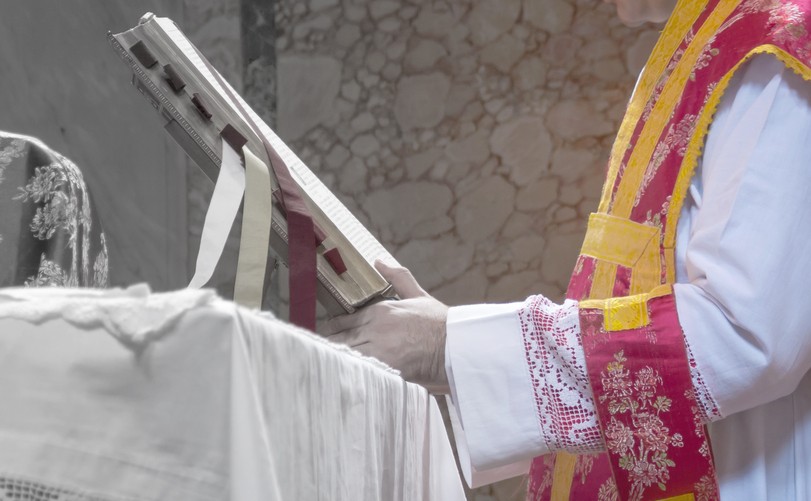
The Diocese of Camden has chosen not to renew the indult that allowed a Traditional Latin Mass community to meet in Northfield, New Jersey, ending an established provision and prompting questions about pastoral priorities, liturgical continuity, and how the local church will accommodate worshippers attached to the older rite.
Bishop Joseph Andrew Williams recently decided not to extend the special permission that had been in place for a Traditional Latin Mass in Northfield. That move means the TLM community will no longer have diocesan authorization to celebrate under the previous provision that granted the extraordinary form a recognized place in the parish schedule. The decision is administrative, but it carries clear effects for those who attend and for the priests who escort that liturgical tradition.
For many Catholics, the Traditional Latin Mass is more than a style of worship; it is a lived spiritual habit and a distinct expression of reverence and continuity with the Church’s past. Those attached to the extraordinary form often cite its solemnity, continuity with older liturgical texts, and the way it shapes prayer and devotion. Losing a local indult can feel like a sudden rupture in routine and sacramental life, especially for communities that have built stable schedules, ministries, and friendships around the Mass.
Diocesan leaders who decline to renew an indult usually cite pastoral reasons, scheduling conflicts, priest availability, or a desire to foster unity under the ordinary form. Bishops must balance many responsibilities: staffing parishes, overseeing formation, and ensuring that liturgies conform to diocesan norms. From a governance angle, refusing renewal is within a bishop’s canonical authority and reflects his judgment about what best serves the broader diocesan pastoral plan.
The practical fallout is immediate for worshippers and celebrants. Regular attendees face the choice of traveling farther to find a TLM, shifting to celebrations in the ordinary form, or adapting to whatever new arrangement the diocese offers. Priests who served the indult Mass must also adjust their schedules and ministries, and parish administrators have to rework room assignments and liturgical calendars. These transitions can strain relationships if they feel sudden or poorly explained.
Responses from the faithful typically range from disappointment to organized appeals for accommodation. Some parishioners will seek dialogue with diocesan officials to request alternative provisions, consolidated schedules, or the invitation of visiting priests who can celebrate the older rite. Others will accept the decision and adapt their devotional life accordingly, embracing different forms of the Mass while preserving personal devotions at home or in small groups.
Looking at the broader picture, decisions about the Traditional Latin Mass intersect with ongoing questions about liturgical identity, formation, and unity. Bishops must weigh the pastoral needs of a diverse flock against the practical limits of clergy resources and diocesan priorities. At the same time, communities that find their rite curtailed often redouble efforts to maintain catechesis, choral traditions, and spiritual practice so that continuity survives beyond the liturgical schedule.
For those directly affected in Northfield, the immediate next steps will be clarifying timelines, communicating alternatives, and offering pastoral care for parishioners who feel dislocated. The diocese can respond by providing clear guidance, suggesting nearby options, or exploring creative solutions that respect both diocesan oversight and the spiritual attachments of the faithful. Whatever follows, the change underscores how liturgical decisions can touch ordinary parish life in very personal ways.
