
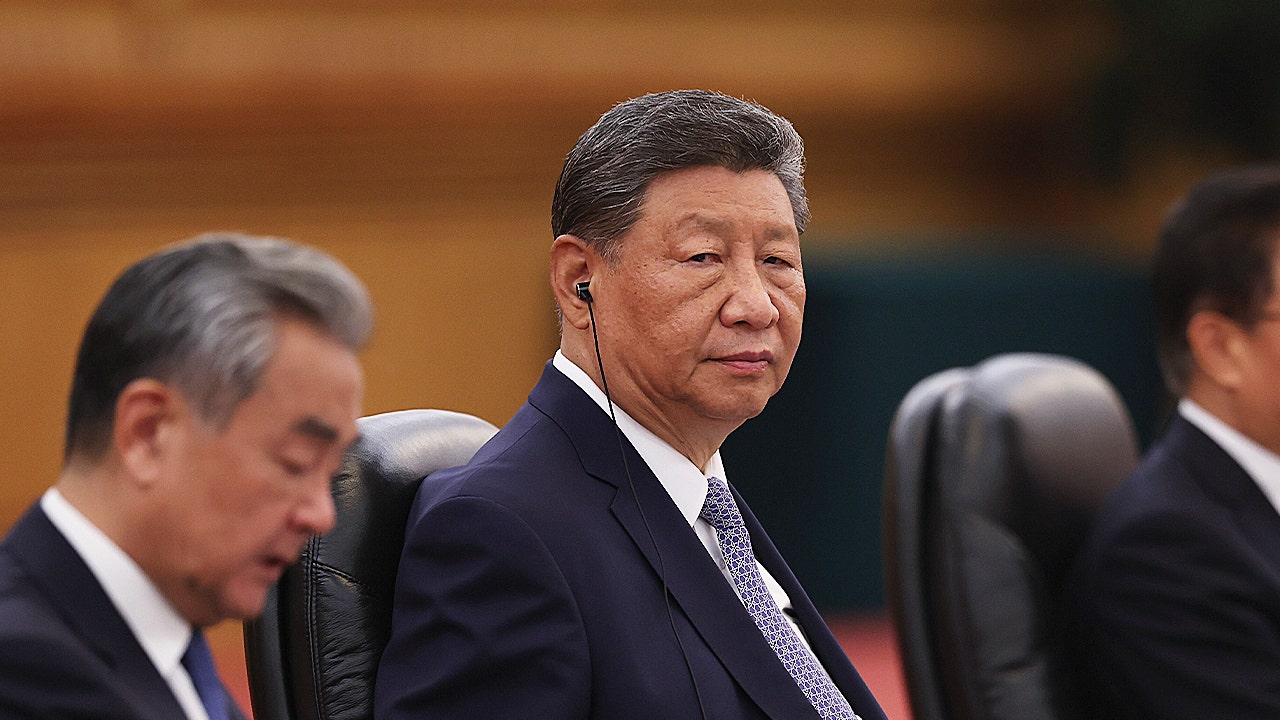
The Chinese Communist Party has moved from repression to legalized cultural erasure, and this article lays out how a new law, its extraterritorial reach, and chilling real-world incidents show the threat to minorities, dissidents, and free societies worldwide. I explain what the Law on Promoting Ethnic Unity and Progress does in practice, how Article 63 weaponizes Beijing beyond its borders, and why democratic governments must treat this as a security and human rights emergency. Personal stories — a sister abducted after someone spoke out, and a U.S. citizen detained overseas — reveal the law’s human cost and the urgency of a firm response.
The CCP’s appetite for control has always been broad, but under Xi Jinping it has grown ravenous. The new law passed on July 1, 2026, cloaks coercion in euphemism while giving officials sweeping authority to erase distinct cultures and beliefs. What looks like a unity push is a legal blueprint to flatten identities and impose mandatory loyalty to the state.
The consequences are not hypothetical. The law criminalizes practices and loyalties that fall outside Beijing’s box. For Uyghurs, Tibetans, Southern Mongolians, Hong Kongers, Falun Gong followers, and independent faith groups, the result is systematic elimination of language, religion, and traditional life. Education in mother tongue is being replaced by state-mandated Mandarin, and cultural practices are being recast as subversion.
The reform goes further by rewriting behavior into criminality. Parents are forced to teach children to “love the CCP,” social incentives reward reporting on neighbors, and refusal to conform can be punished. For Uyghur girls, refusing to intermarry with Han Chinese can be treated as a criminal act. These are not isolated policies, they are a coordinated program to absorb diverse peoples into a single, monitored identity.
PENCE COMMENDS TRUMP FOR WINNING FREEDOM OF BEIJING’S ZION CHURCH PASTOR EZRA JIN FROM CHINESE DETENTION
Article 63 is where the danger turns global, asserting that “Organizations and individuals outside the territory of the P.R.C.” who undermine Beijing’s definition of ethnic unity can be pursued. That sentence hands Chinese authorities a claim to reach beyond borders, to freeze assets, to pressure foreign governments, and to intimidate citizens abroad. It transforms activism, scholarship, and journalism into potential targets of transnational repression.
We have already seen the muscle behind this claim. Three months ago, on March 30, my husband Abdulhakim Idris, a U.S. citizen and executive director of the Center for Uyghur Studies, was detained in Malaysia. He was there on a lawful academic trip to launch a Malay-language edition of his book Menace: China’s Colonization of the Islamic World and Uyghur Genocide. Under intense pressure, Malaysian authorities seized him, held him nearly 22 hours in an airport cell with limited food and water, stripped him of his American passport, and forced him onto a plane back to the United States under escort.
The tactic is clear: build pretexts to punish dissidents, then normalize cross-border coercion. If Article 63 is accepted without pushback, countries that value free speech and due process will face more of these incidents. Academia, journalism, and human rights work will operate under a growing legal shadow that aims to silence criticism globally and to export Beijing’s censorship into democracies.
This is not an abstract policy debate. In September 2018, six days after I spoke on a panel in Washington exposing China’s concentration camps, the CCP retaliated by abducting my sister, Dr. Gulshan Abbas. A retired medical professional who never committed a crime, she was sentenced after a sham trial on fabricated charges. She had just turned sixty-four two weeks ago, and my family has spent nearly eight years counting the days of her wrongful detention as a direct consequence of speaking out.
The law’s architects seek to make such reprisals routine and legally defensible. International bodies and rights experts have warned this breaches core principles of sovereignty and human rights, but words alone will not stop forced disappearances or cross-border intimidation. Democratic governments must pair condemnation with concrete actions to protect citizens, deny extraterritorial claims any force, and impose costs on authorities that weaponize law to erase people and ideas.
Silence is not an option when a legal framework grants a regime the power to hunt critics anywhere. The law is already changing lives, families, and careers; it is also testing whether free nations will defend the basic liberties that make them free. Act now or watch Beijing normalize a template that suppresses dissent at home and exports repression abroad.
