
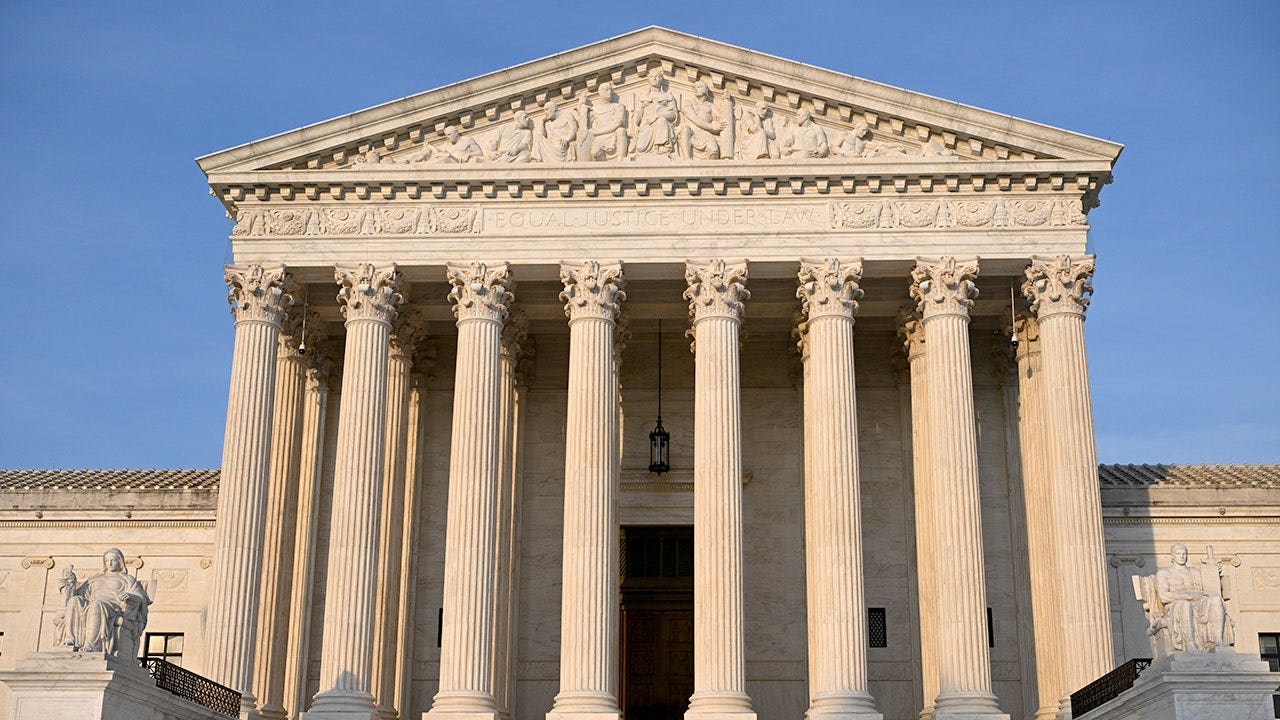
Constitutional law classrooms can be lively, even joyful, and the Supreme Court’s steady pace matters more than viral court drama; this piece argues that measured judicial change protects the republic, highlights recent term trends and key decisions, and urges calm in the face of overheated commentary.
Teaching Constitutional Law tends to be energizing, with exceptions like the “Dormant Commerce Clause” and certain arcane amendments that make students groan. I tell every class that this subject echoes beyond bar exams because constitutional rulings touch daily life, even if only a few lawyers argue such cases regularly. That reality explains why the Court’s term draws national attention each June.
News cycles love drama, so headlines and hot takes swarm when opinions drop from One First Street, N.E., but the Court usually nudges change rather than upending everything overnight. The most consequential rulings are rare and, historically, the Court moves slowly to maintain continuity and legitimacy. When it does leap, the public pushback can be fierce and lasting.
DEMOCRATIC SENATOR CLAIMS GOP ‘STOLE’ TWO SCOTUS SEATS IN 2016, 2020, CALLS FOR EXPANSION
Observers and outlets like “SCOTUSblog” help translate the end-of-term freight of opinions for citizens who aren’t specialists, and that perspective is useful for judging whether a genuine ideological sea change is happening. “By several measures, this term was more ideologically divided than the last one,” the platform noted, and it offered exact statistics on 6-3 splits that show a measurable uptick. That’s data worth watching, but numbers alone don’t prove the Court has abandoned institutional restraint.
The terms “originalists” and “living Constitutionalists” get thrown around a lot, and the labels often simplify how justices vote across issues. Some justices are grouped as conservative or moderate, others as liberal, yet coalitions form case by case around doctrine and precedent as much as politics. Even a justice viewed as ideologically distant can join majorities in ways that cut across simple left-right maps.
NPR RETRACTS FALSE REPORT CLAIMING JUSTICE SAMUEL ALITO IS RETIRING FROM THE SUPREME COURT
Quantitative data from recent terms shows a Court operating from a conservative center without turning into a partisan engine. “The justice-level data reinforces this picture of a court still organized around a conservative center, but not operating in a purely ideological pattern in every major case,” one analysis explained, citing how certain justices were in the majority most often. “[Justice] Jackson remained the justice least often in the majority,” they continued. “She was in the majority 67% of the time overall this term and 41% of the time in non-unanimous cases.”
That pattern matters because stability in the law preserves predictability for citizens and institutions. The public’s broad acceptance of Court rulings, even when people disagree, is a strength of our system, not a weakness. When courts race ahead of public views in radical ways, backlash follows and the rule of law frays.
SUPREME COURT STRIKES DOWN LIMIT ON PARTY CAMPAIGN SPENDING IN COORDINATION WITH CANDIDATES
Some decisions this term will have real political effects, such as reinvigorating party activity by striking down parts of campaign finance restrictions, a development that appeals to those who view strong parties as necessary for democratic competition. Other high-profile cases—about citizenship or administrative authority—generate headlines but tend to settle into policy debates rather than spark immediate revolution. The long arc of law and politics usually absorbs and normalizes these rulings.
Con Law students learn an important lesson about institutional patience: dramatic doctrinal moves rarely convert public opinion overnight and often deepen divisions instead of resolving them. That lesson is comforting in an era of theatrical courtroom fights and cable commentary, because it reminds readers that the Court’s real power rests on legitimacy and restraint. The republic of laws not men survives when institutions act with fidelity to text and precedent, not partisan spectacle.

1 Comment
Good make= for both sides reduce Dem games