
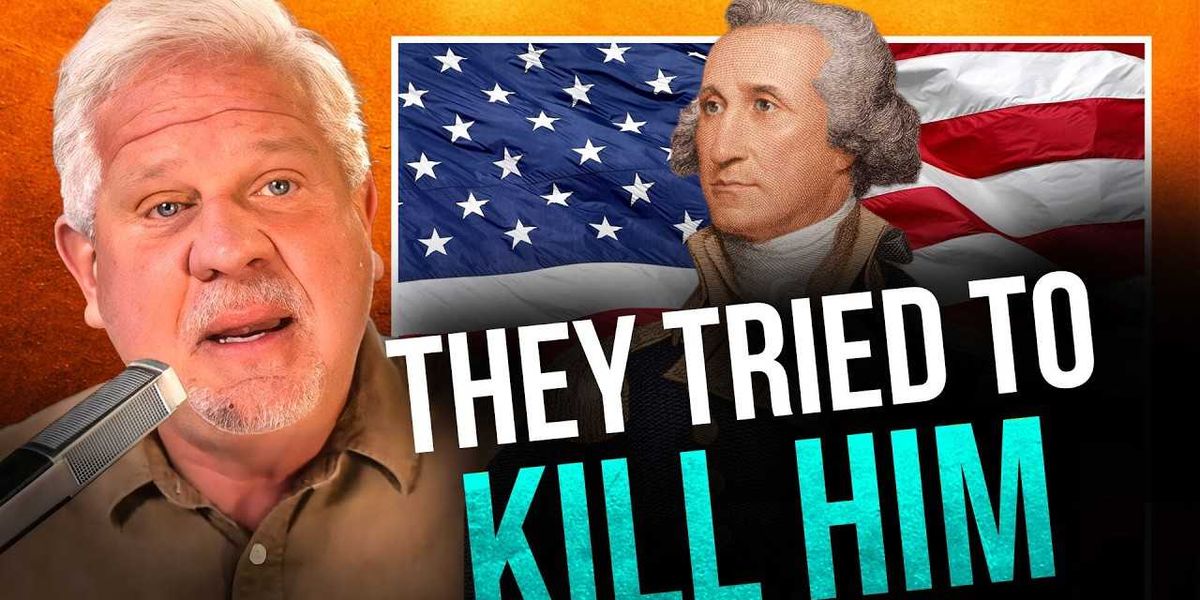
Glenn Beck pulls an old, dramatic slice of American history out of the attic and shines a bright light on the desperate week that birthed a nation: the plots, betrayals, a secret trial and a public execution running parallel to Thomas Jefferson’s writing of the Declaration and George Washington’s test of character as British forces closed in.
Most people treat the Fourth of July like a holiday with fireworks and barbecues, but the days before that holiday were raw and dangerous. Millions celebrate; few know the real story of what almost tore the infant republic apart in late June 1776. This piece revisits that tension and the characters who decided the country’s fate.
Glenn frames the drama as two tracks moving toward the same moment: one of high-minded words being written in Philadelphia and one of secret plots unfolding in New York. He puts Jefferson and Washington on parallel stages, each revealing different sides of the American experiment. The collision of ideals and blood on the same morning is what makes the story unforgettable.
Glenn captures the urgency well: “All of us celebrate Fourth of July — everybody does. But nobody knows what’s happening the days before the Fourth of July. … This is when this country was being born in two cities at the same time and on two completely different tracks,” says Glenn, “and those two tracks slam together on one morning.” Those words pull you straight into a moment where the future was still very much in doubt.
He reminds listeners that while Jefferson was drafting “what kind of men we could be,” Washington was testing “what kind of men that we already have among us.” “Because while [Thomas] Jefferson is writing … what kind of men we could be [in the Declaration of Independence], George Washington is discovering the kind of men that we already have among us. The British fleet are coming,” he continues. That contrast is the essence of the founding drama.
The plot in New York involved Crown officials willing to subvert law and life to keep the empire intact. “[Tryon and Matthews] are quietly buying off Continental soldiers, paying them to switch sides the moment the British land. … The minute the British land, they’re to turn their guns around and blow the powder magazines, seize the bridge at the north end of Manhattan, so Washington’s whole army is trapped on that island like fish in a barrel,” Glenn recounts. It reads like a thriller, but it was deadly serious and close to working.
One conspirator was in Washington’s inner circle: a member of his personal guard named Thomas Hickey. “Hickey gets himself thrown in jail for passing counterfeit money, and he couldn’t keep his mouth shut. He bragged to another prisoner about the conspiracy … well, that prisoner talked, and it landed in front of a secret committee tasked with sniffing out exactly this kind of treason committee led by a young New Yorker named John Jay,” says Glenn, highlighting Jay’s contributions from legal writing to the bench. That committee is often called “the first American intelligence agency.”
Hickey’s fate was swift and public, and the timing could not have been harsher for the fragile revolutionary cause. His execution on June 28, 1776, came as Jefferson carried his finished draft toward Independence Hall. “One single morning, in one young nation that didn’t legally even exist yet, in one city, the words of who we wanted to become were first being read into the record. And another city just up the road, a man was being hung by a rope for trying to strangle that nation in its cradle,” Glenn summarizes. “The promise and the betrayal in the same hour — 90 miles apart.”
Congress voted for independence days later, on July 2, and yet the danger was not theoretical. Glenn nails the immediacy: “The ink isn’t even dry and the enemy is already in the water,” says Glenn. He argues that Washington could have become a tyrant in the face of fear and betrayal, but he did not. “It would have been so easy in that moment of terror — invasion coming, traitors in the ranks, the mayor himself in on it — for Washington to become the very thing that they were fighting.”
Instead, Washington upheld law and process, even when revenge would have been simpler. “In the middle of the most dangerous month of their life, with a knife already at the Republic’s throat, they chose process over panic, law over vengeance. And in the same breath, in the same week, they put their names down on this document that said power has to answer to something higher than its own power,” says Glenn. Those choices shaped the republic the founders promised to create.
“That’s who we are. That’s who we were. That’s who we can be every day going forward.” The scene Glenn retells is a reminder that founding moments require both moral vision and iron nerves. To hear more, watch the video above.
