
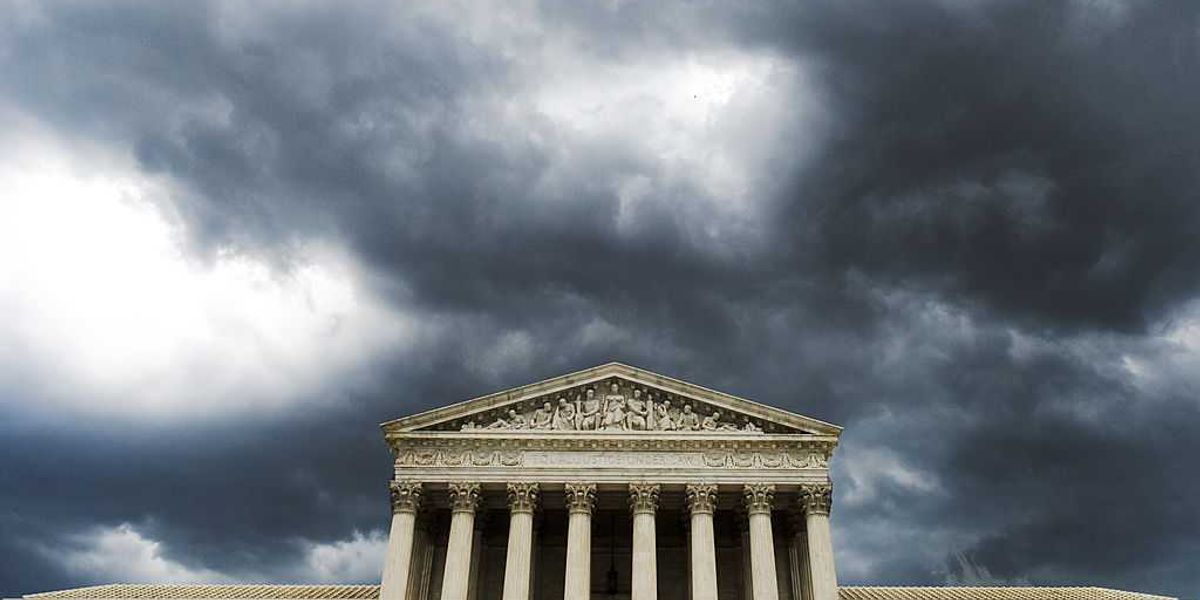
The Supreme Court’s recent birthright citizenship ruling gets the history right but the conclusion wrong, trading the Revolution’s political shift for an imported English frame. This piece argues that Americans rejected perpetual allegiance to a monarch and intended the 14th Amendment to reflect membership by consent, not an automatic ties-by-birth rule imported unchanged from Blackstone and Calvin’s Case. The Court’s learned tour through common law and precedent is impressive, but it asks the wrong constitutional question.
Chief Justice Roberts traces the English doctrine of jus soli carefully from Calvin’s Case through Blackstone and ultimately to United States v. Wong Kim Ark, and his opinion may become the go-to statement of the conventional view. That scholarship is respectable, but scholarship cannot rescue a decision that overlooks the Revolution’s political transformation. The key question is not whether Americans copied English legal language but whether they accepted England’s political idea of membership.
Thomas Jefferson’s Declaration was not poetic fluff. It announced a different theory of legitimacy when it said governments derive “their just powers from the consent of the governed.” The Declaration’s charge that the new states were “absolved from all allegiance to the British Crown” marked a decisive break with feudal subjectship. Those words matter when you interpret a constitutional clause born of Reconstruction and framed by that revolutionary tradition.
“English law rested upon allegiance to the Crown. The American Republic would rest upon the consent of a self-governing people.” That contrast is the point the majority mostly skirts. The Court assumes continuity between English subjectship and American citizenship, while the stronger originalist move is to see a constitutional adaptation of inherited phrases to a republic that rejected monarchical allegiance.
Justice Joseph Story tried to do the heavy lifting of translating common-law ideas into republican terms, showing how English legal inheritance might be reshaped for self-government. Roberts leans heavily on continuity and precedent, but he gives less weight to the constitutional genealogy that runs through the Declaration, Story’s reinterpretations, Lincoln’s framing of national principles, the Civil Rights Act of 1866, and the 14th Amendment itself. That genealogy points away from unmodified English doctrines.
Lincoln framed the problem with a memorable metaphor, calling the Declaration the “apple of gold” and the Constitution the “picture of silver” meant to preserve it. The framing idea matters: the Constitution must protect the Declaration’s principles, not smother them under imported legal categories. Reading the 14th Amendment calls for attention to the principles that underwrote Reconstruction, not only to English lineage.
The Citizenship Clause reads: “All persons born or naturalized in the United States, and subject to the jurisdiction thereof, are citizens.” Those closing words are not ornamental. The majority reduces “subject to the jurisdiction” to mere obedience to American law, equating jurisdiction with legal obligations on the ground. That shortcut turns political membership into a technicality.
The Reconstruction debates made clear they were speaking of political belonging, not traffic citations. Senator Lyman Trumbull and other framers emphasized complete jurisdiction and undivided political obligation. The Civil Rights Act of 1866 used language about those “not subject to any foreign power,” and the Amendment’s architects were worried about allegiance and membership, not transient obedience by visitors.
“Mere obedience to law is not the same thing as complete political allegiance.” That line captures why the majority’s shrink-wrapped reading collapses the Clause’s second requirement. If every temporary foreign visitor, student, or unlawful entrant became a political member simply by being on American soil when born, the jurisdictional phrase would add almost nothing to the text it purports to clarify.
United States v. Wong Kim Ark is often treated as the decisive precedent, but its facts were narrow: a child born to parents lawfully domiciled and admitted to remain. The decision did not confront births to temporary visitors or to those unlawfully present, so treating Wong as dispositive sweeps beyond what that case actually decided. Originalist inquiry should ask what Americans in the mid-19th century meant by membership, not just what English courts said under a king.
The dissenters raise the core originalist question Justice Clarence Thomas puts front and center: after repudiating English subjectship, how did Americans define a member of a self-governing republic? That is where the argument must land. The 14th Amendment was crafted to restore the founding promise that “all men are created equal,” to undo Dred Scott, and to secure political membership grounded in consent, not feudal birthright.
Roberts gives us a rigorous history of how England treated birth and allegiance, and he shows how Wong Kim Ark drew on that tradition. The flaw is not in the research but in the premise: why assume that a people who cast off monarchy meant to freeze English political categories into an American Constitution? The better originalist path asks whether the Revolution’s doctrine of consent replaced the feudal doctrine of jus soli, and that question deserves the central place in any ruling about birthright citizenship.
