
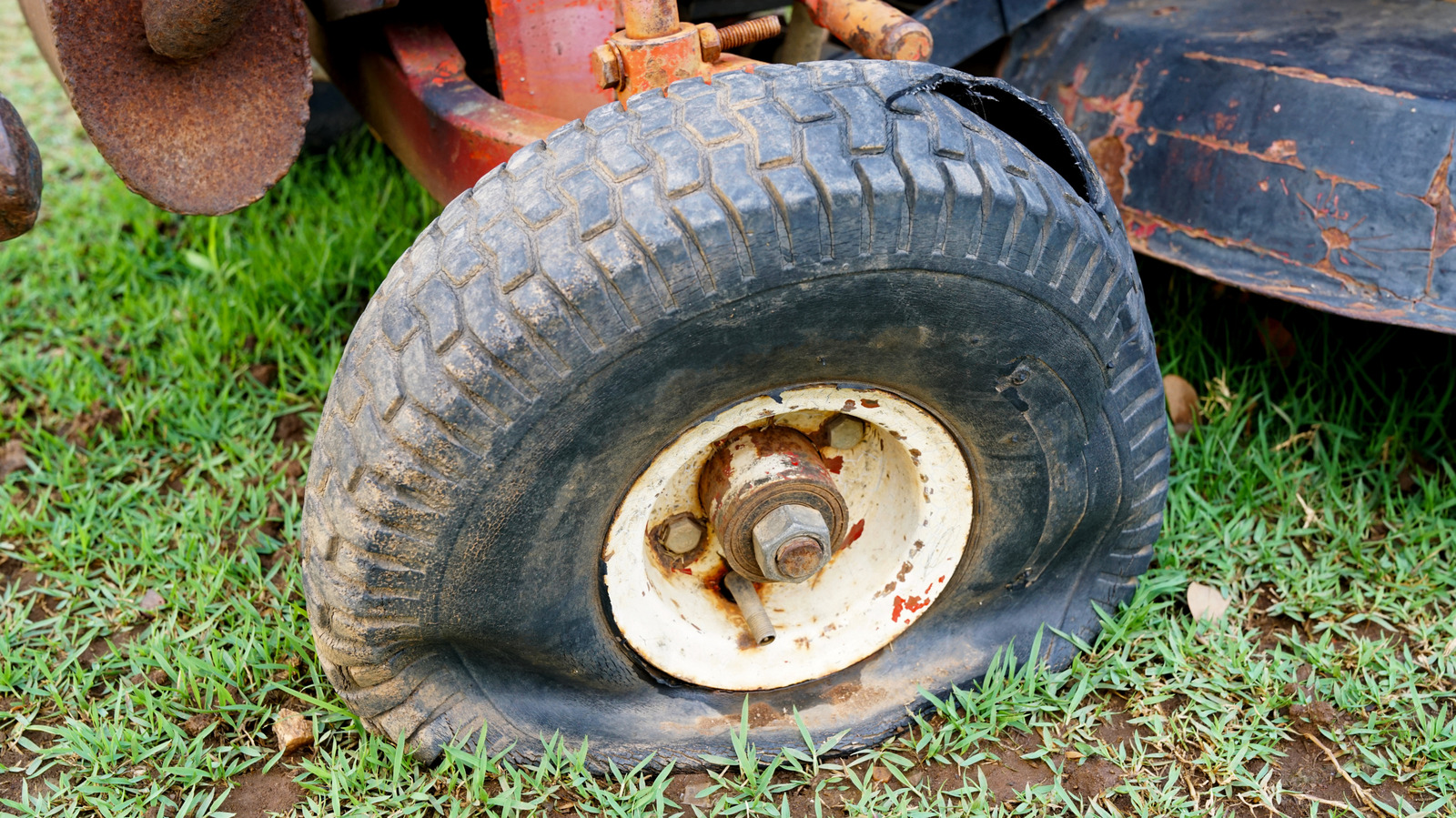
Practical, step-by-step guidance on fixing a flat on a riding mower without fuss: identify the problem, gather the right tools, remove and inspect the wheel, choose the correct repair method for tubeless tires or inner tubes, reinstall and test, and take simple steps to avoid future flats.
Fixing a mower tire isn’t a mystery and it borrows more from bicycle and small-engine work than it does from car mechanics, even though the basics look familiar. Mower tires can be tubed or tubeless, smaller and lighter, and sometimes mounted on light rims that demand gentler handling. Knowing which type you’re dealing with changes the tools and the repair approach.
Start by confirming the flat: visually inspect the tire for nails, thorns, tears, or obvious rim damage, and listen for hissing after you inflate it slightly if you can. Park the mower on level ground, set the parking brake, and remove the ignition key so nothing accidentally starts. Safety first, because these wheels can be awkward and you don’t want the machine shifting while you work.
Gather a simple kit: a jack or sturdy block, lug wrench if your wheels have bolts, pliers, tire levers or a flat screwdriver, a pump or compressor, a soap-and-water spray to find leaks, and a plug or patch kit appropriate for tubeless tires or spare tube if yours uses one. A valve-core tool and replacement valve stem come in handy when stems are the problem. Having the right parts and a clean workspace cuts the job time in half.
Removing the wheel means supporting the mower securely and getting the wheel off the axle; some models use a clip or cotter pin while others use locknuts. Once off, clean the rim and tire so you can inspect both sides for embedded debris or rim corrosion that might cause slow leaks. If the rim is bent or the bead area is damaged, don’t waste time patching the tire; a rim problem usually means a replacement wheel or professional help is needed.
For tubeless tires, locate the puncture using a spray of soapy water and look for bubbles, or immerse the tire if you have a safe way to do it. Small punctures from nails can be repaired with a plug kit: ream the hole, push the plug in, trim the excess, and reseal the bead area. For larger holes or sidewall damage, a patch from the inside is stronger but trickier; you’ll need to break the bead, remove the tire, patch the inside, and remount carefully to avoid pinching the repair.
If your mower uses an inner tube, the process is closer to bicycle repairs: remove the tire from the rim, take out the tube, inflate it slightly and feel or listen for the leak, mark it, then patch or replace the tube. Patches for tubes are inexpensive and reliable if you clean the area well and follow drying time on the adhesive. Swap in a fresh tube if the old one shows multiple repairs, too much age cracking, or valve damage.
When reinstalling the wheel, seat the bead properly and inflate to the pressure indicated on the tire sidewall or in the mower manual, checking the bead seal and valve for leaks. Spin the wheel by hand to confirm it isn’t rubbing the brake or deck and lower the mower back to the ground slowly to re-torque any fasteners. After a short test run, recheck pressure and the repair area for signs of failure; if anything looks off, stop and reassess rather than pushing a compromised tire.
Small prevention steps save time: keep tires inflated to the recommended pressure, remove sharp debris from your mowing path, and inspect tires each season for cracks or dry rot. Carry a basic repair kit if you’re out on a large property and consider a spare tube or a small can of sealant for emergencies. If you see rim damage, repeated flats, or complex sidewall tears, it’s worth replacing the tire or calling a shop instead of risking a makeshift fix that could fail under load.
