
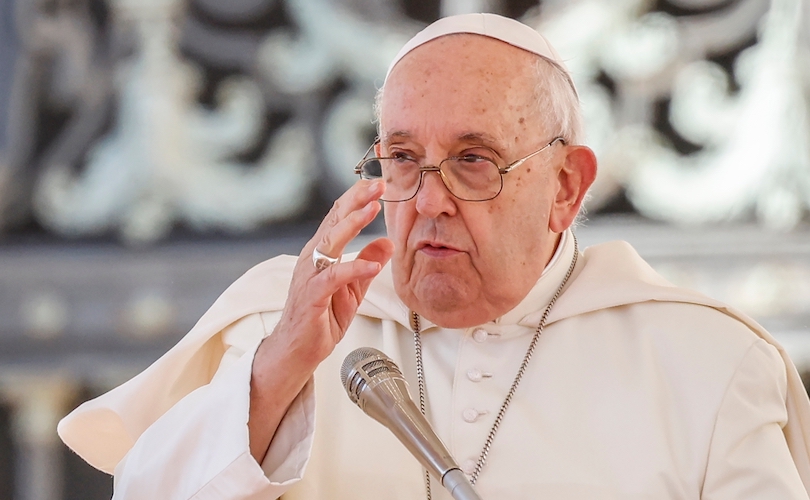
The Vatican has formally removed Fr. Francisco José Vegara Cerezo from the clerical state after he published a lengthy manifesto accusing Pope Francis of heresy and challenging the legitimacy of his election. The move ends Vegara Cerezo’s standing as a priest and signals a firm canonical response to public dissent within the Church. This article outlines what happened, why it matters, and what the decision means for both the priest and the broader conversation around authority and doctrine.
Fr. Francisco José Vegara Cerezo issued a detailed denunciation that labeled the pope’s teachings as heretical and questioned the papal election. That public challenge quickly drew attention inside and outside ecclesiastical circles, forcing church authorities to weigh both the content and the manner of his protest. The result was a canonical process that concluded with laicization, stripping him of clerical status.
Laicization is a serious step that removes the clerical state and its attendant privileges, duties, and protections. Practically, that means Vegara Cerezo can no longer perform sacraments as a priest or present himself as a cleric in official capacities. For the Vatican, the measure is a way to reassert institutional order when a priest’s actions are judged to undermine unity or to breach canonical discipline.
The case highlights the tension between conscience-driven critique and the Church’s need for doctrinal cohesion. On one hand, individuals inside the Church sometimes feel compelled to speak out when they perceive doctrinal error. On the other hand, public denunciations that attack the pope’s authority can destabilize ecclesial unity and prompt corrective disciplinary measures. That balancing act is at the core of why Vatican officials acted as they did.
Beyond the canonical consequences, the episode raises questions about how dissent is handled today in a global, digital age. Lengthy manifestos circulate rapidly, drawing public scrutiny and media narratives that the Church must address. The Vatican’s response serves as both a disciplinary ruling and a message about how it intends to manage internal controversies that spill into the public square.
For the priest himself, the effects are personal as well as juridical: laicization changes vocational identity, social standing, and the ability to minister publicly. It also limits any formal role he might play in ecclesiastical debates going forward, since canonical penalties can bar participation in public ministry and certain functions. Those practical consequences underscore how seriously the Church treats formal challenges to its leadership.
Observers will watch how this decision influences similar cases and whether it chills open theological discussion or encourages quieter channels for concern. Some will see the laicization as a necessary reaffirmation of papal authority and institutional stability. Others will argue it demonstrates the difficulty critics face when raising doctrinal objections openly, especially against the highest levels of Church leadership.
The episode is a vivid reminder that disputes over teaching and governance do not stay private in our era, and that the Church must navigate legal, pastoral, and public-relations dimensions at once. Whatever one’s view of the merits of Vegara Cerezo’s claims, the Vatican’s action closes one chapter and underscores the institutional limits on how internal disagreement can be voiced. The fallout will likely continue to shape conversations about authority, accountability, and the boundaries of acceptable dissent.
