
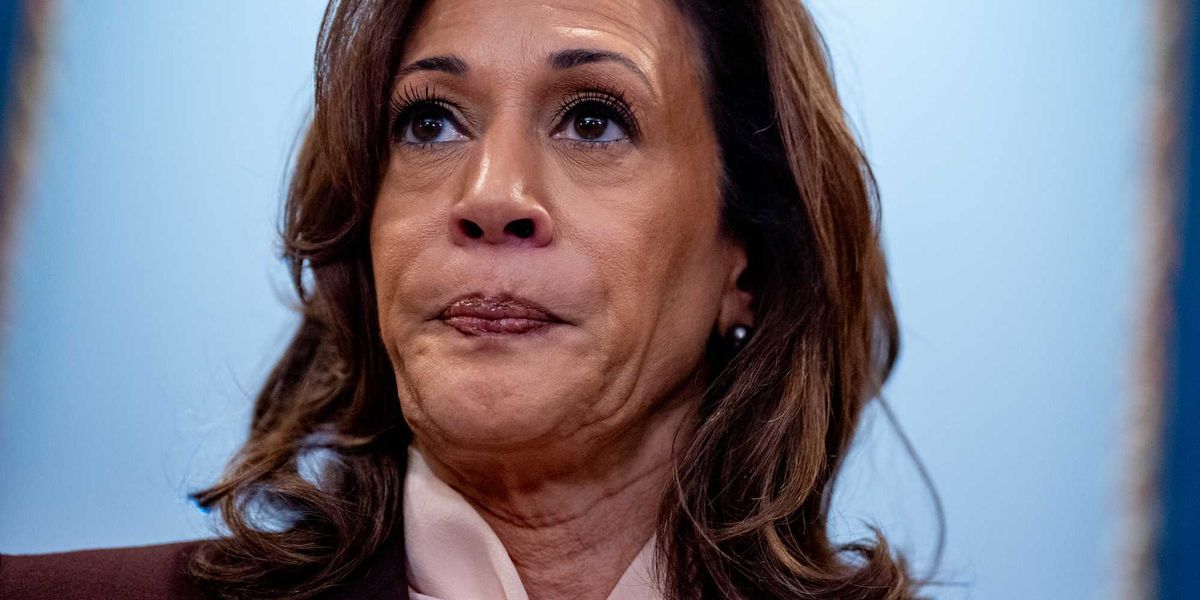
Kamala Harris suggested rethinking how America picks its president, reigniting a long-running debate about the Electoral College after recent elections where the popular vote and the Electoral College produced different winners. Her comments came during an interview and were shared widely online, reminding voters that the mechanics of choosing a president remain a live issue. The debate brings up history, legal hurdles, and the practical effects on campaigning and state influence. Republicans argue the system protects smaller states and balances regional interests, while some Democrats push for a straight national popular vote.
Harris raised the idea in an interview with Don Lemon, where she said, “I think that there is some real shaking up that we have to do of the rules and the structure,” and during the exchange she responded, “I think we should — that should be a discussion that we should have. I don’t think we should eliminate that as a point of discussion for potential action.” That remark has drawn attention because it signals the party is openly considering major structural change. For Republicans, the suggestion looks like a political move after recent defeats, not a policy grounded in national consensus.
Democrats have long complained about the Electoral College after a few notable elections where the popular vote went one way and the Electoral College another. The pattern most often cited includes 2000 and 2016, and the discussion re-emerged after the 2024 result where Harris lost the popular vote by a narrow margin but was “buried in the Electoral College count 312 to 226.” Those outcomes fuel the argument that the system can clash with the idea of one-person, one-vote.
Supporters of the Electoral College counter that a national popular vote would concentrate political power in a handful of populous cities and states. They point out that without the Electoral College, candidates could ignore rural and smaller-state voters entirely, campaigning only where large vote totals can be amassed. That concern is central to the conservative defense of the current system, which is meant to preserve regional balance and protect federalism.
History shows other presidents won the White House despite losing the popular vote, including Rutherford B. Hayes and John Quincy Adams, and those examples are often invoked by both sides. The vast majority of elections produce a winner who carried both the popular vote and the Electoral College, but the exceptions keep the debate alive. Republicans emphasize the system’s role in encouraging coalition-building across diverse states and regions.
In 2024 some Democrats did push proposals to eliminate the Electoral College, arguing it is unfair and outdated. At the time Democratic Sen. Brian Schatz of Hawaii said, “In an election, the person who gets the most votes should win. It’s that simple,” and added, “No one’s vote should count for more based on where they live. The Electoral College is outdated and it’s undemocratic. It’s time to end it.” Those quotes capture the straightforward appeal of a national popular vote to many reformers.
Changing the system is easier said than done. A full shift to deciding the presidency by national popular vote would require a constitutional amendment or a coordinated interstate compact that effectively substitutes the Electoral College. Constitutional amendments are notoriously difficult, needing broad bipartisan support and ratification by the states, which makes dramatic change unlikely without a major national consensus.
Practically, candidates and strategists also weigh how rules shape behavior. Political operatives know the Electoral College focuses attention on swing states, forcing campaigns to spread resources across different regions. Remove that incentive and the map of campaigning would change quickly, with implications for local issues and turnout in less populous places. Republicans warn that those consequences would hollow out the voice of many Americans outside urban centers.
Harris’ comments were circulated as short clips and social posts, and a clip of her was posted to social media. The exchange has become a talking point in conservative circles, framed as proof that the other party wants to rewrite rules when outcomes don’t go their way. For voters, the moment is a reminder that debates over democratic procedures are ongoing and can flare up whenever the results are disputed.
https://x.com/thechiefnerd/status/2068313438292410708
Beyond the politics, the constitutional stakes are clear: the founders set a system that blends state and popular elements, and altering that architecture requires broad agreement. Any serious push to scrap or replace the Electoral College would trigger a deep legal and political battle about representation, federalism, and the balance between city and country. For now, the system remains in place and the debate keeps simmering.
