
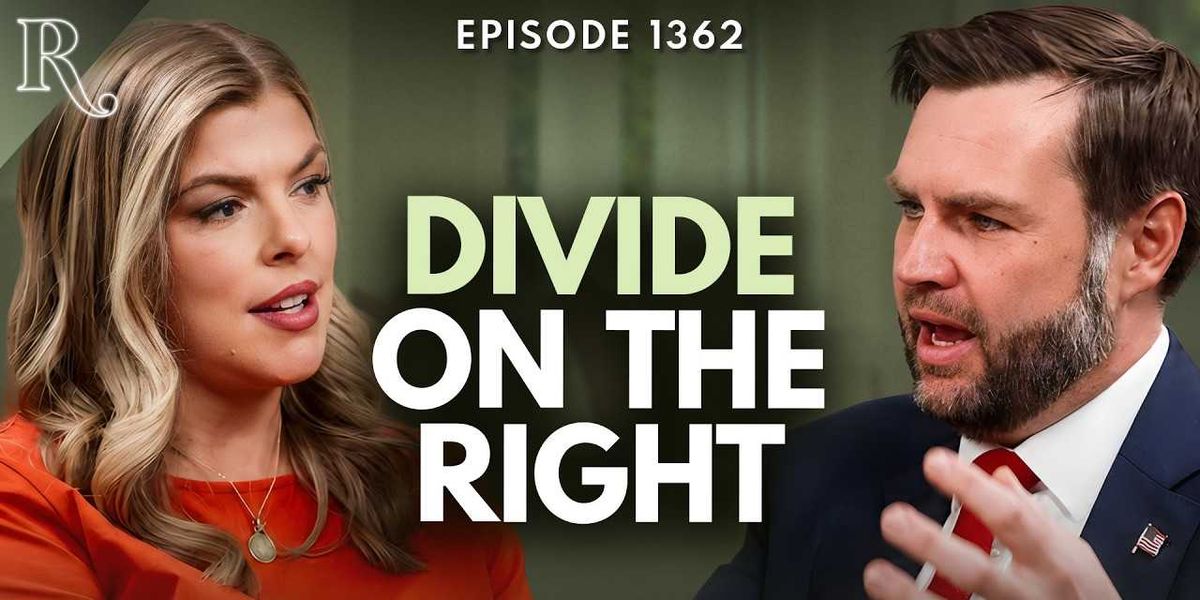
JD Vance lays out a raw, personal map of losing and finding faith, moving from a Baptist upbringing through atheism to a 2019 conversion to Catholicism. This piece walks through the wounds that pushed him away, the cultural frustrations that hardened his doubts, and the intellectual and emotional nudges that welcomed him back into a richer religious life. It also captures an evangelical perspective that values doctrine and cultural engagement, setting the scene for why Vance chose a different church home in the end.
Vance grew up steeped in the rhythms of Scripture and revival, shaped largely by his Baptist grandmother. Those early experiences felt steady and ordinary until her death when he was 20, which left his faith suddenly fragile and exposed. The loss was more than emotional; it erased the practical anchor that had tied his belief to daily life.
He says plainly, “I was an atheist two years later … Christianity to me was Mamaw, and when that was gone … I just didn’t really have any anchor to Christianity anymore,” he says. That sentence cuts to the heart of what can happen when faith is bound to a person rather than an inner conviction. It explains how grief and absence can open a quiet room for doubt to move in.
Part of his drift wasn’t just grief but a growing sense that the church was off-message for people like him. Vance points to the evangelical obsession with culture war fights that felt abstract while his neighborhood was falling apart. He names the Terri Schiavo dispute as a symbol of attention misspent at moments when families nearby needed practical care and moral leadership.
“Why are we talking so much about [Terri Schiavo] when I saw so much that was going wrong in my own community that it felt like the church wasn’t speaking to,” he recounts, emphasizing the importance of Christians caring about both public policy and the individual issues impacting communities. The complaint is simple and blunt: moral energy without pastoral muscle can feel hollow. For a young man watching addiction and chaos close to home, church felt distant and irrelevant.
He admits the reaction was not entirely fair, but honest. “There was this sense of almost betrayal that there was a total chaotic situation in my own life, and the faith didn’t speak to it in the same way. And again, was that totally fair? No, but it’s certainly part of the story of why I lost my faith,” he confesses. That kind of candidness is rare in public religious narratives, and it matters because it shows doubt as relational and situational, not merely intellectual.
On the other side of his story, Vance met people who made Christian life look sane and attractive again. He noticed fellow students who seemed happier and healthier than their secular peers, living with a purpose that resonated. That observation shifted his view from religion as tribal habit to religion as source of moral flourishing.
He describes a reasoning that felt less like social pressure and more like a lived test: “So that got me on the pathway of like, well, if they’re right about virtue and they’re right about character and they’re right about the things that actually matter, maybe they’re right about Jesus. Maybe this actually comes from some inner truth that radiates outward.” The idea planted was practical: virtue, character, and inner truth were signs worth following.
Allie Beth Stuckey offers a complementary evangelical view that appreciates doctrinal consistency and public witness. “Something I really appreciate about evangelicals is not only, you know, doctrinal fidelity and being consistent on that, but the willingness to take that and take those doctrines into the culture and to say, ‘Look, if God is the creator and the authority of all things, then that has to dictate what we think about life … [and] all of these other other issues as well,” she explains, “and when Christians don’t do that, especially if evangelicals didn’t do that, we’d be in a really bad spot.” Her point is about accountability: belief should shape behavior and policy.
Vance’s final turn toward Catholicism came after reflection and a search for something with deeper ritual and historical heft. Catholicism’s emphasis on sacrament, tradition, and a long moral record answered a hunger that his evangelical past left unmet. The shift was not a rejection of conservatism but a move toward a framework that promised steadier formation and communal gravity.
His arrival at Catholicism in 2019 marks a quiet end to a loud internal argument. It’s an ending that feels less like surrender and more like homecoming, a return to faith with a different vocabulary and a denser practice. For those watching, it’s a reminder that religious life often moves through seasons and that public figures can undergo sincere private transformations.
The story remains a practical lesson for conservative Christians who care about both doctrine and community care. Vance’s journey suggests that moral clarity must be paired with pastoral attention; otherwise, people in pain will look elsewhere for anchors. His testimony is a nudge to build churches that teach, serve, and heal in equal measure.
