
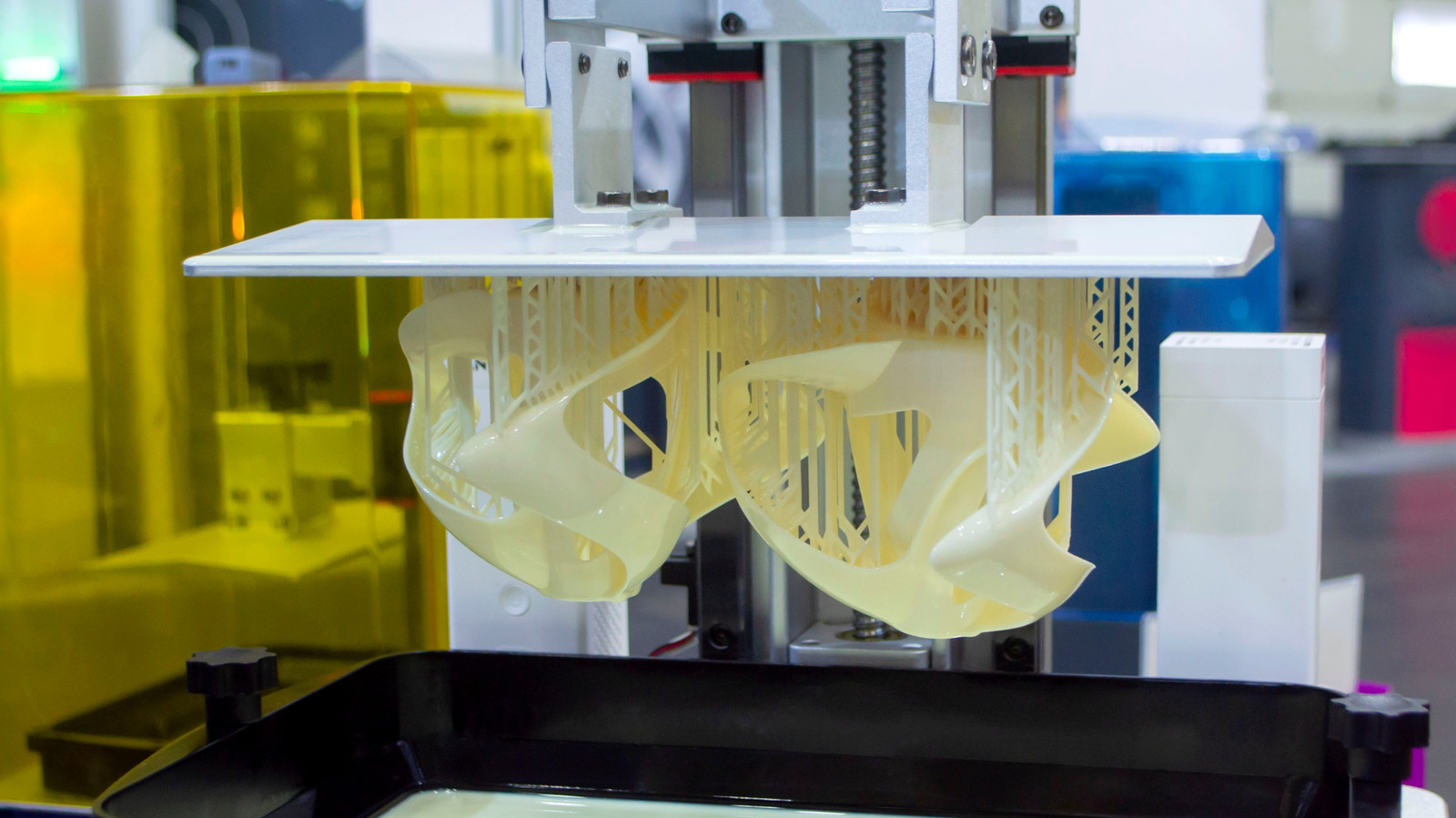
Researchers in China unveiled a 3D printing technique that can form objects almost instantly, reshaping how we think about manufacturing speed and design freedom. The method abandons layer-by-layer building in favor of a volumetric approach that hardens resin across a full volume at once, promising much faster production, complex internal geometries, and a different set of trade-offs for materials and resolution. This piece explains how the process works, what it can do, and the technical and practical hurdles before it hits everyday workshops and factories.
The core idea is volumetric manufacturing, where a whole object is created in a single exposure rather than stacked layers. Light patterns are projected into a rotating tank of photosensitive resin so the chemistry inside cures simultaneously across the target shape. That removes the slow, stepwise motion of traditional 3D printers and eliminates many of the artifacts and weaknesses that come from layer interfaces.
To make that happen, the team used concepts borrowed from computed tomography and optical projection, reversing the imaging process so light builds, not reads, a 3D structure. By carefully timing and shaping the light, regions of resin receive the precise energy needed to polymerize only where the object should exist. The result is a solid form appearing within the vat in seconds, often with a smooth external surface straight out of the machine.
Speed is the headline but not the whole story. Instant formation allows for rapid design iteration and on-demand production at speeds that could transform prototyping and some short-run manufacturing. Complex internal channels and lattice structures, which are difficult or impossible with subtractive methods, are natural fits for this technique. However, the absence of layers raises different quality-control questions about internal homogeneity and material performance.
Materials science becomes the gating factor more than optics once you move past proof-of-concept parts. Typical photopolymers used for optical curing can be brittle or limited in heat resistance, so engineers must reformulate resins for strength, flexibility, or biocompatibility depending on the use case. There are also constraints from the curing reaction itself: overexposure, oxygen inhibition at interfaces, and thermal stresses during polymerization can affect final part properties and must be managed carefully.
Resolution and surface finish look impressive in demo pieces, but scaling that performance is nontrivial. High detail requires precise control of light intensity and timing, and larger parts demand more powerful projection systems and uniform resin behavior throughout the volume. Shrinkage during cure and post-processing needs can introduce distortion, so engineers still rely on calibration, tooling, and sometimes secondary operations to meet tight dimensional tolerances.
Applications are already clear in certain niches. Medical models, surgical guides, and some dental parts benefit from the speed, while soft robotics and microfluidic devices gain from the freedom to form intricate internal pathways. For industrial uses, the technology could accelerate model shops and emergency replacement part production, where time beats every other consideration. Widespread adoption will depend on developing robust materials, predictable mechanical properties, and cost-effective hardware for factory floors.
Commercial puzzles remain: equipment cost, repeatability, and regulatory approval for medical or safety-critical parts are all serious roadblocks. The printers rely on precise optics and motion systems that add expense, and quality assurance for parts produced in seconds needs new inspection methods. Still, the payoff could justify the investment where cycle time and design complexity dominate economics.
In short, this instant volumetric printing method reframes three-dimensional fabrication by prioritizing speed and geometric freedom over the incremental building mindset. It does not eliminate the need for traditional 3D printing or machining, but it adds a powerful option that expands what creators and engineers can attempt. With further materials advances and engineering work on scale and reproducibility, this could move from lab curiosity to a practical tool in several high-value industries.
