
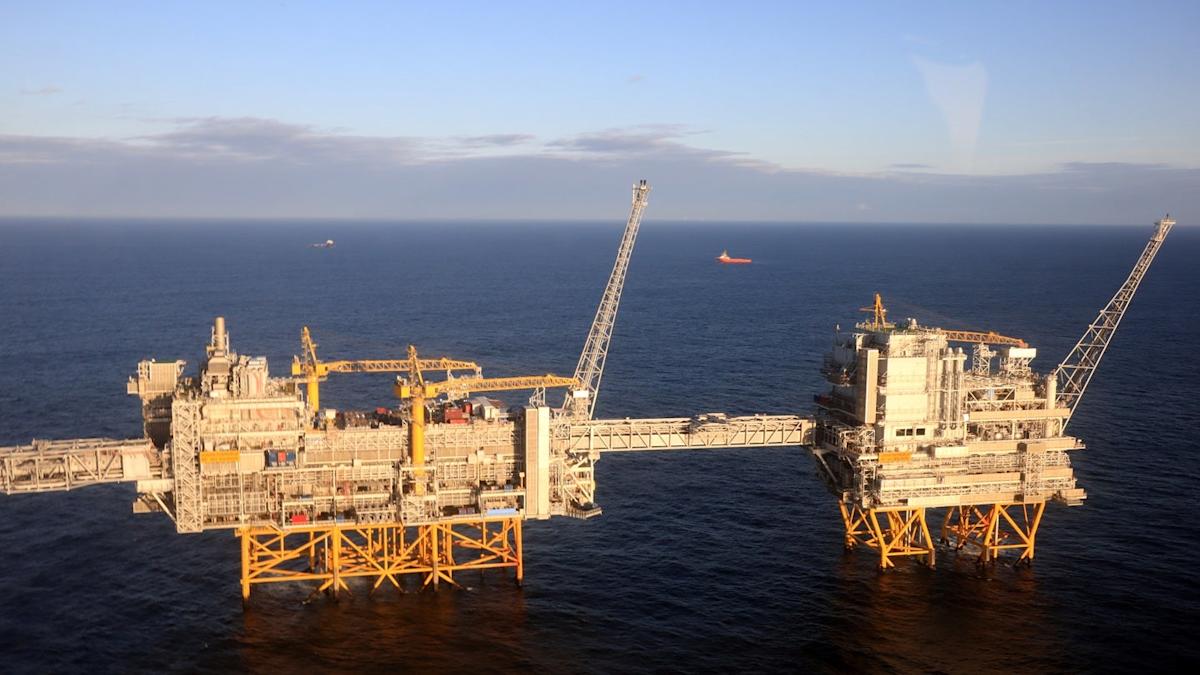
Equinor is pushing ahead with a fourth development phase at the Johan Sverdrup field after appraisal wells confirmed new oil finds around Tonjer and Geitungen. The company sees these additions as practical, low-cost tiebacks that extend the life and output of one of Norway’s biggest fields. With production targets eyed for the end of the decade, the move underlines a steady focus on extracting value from existing infrastructure while keeping emissions and costs down.
The recent discoveries at Tonjer west, Tonjer east and Geitungen give the Johan Sverdrup complex fresh upside and a clearer path for phase four. Preliminary joint estimates place the combined resources for Tonjer and Geitungen in the 20 to 30 million barrels of oil equivalent range, which is meaningful for a tieback-led expansion. Those figures are not final but they provide a solid base for planning subsea development options that connect to Johan Sverdrup’s existing systems.
Drilling activity on the northern Geitungen terrace involved two appraisal wells and a sidetrack, and that work helped reduce the earlier uncertainty about the pool. The appraisal results supplied better data on reservoir extent and quality, which in turn sharpen resource and development scenarios. Equinor says further subsurface analysis is under way to translate the well results into more precise volume and recovery estimates.
Phase four is being shaped as a subsea project that will tie the new finds back to Johan Sverdrup’s established topside and export arrangements. Tiebacks are attractive because they often cut development lead times and capital needs compared with standalone platforms, and they leverage proven production and gas-handling capacity. That fits a broader industry push to add value quickly and efficiently from nearby satellite resources.
Equinor frames the project as both commercially sensible and strategically useful for Europe’s energy picture, aiming to keep steady production from a field that has been central to Norway’s output. The company has signaled a possible production start-up for phase four in 2029 as the partners move toward an investment decision. If approved, the plan would accelerate delivery of additional barrels from a site already optimized for scale and low unit costs.
Equinor Norway development and production executive vice-president Kjetil Hove said: “These are important and profitable volumes for Johan Sverdrup. By tying new resources to existing infrastructure, we can develop them quickly, with low costs and low emissions.
“At the same time, they contribute to maintaining production and value creation from one of Norway’s largest oil-producing fields. Johan Sverdrup has been the backbone of Norwegian oil production since its inception.
“In order to maintain production and value creation for decades to come, we must continuously develop new resources around the existing infrastructure. Phase four is a good example of how we can get more out of a world-class field.”
The company is also accelerating a wider slate of subsea developments and tiebacks, emphasizing faster project execution to boost returns across its portfolio. That approach includes awarding multi-field subsea contract packages to specialist contractors as part of the push to deliver more ties and reduce time to first oil. Faster execution and reuse of infrastructure are clear priorities in Equinor’s planning for the Norwegian Continental Shelf.
The Johan Sverdrup Unit partners remain Equinor with a 42.62% stake, Aker BP holding 31.57%, Petoro at 17.36% and TotalEnergies with 8.44%. Those licensees will weigh the updated resource data and cost estimates as they move toward a binding investment decision that will determine the final scope and timing. For now, the focus is on turning recent appraisal clarity into a subsea plan that can be executed swiftly and economically.
