
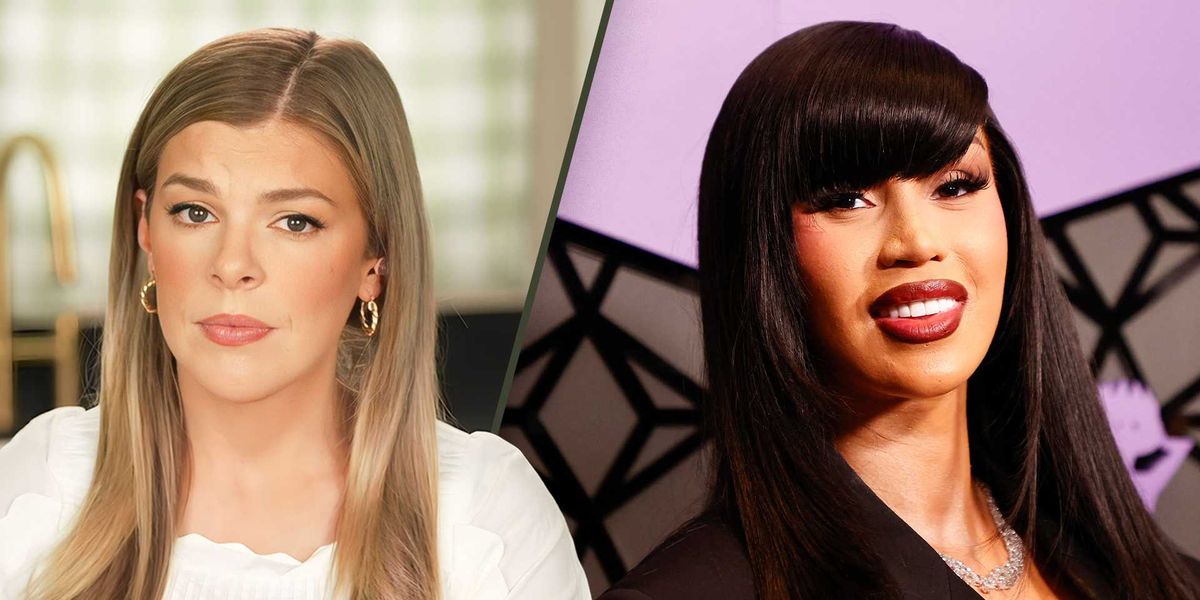
The reaction to Karmelo Anthony’s sentencing has split the public, with celebrities blasting the outcome as unjust and conservative commentators arguing the punishment fits the crime. This piece follows the hot takes and the pushback from Allie Beth Stuckey, who frames the debate around accountability, deterrence, and the different fears people live with. Quotes and clips circulating online have become fuel for a broader conversation about justice, public safety, and political theater.
Rapper Cardi B exploded on social media after the sentence was handed down, posting, “Wow! Just freakin wow! DISGUSTING… This is not justice, this is trying to make an example!!!” Cardi B in a post on X. Her outrage reflects a common left-leaning view that the system is targeting individuals to send a message.
BlazeTV host Allie Beth Stuckey pushed back hard against that line of thinking, questioning the logic behind defending a sentence in a murder case. “What are you even saying?” she asks, calling out the tendency to confuse sympathy for performative outrage. She even nudged Cardi B to try a little common sense, referencing how other artists have managed more coherent takes.
https://x.com/iamcardib/status/2064521641988637183
“He’s not getting the death penalty. He’s not getting life in prison. He’s going to get out when he’s in his mid-30s. He could get married. He could have kids. He could probably get a job,” she says, noting that Austin Metcalf will get none of that. Stuckey emphasizes the humanity lost in this case and contrasts the futures of the convicted man and the victim’s family.
Stuckey argues that the justice system serves a deterrent purpose and that making an example of violent offenders is part of preventing more violence. “And yeah, we should make an example out of murderers. That’s part of the reason for the justice system. It is preventative in that way. It is saying, ‘Hey, if you do this, you will also get this punishment, so don’t do it,’” she says. Her point is blunt: visible consequences matter to keep people from committing deadly acts in the first place.
She also notes that the chorus defending the sentence stretches beyond entertainers into elected officials and activists, and she played a clip of Jasmine Crockett responding to Anthony’s sentence. “Black women, especially black women who have black male children, live in fear and agony every single day. A fear and agony that, I promise you, the Metcalfs probably never spend a day living that way,” Crockett said. Those words were used to argue that the sentence reflects broader social failures, not just individual guilt.
Stuckey asks a direct follow-up that reframes who should worry most: “Why? Why do they live in fear and agony?” she asks. “Why do moms of black boys, black men, live in fear and agony? Has nothing to do with Austin Metcalf. Has nothing to do with the police. Has nothing to do with white people.” Her rebuttal pushes the conversation toward personal responsibility and the reality that most violent crimes are committed by people of the same community as their victims.
“If black mothers fear for their sons’ lives, the fear should be toward other black men, because statistically, black men are the ones killing black men,” she adds. That hard statistic-centered claim is meant to shift attention from policing and racial grievance to the immediate sources of violence in communities. Viewers watching these exchanges see two very different frames: one that centers systemic blame and another that emphasizes individual crime and consequence.
For those interested in more of Allie Beth Stuckey’s takes on culture, law, and faith from a conservative perspective, BlazeTV continues to publish her commentary and interviews. Her coverage aims to blend moral clarity with legal common sense, and it has become a steady voice for readers who favor accountability and order over performative outrage.
