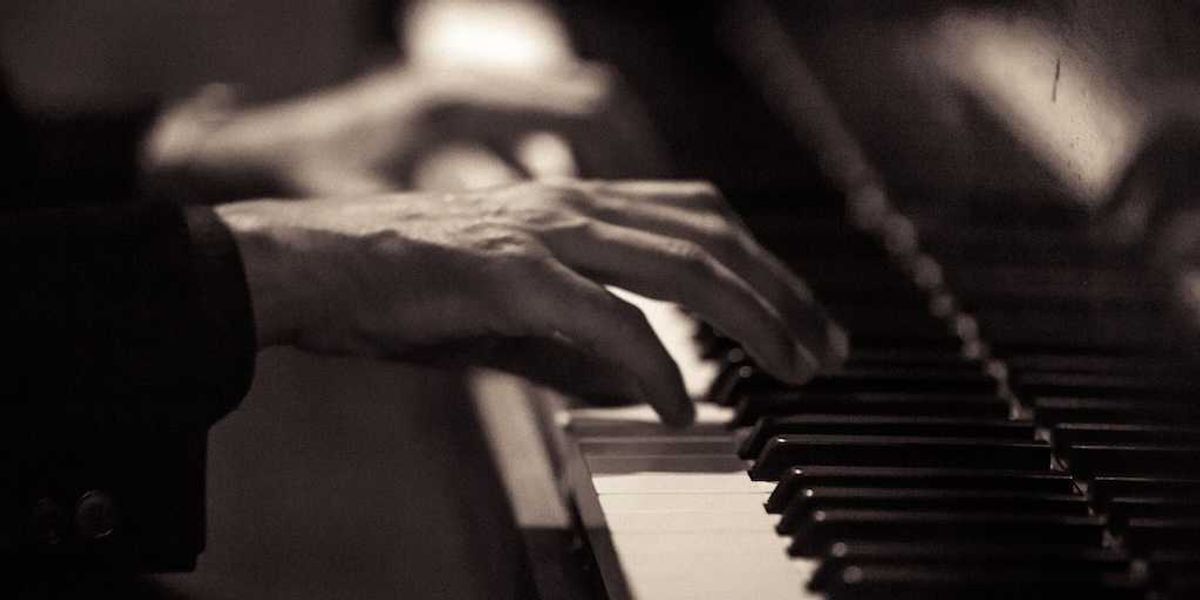
I’ve spent nearly five decades at the piano in funeral rooms, and this piece looks at why families keep choosing “It Is Well with My Soul,” what happens in that music’s quiet moments, and how a hymn can let a room of strangers speak grief out loud.
Last month a family asked me to play that hymn at a loved one’s farewell, and the request felt familiar in the best way. Over the years, the song has become a kind of shorthand for grief that refuses to be hurried. People come to church carrying a lifetime of stories, and that hymn gives them a place to put some of the weight down for a while.
Sitting at the piano, I face the room instead of the pulpit, and that perspective has taught me a lot. I have watched the gamut of life pass by in pews: executives, teachers, ranch hands, doctors, ministers, and children who don’t yet understand the finality in the room. I’ve seen family strains eased for an hour and tears from people who spent years telling the world they never cried.
It’s hard to hide when grief is present. The face and the eyes tell the truth in a way that words often can’t. For a short time, ordinary distractions fall away and everyone is reminded that life is fragile and that someone else has finished their story.
“The sorrows like sea billows are a given. They arrive for all of us eventually. The question is not whether suffering comes. The question is what we have been taught to do when it arrives.”
When families ask which hymn to choose, that one nearly always surfaces. This year marks 150 years since Philip Bliss set Horatio Spafford’s words to music, and it remains a go-to because it makes space. The moment in the tune where the word “sorrows” lands on the minor chord is small but enormous in effect, and I leave room for that chord to do its work.
I play the hymn slowly, even when other church leaders hint for a brisker pace. Grief does not benefit from haste, and rushing through the lines steals the room’s chance to breathe together. I’m not trying to show off the arrangement; I’m watching what happens when the music slows and people are invited to feel instead of perform.
When the congregation sings, something changes: heads drop, shoulders fall, and many mouth the words while others sing through tears. Some stand motionless and stare forward, and I’ve seen fathers and mothers lift hands toward the ceiling as they wept. On bad days the hymn lets folks admit how much it truly hurts without pretending to fix the pain on the spot.
Sometimes I stop playing on the final chorus and let the room carry it. Hearing a group of grieving people move from silence into a shared voice is one of the most powerful things I’ve known. There is a kind of courage in that collective breath, a willing of sorrow into song so it doesn’t stay isolated in a single chest.
The hymn itself was born out of deep sorrow, and it does not rush you past pain. It refuses clichés and treats suffering like something real that must be acknowledged. At the same time, it refuses to give sorrow the last word, and that refusal matters more than most people expect.
Then there is the line that keeps returning to my mind: “Whatever my lot, Thou hast taught me to say …”
Taught me.
That phrase points to formation, to habits learned before grief arrives. We all face sea billows sooner or later, but the difference is what we have been trained to reach for when waves knock us off our feet. Some sing this hymn with the ease of testimony, others get the words out as a prayer, and some seem to be practicing hope while they sing.
Requests for the hymn keep coming because it does two things at once: it names sorrow honestly and it invites a different response to that sorrow. After almost fifty years at the bench, I still watch with quiet wonder as a room full of people stands and, together, says: It is well with my soul.