
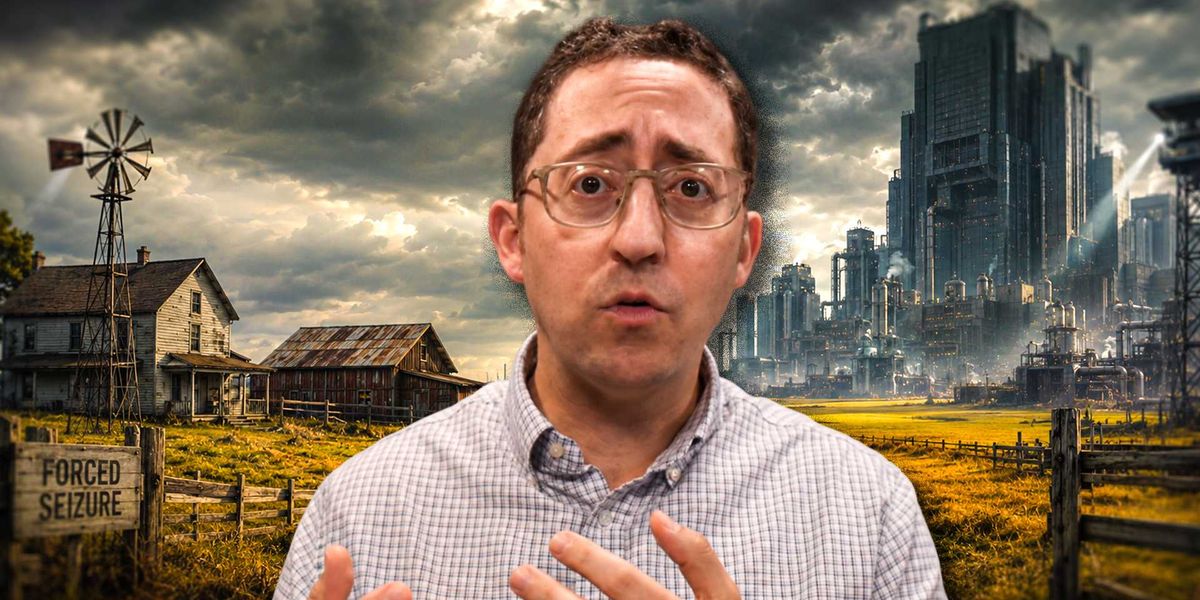
The fight for rural America just got louder: a new bipartisan effort aims to push back against the growing grip of corporate giants on farming, demand fair markets, and restore economic independence to small towns and family operations across the country.
For years farmers have watched local markets shrink while a handful of corporations consolidate power, squeeze margins, and call the tune on planting decisions and prices. Joe Maxwell of the Farm Action Fund is stepping into that breach with a clear, no-nonsense challenge to monopoly control and a promise to put rural families first. His approach rejects nostalgia and instead focuses on real policy fixes that revive competition and opportunity on the ground.
Maxwell has rolled out the Rural Independence Initiative to force that change and make rural issues unavoidable in politics. “We just released a paper along with the launch of the Rural Independence Initiative, a bipartisan, cross-partisan organization, the only political organization that’s pro-healthy food, pro-farmer, pro-rural America,” Maxwell tells Horowitz. “We want candidates that will fight for markets — fair and free markets — healthy food, and economic independence from monopoly control,” he explains, pointing out that he doesn’t care whether they’re Democrats, Republicans, or Independents.
Maxwell bluntly accuses the political class of aiding that consolidation instead of stopping it. He argues the problem runs deep: “both parties are working against the people and for corporate monopoly oligarchy control of our economy.” That is a direct call to voters to demand representatives who will break up concentrated power rather than enable it.
That criticism extends beyond policy talk into the everyday things that shape how Americans eat and work. “And therefore, what we eat, what we can raise, how we’re going to produce it, and then ultimately control of our government,” he adds. The point is simple: control over food and production leads to control over communities, and unchecked corporate power narrows choices for farmers and consumers alike.
BlazeTV host Daniel Horowitz presses that idea toward the policy level, pointing at the way farm bills and subsidies have been shaped. “Exactly, because if you look at the farm bills, which are always overwhelmingly bipartisan, they’re pushed by both parties, the same monopolization of the land, obsessive support for very specific things, very specific crops, often not even for food,” Horowitz agrees. He calls out the false posturing some politicians use when they claim to back rural America while backing policies that centralize wealth.
That hypocrisy stings in towns where families work harder and get less. Rural households face real economic penalties and worse health outcomes, and those gaps are growing into a crisis. Maxwell insists his effort is not about special favors or tribal politics, but about leveling a rigged playing field so individual entrepreneurs and family farms can compete again.
He spells the human cost in stark numbers to wake people up to what policy choices have produced. “A rural worker will make about $24,000 a year less than the average metropolitan worker. … Rural grandparents will see more of their grandchildren die before the age of 1 than metropolitan grandparents, and rural grandchildren will lose their grandparents three years earlier than metropolitan,” he explains. Those are not abstract statistics — they reflect policies that have hollowed out medical access, wages, and local economies.
Maxwell says the solution starts with a new lens on policymaking that centers people and small business interests rather than national conglomerates. “So, the policy has to begin with a lens towards representing people, individual businesses — whether that’s a meat packer or a light manufacturer in rural America or whether that’s the farmer,” he continues. “We have to break the grip that these companies have on these sectors to restore the wealth and the quality of life for rural Americans.”
