
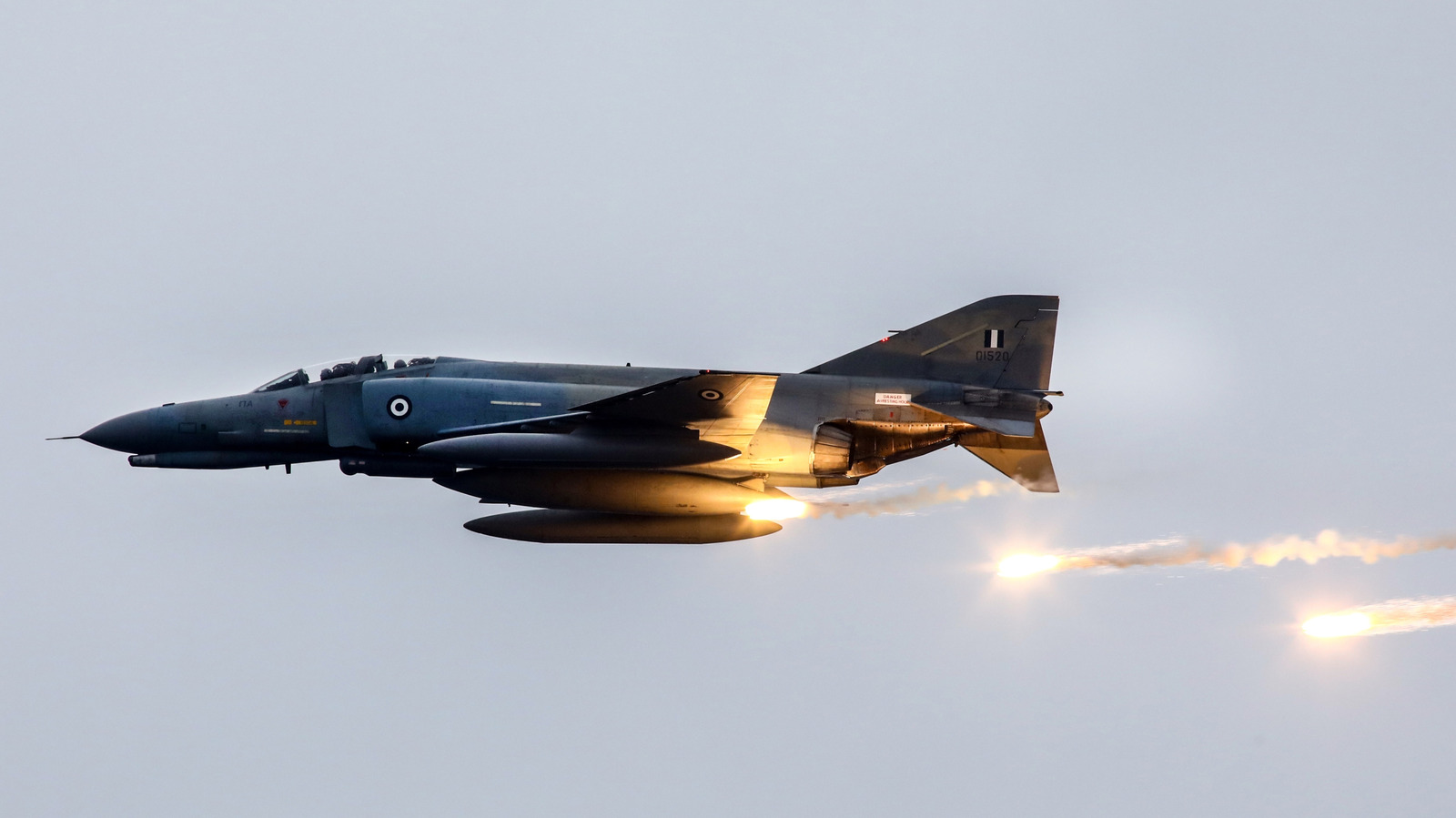
The F-4E and the F-16 are two iconic fighter jets that tell a story about different eras of air combat design: one built around brute speed and multi-role heft, the other focused on agility, avionics, and pilot-centered survivability. This piece compares their core strengths and trade-offs, looking at speed, maneuverability, systems, mission flexibility, and what each type brings to a modern battlefield. Expect clear contrasts and practical observations rather than technical fanfare. The goal is to show why both remain relevant in their own ways.
The F-4E earned its reputation on raw performance. It was designed when straight-line speed and payload mattered above all, packing powerful twin engines and a heavy airframe that could carry a long roster of weapons. That capability made it excellent for fast, long-range strike missions and for hauling early-generation missiles and bombs. Speed was a deliberate advantage for its time, allowing it to reach targets quickly and exit hostile airspace before countermeasures could react.
By contrast, the F-16 was born from a different philosophy: lightweight, highly maneuverable, and built around the pilot. It trades some of the F-4E’s top-end speed for superior turn rates, acceleration, and a fly-by-wire system that makes aggressive maneuvering safer and more precise. Its single-engine design keeps weight and maintenance costs down, while modern avionics and HUD-centric ergonomics reduce pilot workload. That makes the F-16 lethal in air-to-air dogfights and flexible in multirole tasks.
When it comes to avionics, the F-16 generally has the edge, especially in later blocks and upgraded versions. Modern radar, electronic warfare suites, and datalink capabilities let the F-16 find, track, and engage threats more efficiently. The F-4E was upgraded over time and could be equipped with newer sensors, but its airframe limits how modern and compact those systems can be compared to a purpose-built fourth-generation design. In contested environments where situational awareness is king, the F-16’s systems-centric approach shines.
Payload and range present another layer of trade-offs. The F-4E can carry heavier loads and more varied stores, which is useful for suppression of enemy air defenses and strike missions that demand ordinance. The F-16 still carries a respectable loadout for its class, but it prioritizes precision munitions and flexibility over brute mass. Mission planners choose the jet that best matches mission priorities: heavier strike packages versus nimble, precise engagements.
Survivability looks different on each platform. The F-4E’s speed can be a defensive asset, enabling high-speed egress, while its size often meant more redundant systems and a sturdier structure. The F-16 counters with agility, a smaller radar cross-section in practice, and the ability to use modern electronic warfare and countermeasure suites more effectively. In modern integrated air defenses and electronic battlefields, survivability favors platforms that blend agility with advanced sensors.
Operational costs and maintenance are practical factors that influence fleet decisions. The F-16’s single-engine economy and widespread global support network make it cheaper to operate and easier to sustain logistically. The F-4E, with two engines and older systems, typically required more upkeep and infrastructure, especially as its fleet aged. Budgets, training pipelines, and repair networks all push operators toward newer, leaner designs when long-term costs are a concern.
Pilot experience and mission adaptability matter a lot in real-world results. The F-16’s cockpit-centric design gives pilots better hands-on-stick control and less cognitive load during high-stress engagements. The F-4E’s larger crew workload and older cockpit ergonomics can make complex missions more demanding without upgrades. Still, experienced crews can wring impressive performance out of both jets, especially when tactics and training align with each plane’s strengths.
Modernization paths kept both types relevant longer than many expected. Upgraded avionics, improved weapons, and structural life extensions let F-4Es remain useful for specific roles, while continuous block upgrades turned the F-16 into a platform with multirole reach. The choice between them often comes down to mission sets, budget realities, and how much value you place on speed versus agility and sensor capability. Each airframe answers a different set of operational questions.
At the end of the day, comparing the F-4E and the F-16 is less about declaring a single winner and more about matching platform strengths to campaign needs. Speed and heft versus agility and systems is a classic trade-off that still defines aircraft design. Operators balance these traits against cost, logistics, pilot training, and the threats they expect to face, and that balance determines which jet is the smarter pick for any given mission.
