
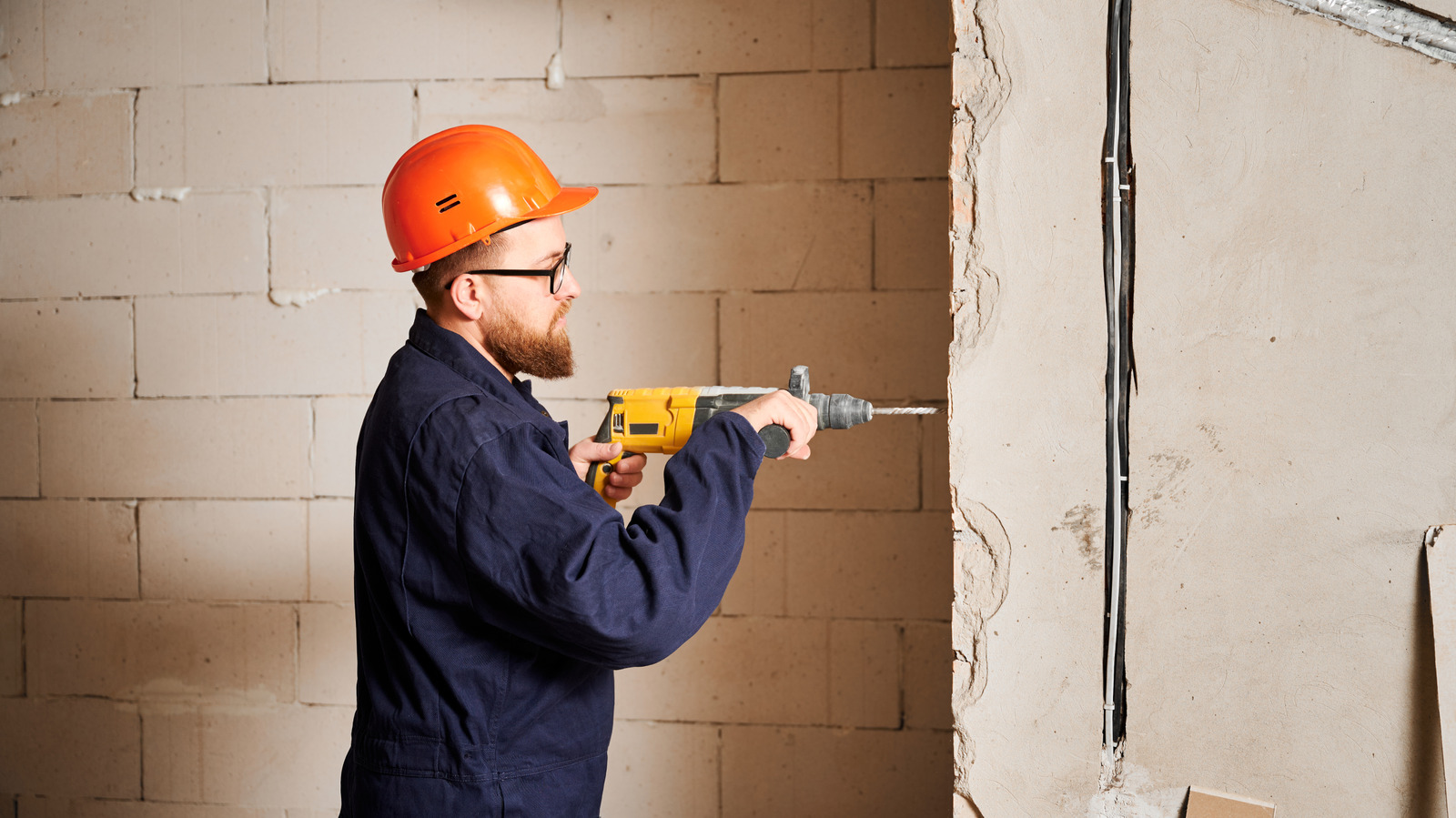
You might not drill into concrete every week, but when the moment comes you want to do it right; this piece explains why a non-masonry drill bit is the wrong choice, what specialized bits and tools actually do, and practical ways to get clean, safe holes without wrecking your drill or the wall.
It’s tempting to grab whatever twist bit is handy and start drilling into block or poured concrete, but those standard bits are built for wood and soft metal and will stall or fail fast in masonry. Masonry surfaces are abrasive and often contain aggregate that chews through ordinary steel, so the bit’s tip and body get punished in seconds. Using the wrong bit wastes time and money and can turn a simple installation into a messy, dangerous chore.
Masonry drill bits are made for this job: they usually have tungsten carbide tips shaped to chip away at mineral material rather than cut like a wood bit, and their flute design expels heavy dust rather than shavings. Some are straight-shank bits for standard chucks while others use SDS or SDS Plus interfaces for rotary hammers; those interfaces let the tool hammer the bit back and forth while it spins, which is what actually breaks up concrete. The combination of correct tip geometry and hammer action is how you get a fast, controlled hole without blunting the bit instantly.
If you force a non-masonry bit into concrete you’ll feel it bind, smoke, and eventually shear off or melt at the tip, and your drill’s motor will overwork trying to keep up. That can damage the drill’s gearbox or trigger and creates heat that ruins any tempering on the metal, leaving the bit brittle. Beyond tool damage, a stuck bit can kick, walk, or suddenly release, which is an immediate safety hazard if your hands are on the tool or you’re balanced on a ladder.
Pick the bit to match the task: for small holes and anchor bolts use carbide-tipped masonry bits; for larger holes or repeated work consider a rotary hammer with SDS bits; and for perfectly clean cuts through tile or very hard stone, diamond-tipped core bits are the right call. Don’t ignore the drill style either—hammer drills are fine for occasional work, but a true rotary hammer gives consistent hammering energy for bigger jobs. Match bit diameter and length to your anchor or sleeve and you’ll avoid sloppy fits and weak anchors.
The technique matters as much as the equipment: start at low speed to find the spot and keep the bit perpendicular, then engage hammer mode and let the tool do the work with steady pressure rather than jamming it in. Pull the bit out periodically to clear dust from the hole, which reduces friction and keeps the tip cutting; compressed air or a small brush helps for deeper holes. Keep an eye on temperature—if the bit gets hot, back off and let it cool, and use water only with diamond bits or per the manufacturer’s guidance to avoid damaging other types of masonry bits.
Tool maintenance prevents most disasters: secure the bit in the chuck or SDS fitting properly, inspect tips for cracks before use, and don’t use a worn or visibly rounded carbide tip expecting it to perform. For frequent concrete work invest in a quality rotary hammer and a set of bits sized to your common anchors; they run hotter and harder but save time and reduce breakage in the long run. Always wear eye protection and a dust mask when drilling concrete—silica dust is real and not something to gamble with.
Finally, mind the anchors and the finished hole: blow out the dust so adhesive anchors can bond properly and check depth with tape on the bit or a depth stop, then insert anchors gently and torque to specified values. For replacement or repair work, test-fit the anchor before finishing to avoid re-drilling and compromising the surrounding concrete. With the right bit, the right tool, and a few careful habits you’ll drill concrete cleanly and safely instead of turning a simple task into a broken-bit headache.
