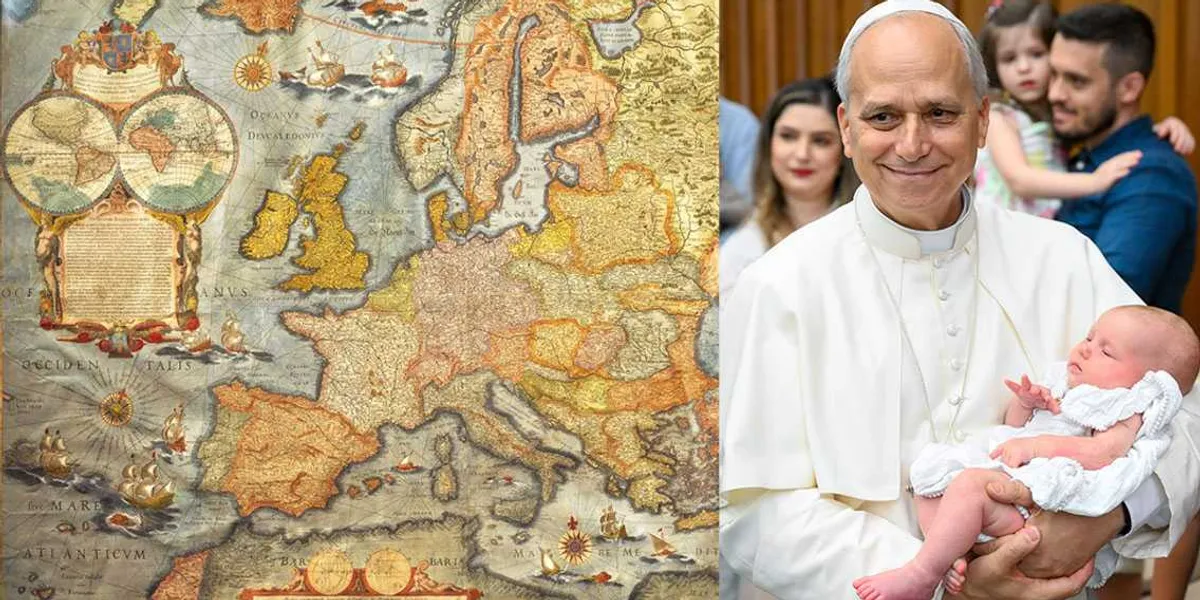
Pope Leo XIV told European leaders they need to face a demographic emergency by putting families back at the center of public life and defending the dignity of life. He warned that low birthrates, aging populations, and cultural drift are not abstract problems but an existential threat to nations, and he urged policies that restore marriage and subsidiarity over bureaucratic fixes.
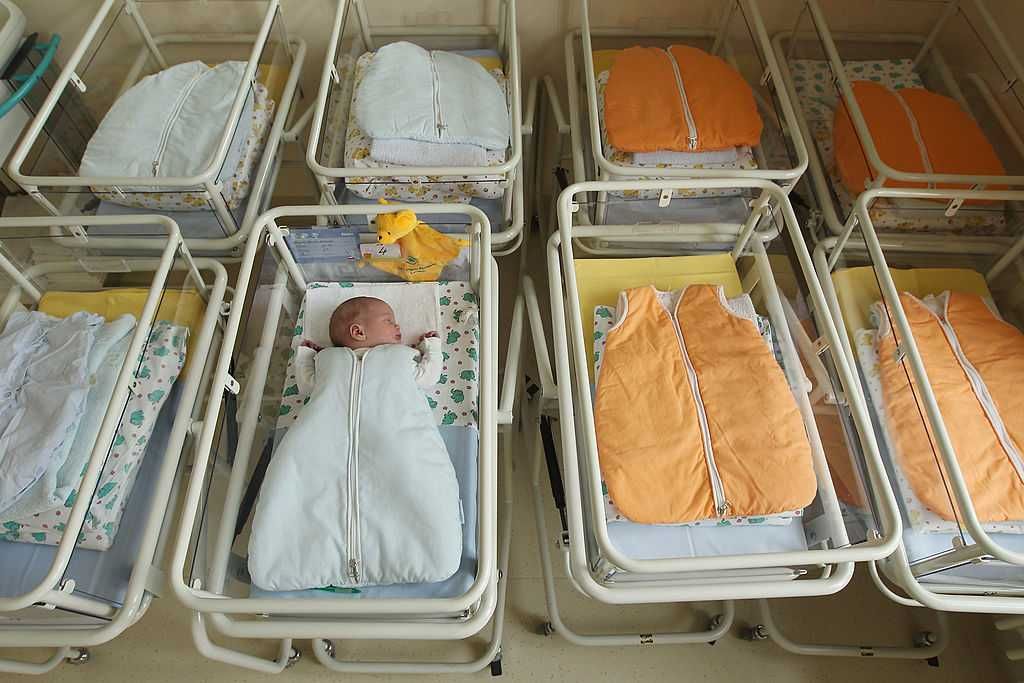
Europe’s fall in births is stark and fast. In 1970 there were 16.4 live births per 1,000 people; by 2024 that crude birth rate had plunged to 7.9, leaving whole communities without the next generation to sustain schools, services, and traditions.
The continent’s total fertility rate hit just 1.34 live births per woman in 2024, and nearly one in four babies born that year had a foreign-born mother. Replacement-level fertility is 2.1, which is the rate needed to maintain a population without immigration, and current numbers are far below that threshold.
‘A rejection of the Christian inspiration of the founding fathers of the EU institutions has led to a time of drastic sterility.’
Official projections paint a grim picture: the EU’s population is expected to shrink roughly 11.7% by 2100, sliding from about 452 million now to near 399 million. Countries like Portugal, Italy, Greece, and Poland are on the front line, with projected declines of 19.3%, 24%, 30.1%, and 31.6% respectively, and these drops matter for national character and security.
Speaking to European officials, Pope Leo warned that the demographic trend “stands as a crucial juncture for the anthropological, social, and economic future of Europe.” He was blunt in saying “children are the future,” and he tied the decline directly to cultural choices and policy failures that drift away from the continent’s moral foundations.
The pope did not spare Europe’s political class. After emphasizing that “children are the future,” Pope Leo noted that “a rejection of the Christian inspiration of the founding fathers of the EU institutions has led to a time of drastic sterility, not only because too many have been deprived of the right to be born, but also because there has been a failure to pass on the material and cultural tools that young people need to face the future.” That sentence links falling birthrates to both moral confusion and a collapse in the institutions that once supported young families.
He also criticized policies dressed up as support for families. Some measures advertised as “family-friendly” have, in practice, “simultaneously promote discrimination against motherhood, exalt abortion as a right, and undermine the very foundation of the desire to start a family.” His argument is that token subsidies and bureaucratic programs cannot replace a culture that values parenthood, marriage, and local decision-making.
For solutions, Pope Leo pushed a return to subsidiarity and a clear place for the family, saying that marriage between a man and a woman is the social foundation that must be honored and defended. From a conservative perspective, this is a call to shift power away from distant technocrats and toward communities, faith groups, and policies that make it practical and desirable to raise children.
The pope’s closing image was crisp and optimistic while also urgent: “Only a fresh springtide for the family can transform the winter chill of our aging populations,” said the pope. That line is both diagnosis and challenge, and it puts the burden on leaders to choose whether Europe will renew itself through families and national confidence or drift toward demographic decline and cultural dilution.