
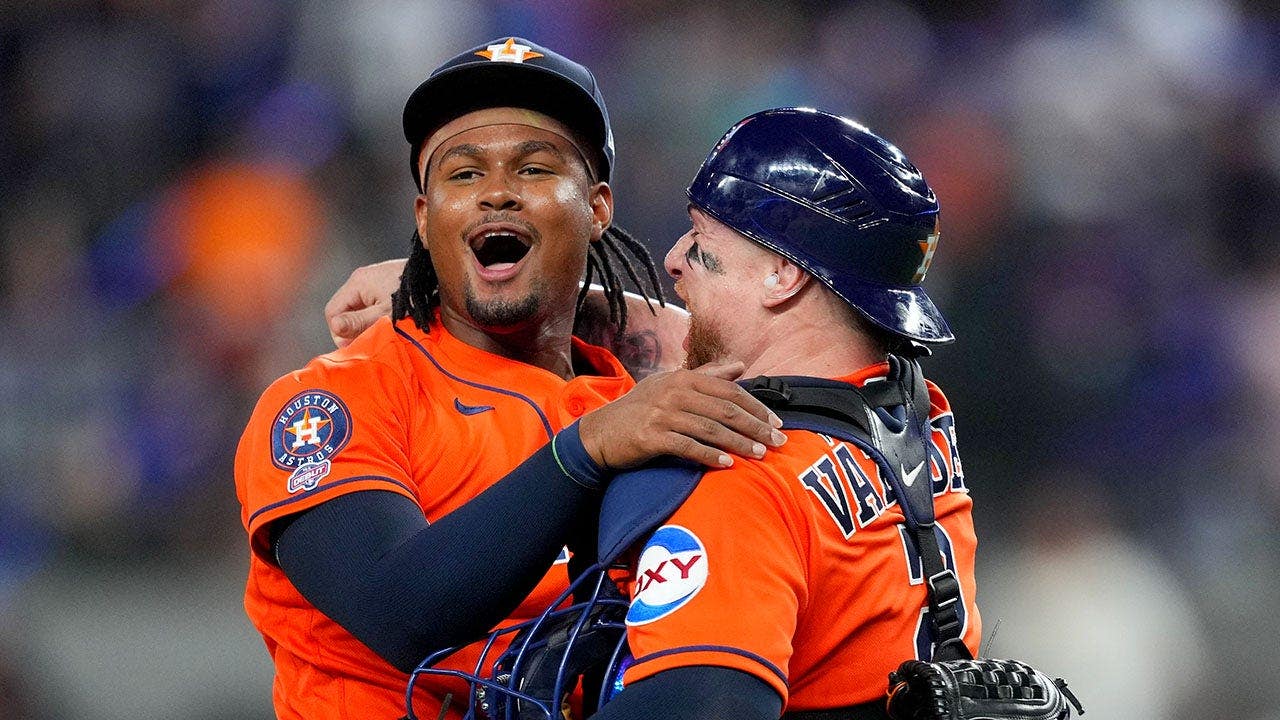
Alimber Santa, a rookie for the Houston Astros, made an immediate imprint on the majors by taking part in a no-hitter against the Texas Rangers during his very first big league appearance, an outcome that is exceptionally rare and reverberated through the clubhouse and the wider baseball world.
Sunday night turned into a headline moment when the Astros completed a no-hit effort that included Santa on the roster, and his debut instantly became a historical footnote because he was the first pitcher since 1900 to be part of a no-hitter in his major league debut. That line alone is the kind of thing announcers repeat for years, but the real story lived in the moment-to-moment drama of a big-league game. Teammates and fans watched a fresh face step into a spotlight most rookies only dream about.
No-hitters are one of baseball’s toughest achievements, and plugging into one as a newcomer adds an unusual layer. It is not just about one dominant outing; it is about collective focus, late-inning nerves and a defense that holds firm. For Santa, being part of that fabric on his first night in the majors is the rarest of welcome-to-the-league welcomes.
The mechanics of a debut like this do more than scatter headlines. It sets expectations, flips a switch on how opponents scout and game-plan against a pitcher who, until that night, had no big-league track record. For coaches and front office people, it also offers a fresh data point: how a player performs under pressure when the lights are brightest. For the player, it’s an immediate benchmark against which future outings will be compared.
Fans and media orbit moments like these because they combine unpredictability and proof. On one hand you have a rookie, relatively unknown and without the weight of history to carry, and on the other you have the raw spectacle of a no-hitter that forces everyone to notice. That mixture of surprise and legitimacy is what turns an ordinary box score into a narrative that lingers in conversations and highlight reels.
Within the team environment, an event like this tends to shift clubhouse dynamics in practical ways. Veteran pitchers often step up as mentors, while coaches calibrate workload and approach with fresh eyes. Managers face new decisions about how to integrate a rookie whose debut carried historic heat, balancing the desire to protect development with the temptation to ride a hot streak.
For opposing lineups, seeing a debutant contribute to a no-hit performance changes scouting priorities instantly. Where once there might have been little video or statistical profiles to pore over, teams now have a specific performance to analyze for tendencies, pitch mix and mental makeup under pressure. That helps opponents prepare, but it also forces them to respect an unknown quantity who already has a landmark achievement on his ledger.
Beyond boxes and stats, moments like Santa’s debut have a ripple effect on the season’s storytelling. They give broadcasters a pivot point, give teammates a shared memory and give the local fan base a new name to cheer. They do not, however, carry guarantees about long-term success. Baseball is nothing if not a grind, and a historic first night is only the opening chapter.
What this moment does guarantee is attention. It invites questions about opportunity, roster construction and how organizations shepherd talent. It creates a buzz that can last through homestands and trade deadlines alike. The important next step for Santa and the Astros is to translate that instantaneous history into steady performance, game by game.
