
This article looks at a new consumer gadget that aims to replace sprays and nets with a compact laser system for knocking mosquitoes out of the air. It explains how the device detects and targets tiny flying insects, what the makers say about safety, and the practical details consumers will want to know before buying. The piece keeps to the facts about capabilities, limits, timing, and upkeep so you can judge whether this is backyard science fiction or a useful tool.
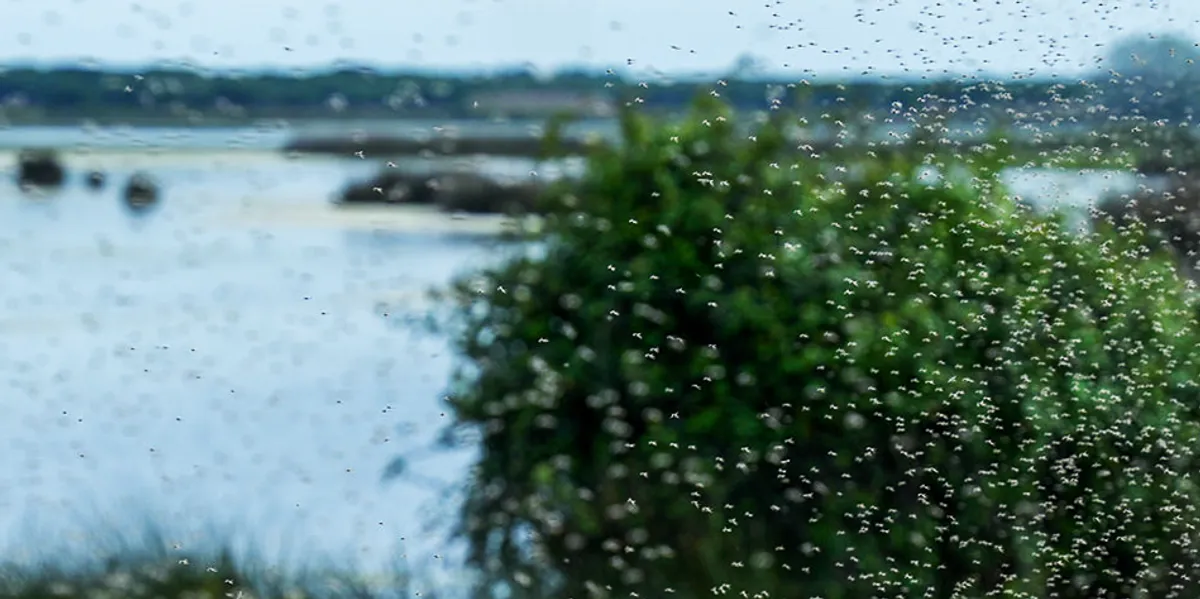
Imagine a backyard gadget that watches the air and zaps mosquitoes the instant they enter a small perimeter. The Photon Matrix Lab team describes a portable unit that pairs light detection and ranging with a fast-steering mirror system to locate and hit targets the size of mosquitoes. That focus on detection, not repellent chemistry, is the core idea behind the product.
The company calls the mechanism a precision laser striking system, and it emphasizes automatic operation that needs minimal human input. The targeting window is narrow: roughly a 19-foot radius and objects between about 0.08 and 0.8 inches in size. That size filter is intended to pick out mosquitoes while ignoring larger, faster insects.
Manufacturers say the device will not affect houseflies, roaches, wasps, or moths because those insects are outside the device’s detection envelope. They also claim the unit differentiates flight patterns so bees and butterflies are not targeted. Those are significant selling points if true, because bystander pollinators are a common concern with insect control tech.
– YouTube
Safety is the immediate question with any product that emits a laser aimed at living things, and the maker offers several assurances. They say the system halts firing if a larger object, including a person or pet, enters the target zone. The company further describes the pulses as low power and extremely short in duration, arguing those characteristics prevent burns in the unlikely event of exposure.
‘When used as directed, there is no risk to adults, children, babies, or pregnant women.’ That statement is how the company frames its safety case, repeating that the design and built-in protections eliminate meaningful risk to people. Independent verification would be the next step for anyone weighing safety claims against everyday use.
The product’s limitations matter as much as its claims: the system targets a precise size and speed range and so will only reduce a subset of biting insects. Placement, ambient clutter, and reflective surfaces can affect detection performance, and heavy fog or rain will likely diminish effectiveness. Buyers should treat it as one element in an overall mosquito-control plan rather than a guaranteed replacement for all methods.
Logistics are straightforward: the device is slated to ship in the summer window listed as Q2 to Q3 2026, and the announced retail price sits in the mid-hundreds of dollars. Regular upkeep includes cleaning the optical window monthly to avoid dust buildup that could reduce performance. Those running long outdoor seasons will need to factor maintenance and coverage area into any cost-benefit calculation.
On the ecological and ethical side, a targeted laser could be less disruptive than area-wide insecticides if it really spares beneficial species and non-target insects. Still, questions remain about battery life, replacement parts, and how the system behaves in complex real-world settings with mixed insect populations. Field tests and third-party reviews will be useful in mapping claimed performance to practical outcomes.
For shoppers curious about cutting-edge pest control, this product represents a striking shift from repellents and nets to automated detection and strike. If the device delivers on detection accuracy, safety interlocks, and reliable uptime, it could be a useful option for people who spend evenings outdoors and want fewer bites without chemicals. Until broader testing is available, buyers should weigh the novelty against proven, low-tech solutions and consider this as an emerging tool rather than a complete replacement.
