
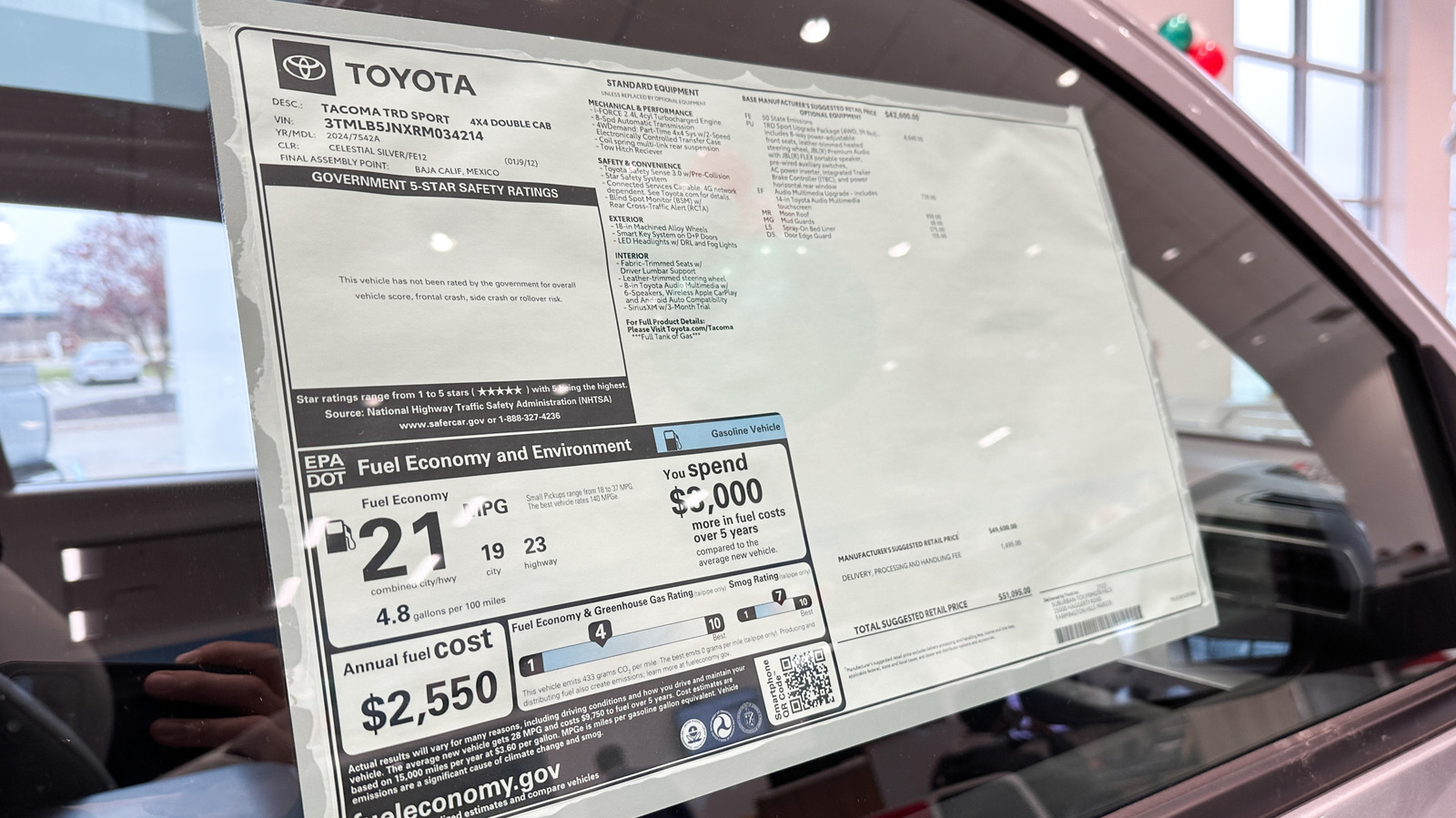
New-car window stickers promise specific fuel economy figures, but real-world driving often tells a different story; AAA’s testing shows EPA estimates can diverge from what drivers actually get, and understanding why matters when you buy, budget, and hit the road.
The EPA test cycle is a controlled laboratory procedure that aims to create a common benchmark, but it can’t reproduce every variable a driver faces. Temperature swings, stop-and-go traffic, aggressive acceleration, and heavier cargo loads all chip away at the tidy numbers on the sticker. That does not mean the EPA label is useless, just that it’s one piece of the puzzle rather than a guarantee.
AAA compared laboratory EPA results to road testing and found noticeable gaps between predicted miles per gallon and what drivers recorded on average. Those gaps are often driven by factors the lab can’t imitate, like cold starts, rolling resistance from different tires, and the real-world use of heating and air conditioning. Automakers design cars to perform well in tests, but everyday driving behavior and conditions usually differ from the idealized test loop.
Driving habits make a huge difference. Smooth acceleration, steady cruising, and anticipating traffic preserve fuel, while rapid throttle inputs, heavy braking, and frequent short trips accelerate consumption. Climate control usage is another big variable; running the air conditioner or heater can shave mpg, especially in compact vehicles with small engines. Even simple changes like maintaining correct tire pressure and keeping roof racks off when not needed directly affect economy.
Manufacturers publish combined, city, and highway estimates on the sticker, and those categories are useful references if you match them to your typical driving. A buyer who spends most days in urban traffic should pay more attention to city ratings and know that real-world city mpg often falls below lab numbers. Conversely, someone who spends lots of time on steady highways may find they come closer to or even exceed highway estimates under ideal conditions.
For shoppers, the smart move is to treat the EPA sticker as a baseline and seek independent validation. Look at long-term owner reports, third-party road tests, and real-world fuel-economy aggregators to see how a model behaves outside the lab. Test drives should include the kinds of conditions you normally face; a quick spin on open roads won’t reveal how the car handles stop-and-go commutes or loaded weekend trips.
Practically speaking, modest adjustments can narrow the gap between sticker numbers and reality. Regular maintenance, correct tire pressures, gentle throttle inputs, and avoiding excessive idling all help. If you tow, carry ski gear, or routinely haul heavy loads, factor a larger penalty into your fuel-cost calculations so you don’t get blindsided at the pump.
There are also implications for budgeting and ownership choices. Relying on optimistic sticker estimates can understate fuel costs over years of ownership, particularly as fuel prices fluctuate. Buyers who need precise cost estimates should assume a conservative mpg figure and calculate fuel expenses with a margin of safety to avoid surprises.
AAA’s work doesn’t dismiss the EPA process, but it highlights a simple consumer truth: controlled tests and real roads are different environments. Watch for independent testing results, consider your typical driving patterns, and use the sticker as a starting point rather than a promise. Armed with that perspective, you can make smarter choices at the dealership and get closer to the fuel economy you actually need.
