
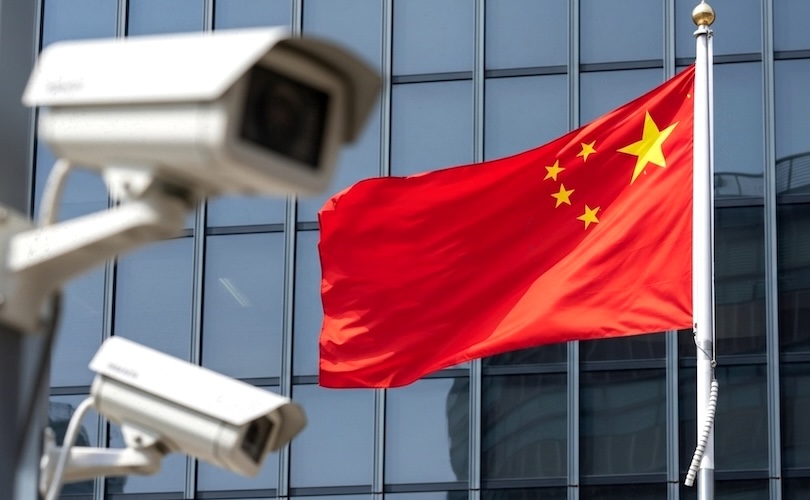
Mike Pompeo spoke sharply about Chinese influence during a Canadian conference, warning the audience about covert connections and raising alarm about how deep Beijing’s reach has become. His blunt line — ‘that there are Chinese Communist Party-affiliated people in this room today.’ — landed like a wake-up call, pushing people to face a reality many still ignore. The speech isn’t just rhetoric; it is a demand for clear-eyed policy and stronger lines of defense against foreign interference. What follows lays out why the warning matters, where the threats show up, and what a serious response would look like from a conservative perspective.
Pompeo’s message hits three basic truths: Beijing plays a long game, its influence networks are diverse, and democratic societies are often passive where they should be vigilant. That matters because weakness invites more aggression, and casual engagement with Beijing’s organs of influence has real national-security consequences. When a former CIA director names the problem plainly, it’s not alarmism; it’s an intelligence-informed assessment that should shape public policy. Conservatives should take this as a policy brief, not just political theater.
The methods of influence are familiar by now: technology transfers that create dependencies, academic and cultural programs that shape narratives, and business ties that distort decision-making. Those vectors aren’t hypothetical; we have seen them on campuses, in corporate boardrooms, and inside political advocacy groups. The problem is not engagement itself but engagement without essential guardrails — without transparency, reciprocity, and a firm plug on sensitive flows of people, money, and data. If we keep treating these as isolated incidents, we will miss the pattern and fail to respond at scale.
Canada’s vulnerabilities have been spotlighted repeatedly, and Pompeo’s blunt language points to an uncomfortable truth about how porous institutions can become. Public institutions and private actors alike need stricter screening and more accountability, especially where dual loyalties or opaque funding are involved. Redirecting debate toward enforcement over niceties is the practical stance here: make interference costly and exposure inevitable. That approach is practical, not paranoid, and it is the conservative way to protect sovereignty and democratic deliberation.
There is also a cultural element: the normalization of quid pro quo exchanges under the guise of cooperation. When grants, partnerships, or hosted events carry strings connected to foreign political aims, they cease to be benign cultural exchanges. A Republican viewpoint favors clear rules: disclose donors, ban foreign-directed political advocacy, and bar access where national security is at stake. These steps preserve openness while denying bad actors safe harbors inside our institutions.
On technology and trade, the answer is tougher screening and smarter alternatives, not blind decoupling. We should incentivize secure domestic options, diversify supply chains, and make reciprocity the baseline for access to our markets and research. That kind of policy protects both liberty and prosperity by reducing leverage and preserving critical capabilities. Policymakers who dodge these choices are making a political calculation that risks long-term strategic disadvantage.
Democratic resilience also demands a public conversation that recognizes influence as a political and security issue, not a mere diplomatic inconvenience. Leaders must explain the risks plainly and act without fear of short-term backlash from elites who benefit from cozy ties. This is where Pompeo’s frankness matters: speaking plainly forces institutions and citizens to choose between convenience and national interest. Conservatives should lead that conversation and push for practical laws that cut across party lines.
Finally, the steps forward are straightforward: rigorous vetting of foreign-funded programs, strict transparency requirements for donations and partnerships, targeted sanctions for covert interference, and a national resolve to protect core institutions. That combination raises the cost of meddling and reduces the cover for influence operations. Pompeo’s warning is a call to action; treating it as a partisan talking point would be a mistake both strategically and morally, because sovereignty and democratic integrity are not negotiable.
