
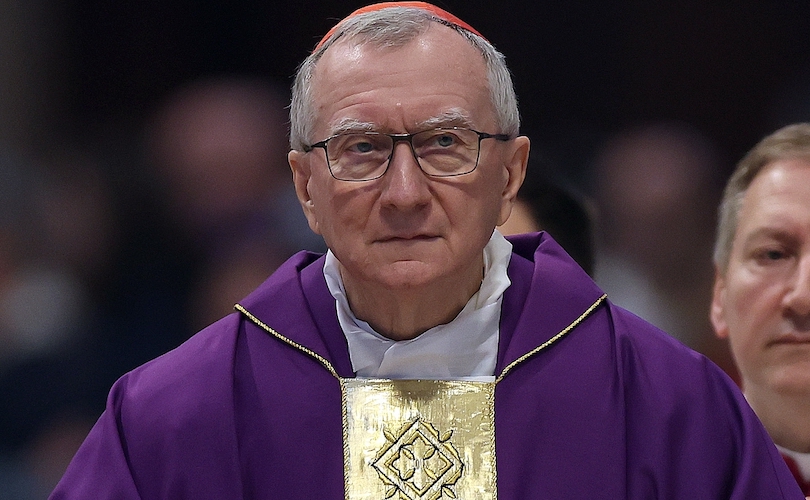
The Vatican’s Secretary of State says talks are ongoing with German bishops about blessings proposed for same-sex couples, and he cautioned that moving to formal sanctions would be premature. This article unpacks what that cautious tone means, how the bishops’ initiative fits into broader church debates, and why Rome’s response matters for pastoral practice and church unity. I trace the tensions between pastoral care and doctrinal clarity, and consider possible next steps in a conversation that is both delicate and consequential.
Cardinal Pietro Parolin’s comment that sanctions would be premature comes after a series of public disputes between parts of the German hierarchy and the Vatican. The German bishops have been exploring pastoral pathways that include blessing ceremonies for same-sex couples, and that has raised questions about consistency with longstanding church teaching. Parolin framed the exchange as part of a dialogue, signaling a preference for discussion over immediate punitive measures.
For many Catholics, the issue is not abstract; it touches daily parish life, pastoral outreach, and the experience of people seeking acceptance. Some clergy and lay leaders in Germany argue that blessings are a way to recognize committed relationships pastorally without changing sacramental doctrine. Others worry that permission to bless same-sex partnerships could be seen as doctrinal drift, eroding clear teaching on marriage.
Rome’s stance has typically emphasized that blessings are meaningful only within the context of sacramental theology and the moral life the Church proclaims. The Vatican has previously clarified that blessings that imply approval of unions that contradict church teaching should be avoided. Parolin’s language suggests the Holy See prefers to handle disputes quietly through consultation rather than public sanction, at least for now.
The broader context includes the so-called synodal path in Germany, where some bishops and lay groups have pushed for reforms on a range of issues, from clerical discipline to sexual ethics. That process has been controversial because it is perceived by critics as moving faster than universal church consensus. The German situation is often read by others as a testing ground for how far local episcopal conferences can diverge in pastoral practice.
Practically speaking, bishops’ conferences can issue pastoral guidelines for their regions, but canon law and doctrinal oversight give Rome a role when teachings or liturgical practices appear to contradict universal norms. The balance between subsidiarity and unity is at the heart of this debate, and Parolin’s caution hints at a desire to preserve both local pastoral sensitivity and doctrinal coherence. That balancing act is never simple in a global church with diverse pastoral realities.
Reactions among Catholics are mixed and often intense, reflecting broader societal shifts and generational divides. Some faithful welcome gestures of inclusion and see blessings as pastoral accompaniment that does not equate to sacramental marriage. Others read such moves as confusing and potentially harmful to catechesis about marriage and family life.
The Vatican’s measured tone also recognizes the optics of heavy-handed disciplinary steps. Sanctions against bishops are rare and carry serious consequences for ecclesial relationships and trust. By keeping the conversation open, the Holy See allows time for clarification, possible compromises, and continued theological reflection that could reduce the need for coercive measures.
At the same time, the possibility of formal intervention cannot be ruled out if practices clearly contravene doctrinal norms or if local initiatives produce widespread confusion. The Congregation for the Doctrine of the Faith remains the organ responsible for safeguarding doctrine, and its involvement would signal that Rome considers the matter beyond a purely pastoral disagreement. That would raise the stakes considerably for both German Catholics and the wider church.
Pastoral leaders face a dilemma: how to accompany people whose lived realities differ from traditional models, while maintaining the teaching role that defines Catholic identity. Dialogue can create space for creative pastoral solutions, but it also needs careful theological grounding so that pastoral creativity does not become doctrinal ambiguity. Parolin’s words suggest Rome prefers theological clarity as the baseline for any pastoral innovation.
Observers outside the church are watching too, because the debate touches public perceptions of religious institutions and their moral authority. How the Vatican handles this could influence wider conversations about religion and modern life, including how faith communities respond to social change. A measured process may preserve credibility better than a sudden crackdown or an abrupt reversal of longstanding teaching.
The coming months will likely see continued exchanges, statements, and perhaps clearer guidelines from Rome designed to steer pastoral practice without inflaming tensions. Grassroots responses, theological writings, and episcopal consultations will shape the next phase of the debate. The outcome will matter not only for Germany but also for how the universal church navigates similar pastoral questions elsewhere.
Whatever happens, the situation underscores how pastoral care, doctrine, and ecclesial authority intersect in complex ways. The Vatican’s preference for dialogue over immediate sanctions keeps options open, but it also raises expectations that the conversation will move toward greater clarity. That clarity will be essential for both pastoral integrity and the unity of the church community.
