
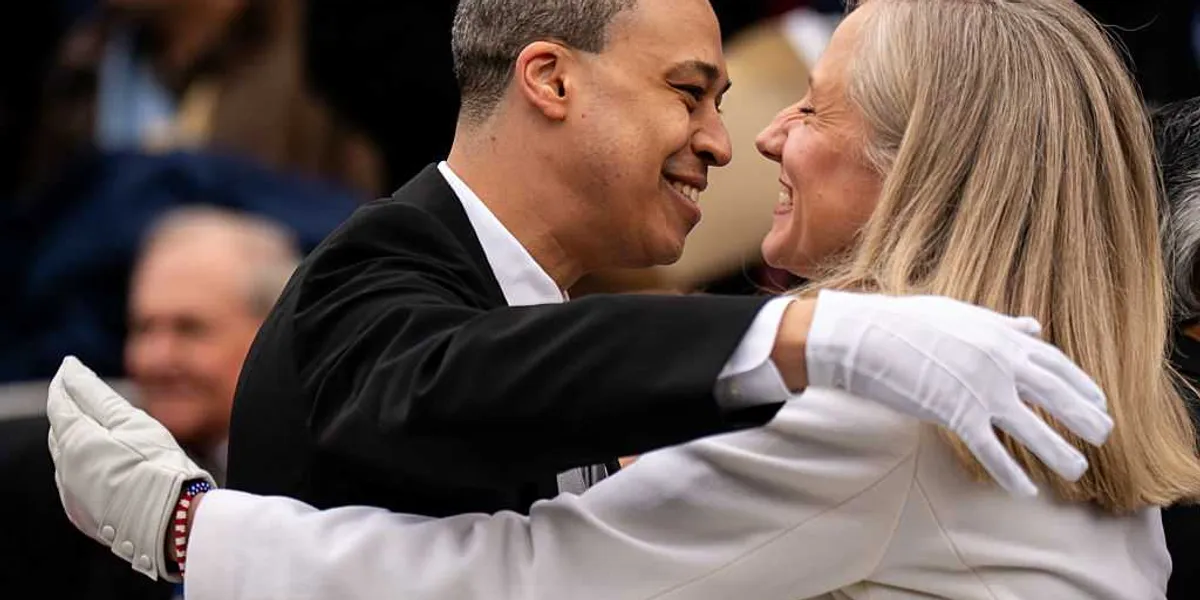
The Virginia Supreme Court gutted a Democrat-backed ballot move this week, and what followed looked less like legal strategy and more like a scramble. Officials rushed filings to the U.S. Supreme Court, flubbed basic court names and spellings, and sparked chatter about extreme fixes to bend the system back their way.
On Friday the state high court tossed a ballot measure that would have effectively handed Democrats extra congressional seats, declaring it unconstitutional. The decision stunned the party and set off an urgent, chaotic response from Democratic leaders who say they were only trying to protect voting rights. Republicans see it as an overreach that would have overridden millions of voters’ choices.
Instead of accepting the ruling, some Democrats began exploring drastic routes: lowering the retirement age for justices, purging the court and packing it with favorable voices. That kind of overhaul smells like politics dressed up as reform, and it’s alarming to voters who expect courts to be stable, not political spoils.
Democratic state officials then took the next predictable step and asked the U.S. Supreme Court to step in and revive the gerrymandering initiative. Their hurry to reverse the ruling produced sloppy legal work and plenty of gloating from opponents. Republicans are calling it a last-minute Hail Mary after a costly failed campaign that voters rejected at the polls.
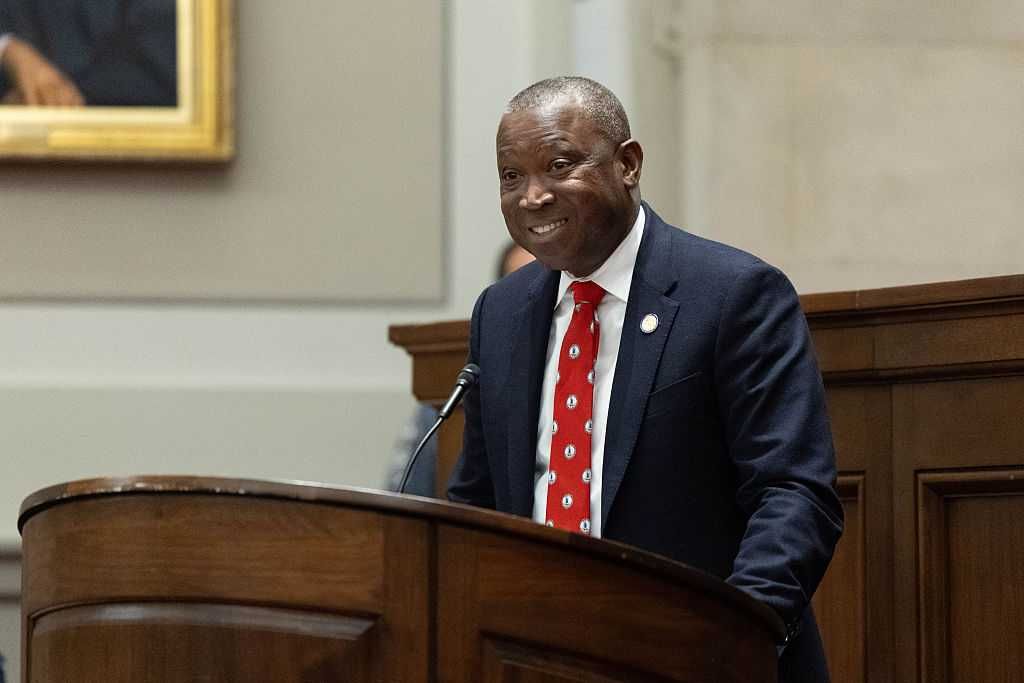
Virginia Attorney General Jay Jones, House Speaker Don Scott and Senate President Pro Tempore Louise Lucas filed a joint motion seeking a delay while they appealed to the nation’s highest court. Their filing contained basic errors that made the whole thing look rushed and amateurish. Former Attorney General Jason Miyares (R) pointed out one glaring misspelling near the top: the document reads “Virgnia House of Delegates” instead of Virginia.
Observers kept finding little mistakes. Assistant Attorney General Harmeet Dhillon flagged another goof where “senator” was typed as “sentator,” which is the kind of slip that undercuts a petition’s credibility in front of judges. In the midst of this, critics were quick to ridicule the effort instead of debating the legal merits, because sloppy work is easy to mock and hard to defend.
Miyares didn’t pull punches. He wrote, “If you are going to appeal to SCOTUS maybe don’t misspell Virginia?” and later added that the motion was a “Hail Mary to save face after wasting $70 million in political money and $10 million in taxpayer money on an illegal, unconstitutional gerrymandering amendment.” The tone was blunt and unforgiving, and it played to a base that already distrusts Democratic maneuvers on voting rules.
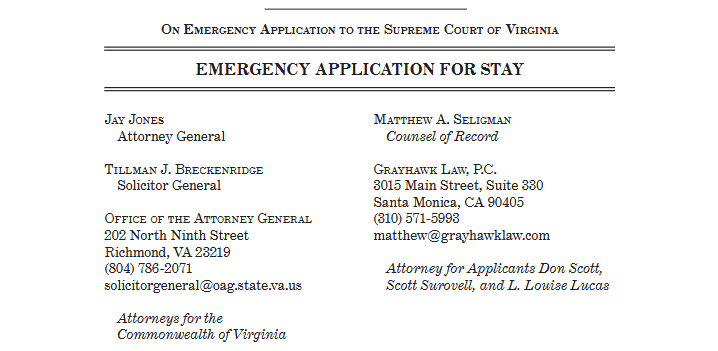
The errors didn’t stop there. The emergency application filed with the U.S. Supreme Court misnamed the destination court on its first page, calling it an “emergency application to the Supreme Court of Virginia” rather than the Supreme Court of the United States. “Good News: Dems managed to spell Virginia correctly,” Miyares quipped after that filing, “Bad News: They sent their emergency application to SCOTUS to the wrong court. Baby steps.”
https://x.com/JasonMiyaresVA/status/2052909180369916159?s=20
Despite the mislabeling, the petition did reach the U.S. Supreme Court, but legal scholars say it still may miss the point. Edward Whelan noted oddities in how the cover page was styled and questioned whether the petition is even asking for the right relief. “Very weird that cover page states ‘On Emergency Application to the Supreme Court of Virginia,'” Whelan observed, since that styling makes little sense for an emergency application to the federal court.
Whelan went further, arguing that even a sympathetic grant of a stay by the U.S. Supreme Court wouldn’t necessarily undo the lower-court injunction that the state supreme court affirmed. “Even if the Supreme Court were to grant Virginia’s emergency application for a stay (it won’t), that would still leave in place the lower-court injunction that the state supreme court affirmed,” he warned.
All this looks less like careful litigation and more like political panic: expensive campaigns, hurried filings, strange errors and talk of rewriting court rules to get favorable outcomes. For voters tired of power plays, these moves reinforce the sense that one party is willing to bend institutions rather than win on the merits.
