
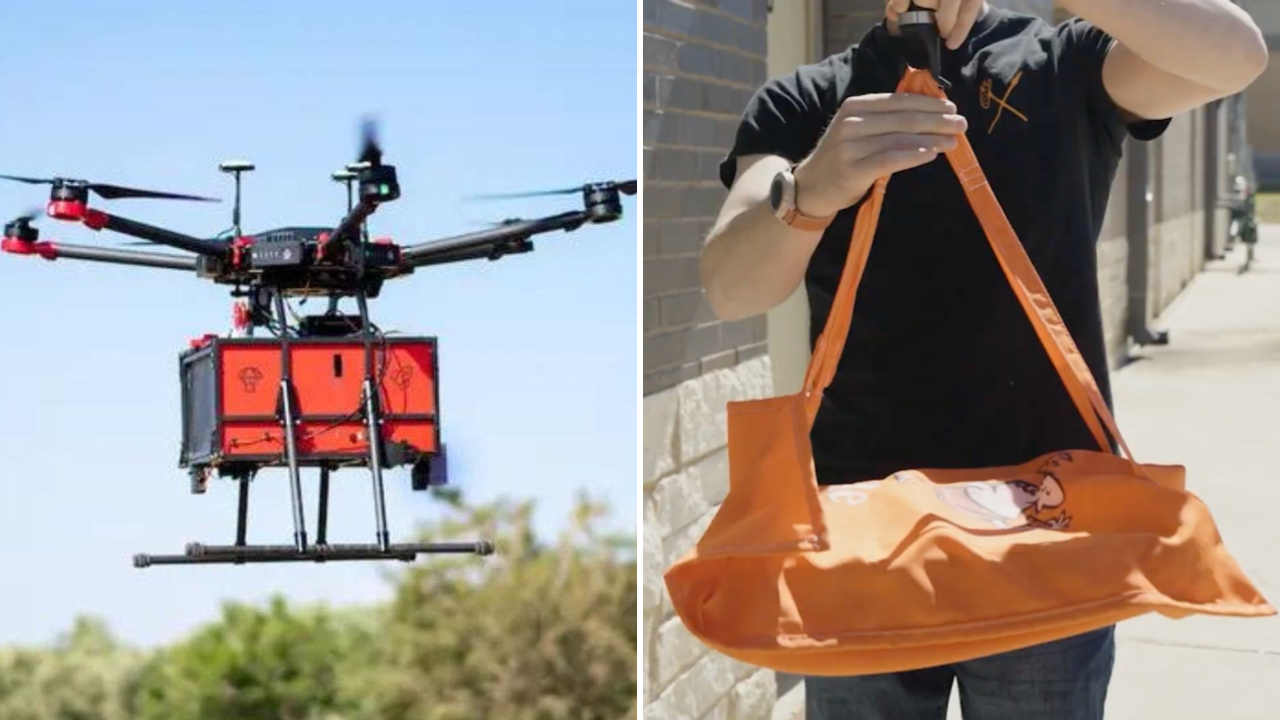
A pizza chain teamed up with a drone company to deliver full family meals in minutes, starting in a Texas suburb, and that launch shows how fast food delivery could change once drones can carry heavier orders and link directly into restaurant systems.
Imagine ordering two 16-inch pizzas, sides and drinks from an app and watching a drone lower your dinner into the yard a few minutes later. That scenario is real today in Wylie, Texas, where a new service is already flying full family meals instead of sending a driver. The convenience is immediate: less time on the road, less waiting in traffic and the ability to get hot food without leaving home.
The system tethers a delivery platform directly to a restaurant’s point-of-sale so preparation and dispatch become seamless. Orders are built in the app like any other delivery, limited by an 8.8-pound cap so the drone can safely lift the load. Once the kitchen finishes, the order is placed at a curbside pickup point where the drone retrieves it and departs for customers’ yards.
The delivery craft at the center of this change is the Sky2 drone, engineered to carry full meals rather than single small packages. It uses an octocopter layout with eight motors so the aircraft has redundancy if one motor falters, and it runs on a dual battery system for extra reliability. Those design choices matter when the payload includes multiple pizzas and drinks on a short, busy flight.
Navigation and stability depend on satellite positioning with real-time corrections and an onboard artificial intelligence that constantly monitors flight parameters. The drone typically reaches nearby homes in around four and a half minutes and lowers orders on a tether without landing. That avoids the traditional handoff and reduces the time food sits in transit.
Speed is the obvious headline here. Getting dinner in minutes changes the calculus for customers deciding whether to pick up or order in. If fast, hot delivery becomes routine, more people may choose convenience over a short drive, reshaping how restaurants handle short-range orders and reducing local road traffic tied to pickups.
Direct POS integration matters because it speeds the whole chain from checkout to lift-off, removing slow points where a driver would be assigned and routed. This connectivity also sets a precedent: when delivery platforms talk straight to restaurant systems, the order lifecycle tightens and accuracy improves. The result is a smoother, faster customer experience.
Operational limits still apply. Today this rollout is focused on a single community, and regulatory, noise and safety concerns will shape how widely it spreads. Neighbors can expect more drones overhead as service areas expand, which raises questions about acceptable noise levels, privacy and the volume of flights in residential skies.
Scale comes from proven operations elsewhere; the drone operator has completed hundreds of thousands of flights in other U.S. markets and runs established routes in places like North Carolina. That experience helps iron out logistics and public acceptance, but broader adoption will hinge on local rules and how communities react to commercial flights over homes.
New entrants and existing delivery companies are watching and testing similar ideas, signaling a broader push into aerial delivery for nearby neighborhoods. If multiple firms crack the full-meal problem, expectations for delivery speed could reset in short-distance markets. Consumers will weigh convenience and speed against possible tradeoffs like increased noise or visible drone traffic.
“Flytrex is laser-focused on making on-demand food delivery by drone a reality for everyday families,” Amit Regev said. “A big part of advancing this market is making sure people can get the food they actually want, when they want it. Until now, drones simply weren’t capable of delivering a full family meal. The Sky2 changes that.”
“Partnering with Flytrex to bring full family meals by drone delivery is a major leap forward and a clear example of how we’re pushing the boundaries of convenience, speed and accessibility in our category,” Trish Heusel said. These words capture the pitch: faster service, less friction, and a glimpse at a delivery future that may arrive one suburb at a time.
Would you order pizza more often if it showed up hot at your door in under five minutes without a driver? Share your thoughts at CyberGuy.com and watch how this technology expands beyond its test markets as the hardware, software and local rules align to make aerial meal delivery an everyday option.
