
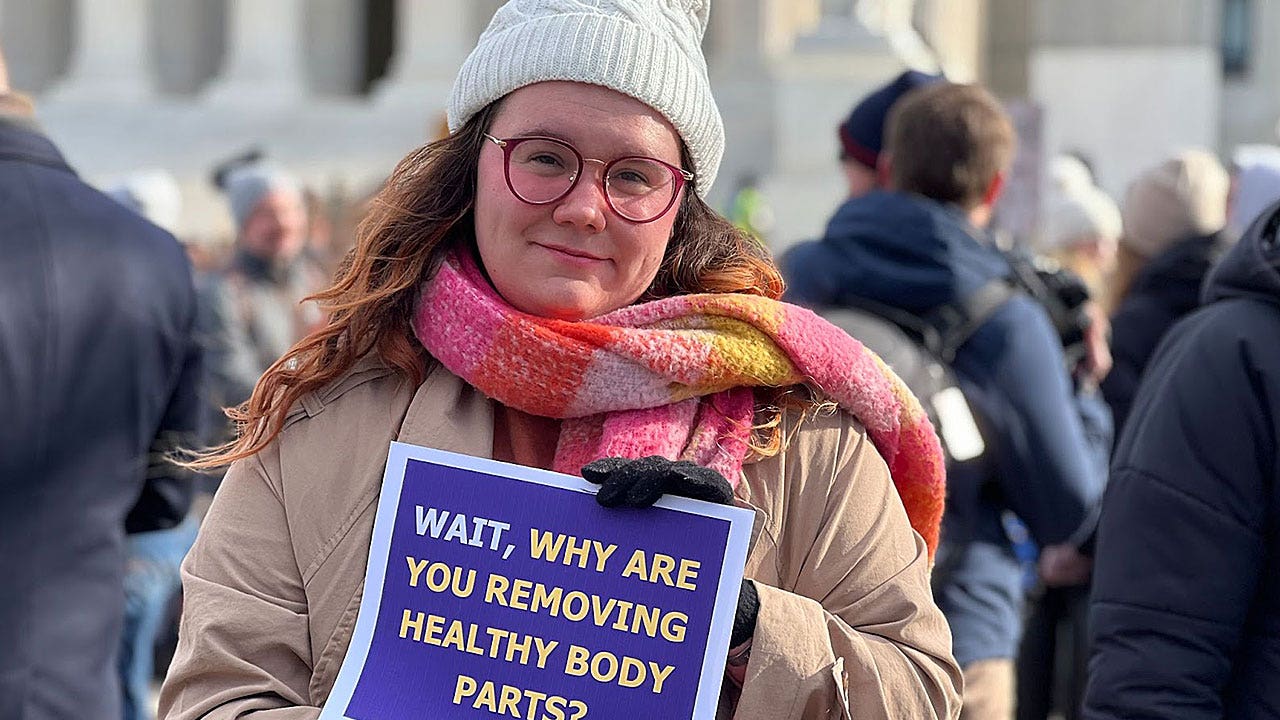
A woman recounts how youthful vulnerability, algorithm-driven communities and medical professionals who urged transition led to permanent physical and emotional harm, and how motherhood reshaped her view of those choices and their consequences.
As a teenager I convinced myself I was a boy trapped in a girl’s body, a belief I first found inside the echo chambers of online communities. Those spaces promised clarity and acceptance when I felt lost, and their validation felt like air to someone struggling. The platforms changed over time but the pattern stayed the same: vulnerable kids pulled toward an identity that seemed to answer pain.
I was painfully open about my mental health and struggled with self-worth, which made me an easy target for people eager to offer a tidy explanation. The apparent “fix”? To start identifying as my “true self” and to take medical steps that felt decisive and irreversible. At the time those options felt less like choices and more like relief from the noise inside my head.
The trans community felt like a place where I finally belonged, full of people who told me I wasn’t broken. Activists and peers assured me that my suffering was proof of innate transness, and that affirmation became its own kind of care. I also trusted the doctors and therapists who reassured me that transition was the path forward.
That trust cost me dearly. I spent years taking high-dose testosterone and later underwent a double mastectomy, moves presented as medically necessary and life-affirming. Those interventions were done when I was still trying to understand who I was and what permanence meant.
Now that I’m a mother, the losses land differently and with greater weight. Motherhood forces a new lens on past choices, measuring them against the life I now hold in my arms. Decisions that once felt personal now ripple outward into my children’s lives and my capacity to mother the way I envisioned.
One of the clearest changes is physical: my chest is scarred and numb where my breasts once were. There are times when I picture laying my baby down and realize I could feel nothing — “like nothing.” It’s a brutal, almost surreal realization that punctures any tidy narrative I once clung to.
The complications only deepened the harm. My surgeon left behind breast tissue that complicated breastfeeding, and because of how the surgery and grafting were performed my milk became trapped. I could not feed my newborn, and the combination of physical pain and emotional grief was something I wasn’t prepared to bear.
Looking back, I regret that I lacked protection and that no adult stepped in to question the rush toward permanent procedures. My parents were misled in the same way I was, convinced by professionals who framed trauma and confusion as something to affirm immediately. Instead of being helped to work through underlying issues, I was steered toward interventions that erased options.
What worries me most is that this pattern is happening to other kids now. It often starts with searching for ways to cope, finding a place that feels validating, and then being funneled toward medical clinics promising a solution. For many, that initial relief is powerful but fleeting, and the long-term cost is ignored.
When I began telling the truth about my experience, the response was swift and harsh: I was ostracized by the same group that once embraced me. “I was harassed, threatened and” even doxxed for speaking out about what had gone wrong, a brutal turn from the acceptance I had been offered earlier. Losing that community support left me isolated and forced me to seek help elsewhere.
The idea that a community built on inclusiveness would reject someone for sharing harm is painful and revealing. People who had once celebrated me became intolerant of doubts, and genuine critiques of care were treated as betrayal. That reaction showed me how fragile unconditional support can be when institutions and identities are at stake.
This Mother’s Day I hold a complicated gratitude: love for my children mixed with an awareness of what was lost. No mother should have to look back and realize that many of her pregnancy and postpartum struggles stemmed from choices made after being misled. No mother should have to lay her baby on a flat, numb chest, and no parent should see their child funneled toward the same path I was.
