
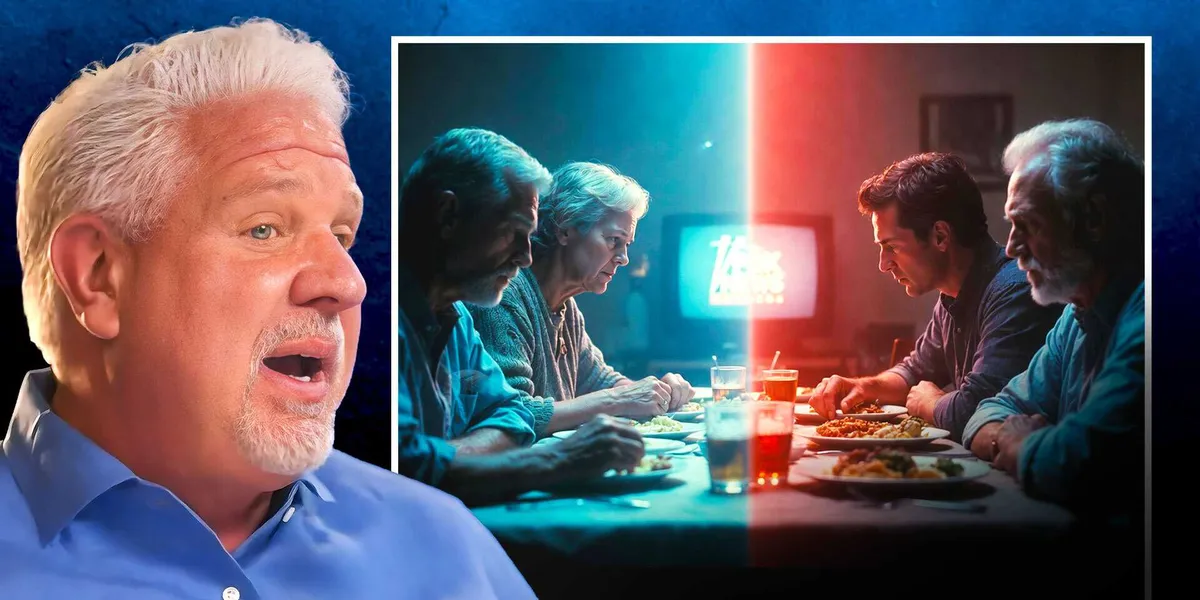
America is fraying at the edges as political loyalty bleeds into personal life, with a new study from UC Irvine psychologists revealing how many friendships and family ties have snapped over politics. Glenn Beck, who co-founded Blaze Media, reacts to the numbers and the human cost, arguing we need to remember people are more than their vote. This piece looks at the scale of political breakups, who is most likely to end ties, and why a little humility and curiosity about others might be the only bridge left.
The study finds 37% of Americans report having experienced a political breakup, and the fallout is real and specific. Of those who said a relationship ended over politics, 62% lost a friend, 40% lost a family member, 29% lost a co-worker, and 10% lost a romantic partner. Those figures are striking not because they shock but because they map to everyday circles most of us depend on for support.
“That’s really sad,” Blaze Media co-founder Glenn Beck comments. He speaks from experience, admitting that political splits have cost him personal relationships and left scars that are still felt. His tone is not one of triumph or finger-pointing but of frustration that identity politics can override decades of shared life.
The partisan split in the data is worth attention. About 47% of Democrats reported political breakups compared with 29% of Republicans, and 66% of Democrats said they were the ones to end the relationship while only 27% of Republicans claimed the same. Those numbers paint a clear picture: the damage is not evenly distributed, and one party appears more likely to pull the plug on relationships over disagreements.
Beck puts the point bluntly and personally. “I’ve lost familial relationships. I have lost friends. We’ve all gone through this,” he says, reminding listeners that political conflict cuts across all age groups and backgrounds. His example underlines a simple truth conservatives often stress: loyalty to people should outweigh tribal loyalty to political figures.
He expands the point with a line that lands hard in today’s polarized climate. “I love my family for many more reasons than who they voted for. And I don’t know why I am such a horrible person if I support Donald Trump. And if I support the one you like, then I’m a really great person. And I can be a great person overnight. Not by changing anything other than saying, ‘I don’t like Donald Trump,’” Beck says, pointing out the absurdity of moral judgments based on a ballot choice. The flip side, he notes, is how quickly reputations can rise or fall depending on political alignment rather than character or deeds.
“And then, all of a sudden, I’m a hero,” he adds, capturing how volatile social standing has become when politics is the primary lens for judging people. That volatility damages trust and makes honest conversation risky, because too often a disagreement becomes a reason to erase someone instead of an invitation to listen. In those conditions, communities shrink and silos grow.
Beck also offers a constructive counterpoint to the closing-off impulse. “I like learning things from people who think differently than I do,” he says, and he doubles down on why that matters. “I learn so much, and that’s what we should do.” His argument is straightforward: curiosity and engagement defeat caricature, and those are values conservatives can champion while defending free speech and robust debate.
These findings are a wake-up call. If nearly four in ten people have fractured relationships over politics, the social cost of our political culture is clear and large. The smallest, most practical step is to treat disagreement as a feature of democracy, not a flaw to be punished with permanent exile.
At a moment when furious partisanship is treated like virtue, this data nudges Americans to choose the harder, quieter work of keeping relationships intact. That does not mean ignoring deep differences, but it does mean refusing to reduce friends and family to political avatars. The alternative is a nation where every dinner conversation is a landmine and every cousin is a potential exile, and that’s exactly the future nobody should welcome.
