
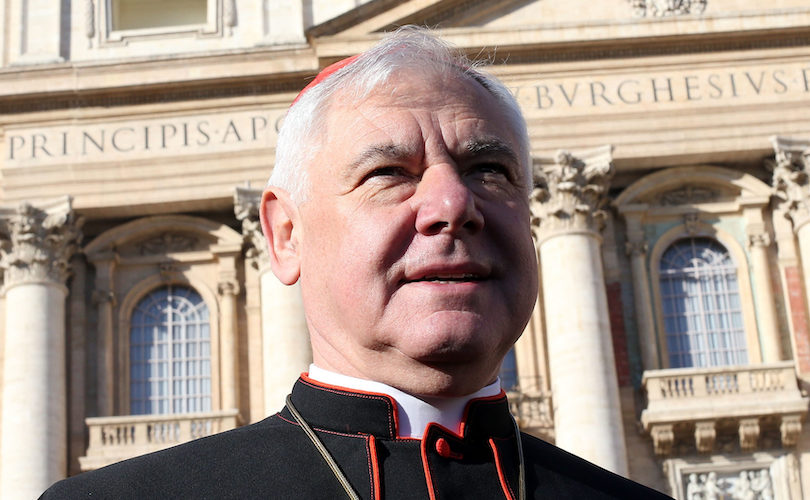
Cardinal Müller issued a sharp critique of currents inside the Church he sees as undermining longstanding teaching, naming a “homo lobby” and warning against changes to marriage theology. His remarks call out specific practices and language he believes distort doctrine and sacramental life, and they have already stirred reactions among clergy and laypeople. The tone is doctrinal and firm, rooted in his role as a guardian of Catholic teaching. This piece looks at what he said, why it matters, and how it could affect the broader conversation in Catholic circles.
Cardinal Müller, known for his time leading the Congregation for the Doctrine of the Faith, framed his criticism as a defense of core theological principles. He explicitly rebuked the ‘homo lobby within the Church’ and argued that certain approaches are pushing what he termed a ‘heretical relativization of natural and sacramental marriage’. Those phrases are central to his message and signal a boundary he does not want crossed.
He also singled out proposals and practices he considers liturgical distortions, denouncing what he called ‘blasphemous’ homosexual ‘blessings’ in a recent statement. By using those words, Müller tied language about pastoral outreach directly to questions of sacramental integrity. For him, rites that suggest a parity between heterosexual sacramental marriage and same-sex unions cross into territory that changes the meaning of sacraments.
The debate is not purely academic; it affects how parishes and bishops respond to pastoral needs. Some local leaders have pushed for more inclusive language and blessings as a pastoral response to people in same-sex relationships. Müller’s intervention challenges that approach, emphasizing doctrine over pastoral experimentation when sacramental theology is at stake.
Supporters of broader pastoral language say blessings can be given in ways that respect doctrine while responding compassionately to people’s lives. They argue that pastoral care and doctrinal clarity can coexist without formal changes to sacramental definitions. Müller’s critics, however, worry that such maneuvers invite doctrinal erosion by changing how rites are performed and understood.
Within the Vatican and among episcopal conferences there is an ongoing tension between maintaining doctrinal continuity and offering pastoral flexibility. Synodal documents and reports have at times signaled more openness to inclusive language, prompting strong reactions from those who prioritize doctrinal consistency. Müller’s statement enters that stream of debate as a clear demand to preserve what he sees as essential theological boundaries.
Practically speaking, the dispute could shape what bishops do in their dioceses and what guidance emerges from higher church bodies. If influential figures insist that certain blessings or formulations are unacceptable, diocesan policies may harden. Conversely, if local bishops continue to explore pastoral adaptations, a patchwork of practices could emerge, leaving parishioners with mixed experiences depending on where they worship.
The controversy also highlights wider questions about authority and change in the Church. How should developments in pastoral practice be weighed against centuries of doctrinal teaching? Who has the final say when interpretation and pastoral needs appear to diverge? Müller’s remarks underscore his view that teaching and sacramental form are not areas for relativization.
Reactions have been varied, with some clergy and lay faithful applauding the clarity and others warning that sharp public disputes can hurt pastoral outreach. The conversation shows no signs of cooling, and it will likely shape synodal conversations, episcopal decisions, and parish life in the months ahead. For many observers, the core issue remains how to hold together faithful doctrine and compassionate pastoral care without blurring essential distinctions.
Whatever the next steps, Müller’s statement has crystallized a familiar fault line in contemporary Catholic life. The use of strong language and pointed phrases ensures the debate will continue to attract attention and require careful responses from church leaders at every level. The coming months will tell whether this critique leads to firmer rules, renewed dialogue, or a more fragmented pastoral landscape.
