
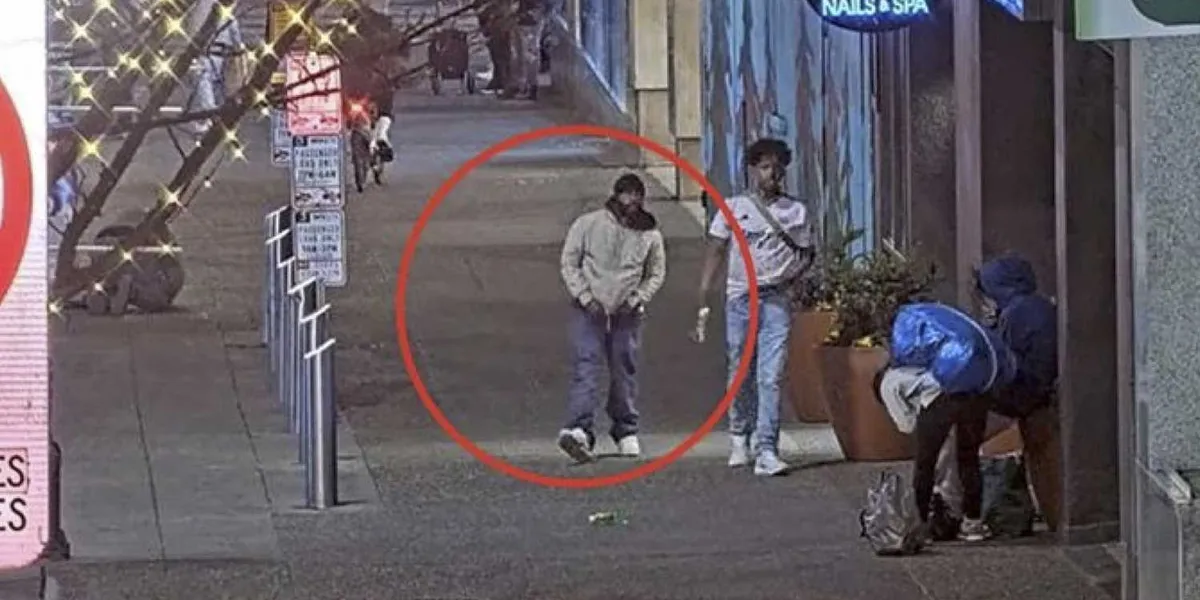
The city watched in shock when surveillance footage showed two young men brutally attacking a 77-year-old in downtown Seattle, a case that turned public outrage into leads and arrests. Video released by police helped identify suspects and move prosecutors, while debate flared over the surveillance tools that made the arrests possible. This article walks through the attack, the arrests, the role of video evidence, and the politics around public safety in Seattle.
The surveillance shows two men looming over the elderly victim and, without provocation, striking him hard from behind while laughing. One of the attackers winds up and lands a powerful blow that knocks the man down, leaving bystanders stunned. The rawness of the footage stripped away any doubt about what happened that day in April.
After the assault the victim was left bleeding on the sidewalk and unable to defend himself, a scene that stunned neighbors and passersby. Emergency crews found him with a serious head wound in addition to a broken arm and a damaged knee. The physical toll on a vulnerable, elderly person is dreadful to picture and even harder to accept as random violence.
Prosecutors describe a chilling moment where one of the attackers feigned a kick, pulling back at the last second as if to toy with his fallen victim. That detail was captured on camera and later used in court filings to illustrate the callousness of the assault. Small gestures like that carry weight when jurors and judges review what looks like deliberate cruelty rather than a spontaneous scuffle.
Public tips after the footage circulated led officers to identify 29-year-old Ahmed Abdullahi Osman as one of the alleged attackers. Osman was charged with second-degree assault and initially released pending further action, then later became the subject of a $200,000 warrant from King County Superior Court. The sequence underlines how identification, charges, and bail decisions can move in fits and starts even after a clear video is public.
A second man, 27-year-old Jessean Tyrell Elion, was arrested after additional tips came in following the release of the footage to the public. Officials booked Elion into the county jail, and a judge set bail at $100,000 on the same assault charge. Arrests like these show the practical impact of community reporting when combined with recorded evidence.
“The allegations of an attack on a stranger is very serious,” a judge said about the incident, words that reflect how the court viewed the case from the start. That statement underscored the legal system’s responsibility to address violent crime aggressively. It also set a tone for the prosecutorial approach moving forward.
Investigators have acknowledged they only spotted the second alleged assailant after replaying surveillance footage several times, a process that turned up details eyewitnesses had missed. Casey McNerthney with the King County Prosecuting Attorney’s Office said the video was crucial to making progress. “It’s absolutely helpful, it’s so helpful when you have that because jurors now expect that, and even when you have great witnesses, there’s always the question if you don’t have video or why isn’t there video,” McNerthney said.
“When you have cameras like that you see higher rates of referrals to prosecutors and often times higher conviction rates,” he added, pointing to a pattern the prosecutor’s office has observed. Those are not just theory statements, they are practical observations about how evidence changes outcomes in criminal cases. For victims, video can be the difference between a case that stalls and one that moves to trial.
Mayor Katie Wilson has publicly criticized the surveillance infrastructure that captured the assault, and her comments have stirred debate about privacy and safety. Her office did not issue new comments about this particular incident, but the mayor’s stance has become a flashpoint for those who say public safety should be the priority. From a law-and-order perspective, the footage did exactly what proponents say it will do, turning fear into leads and accountability.
Authorities also credited assistance from a regional Real-Time Information Center that reviewed the footage and helped coordinate tips and identifications. That kind of interagency support is increasingly common in cities trying to respond faster to violent acts. When technology and citizen tips align, investigations close gaps that once let attackers vanish.
The scene on that sidewalk and the visible injuries to an elderly man are a reminder that protecting the vulnerable is a basic public responsibility. Cameras caught what eyewitnesses missed and gave prosecutors the leverage they needed to move forward, even as questions about city policy swirl. The case raises clear questions about priorities: do we empower tools that catch criminals and protect seniors, or do we let politics slow down justice?

1 Comment
Put those two vicious maniac criminals behind bars in prison for decades!